

Blog
What Are the Benefits of Wearing Compression Socks During Pregnancy?

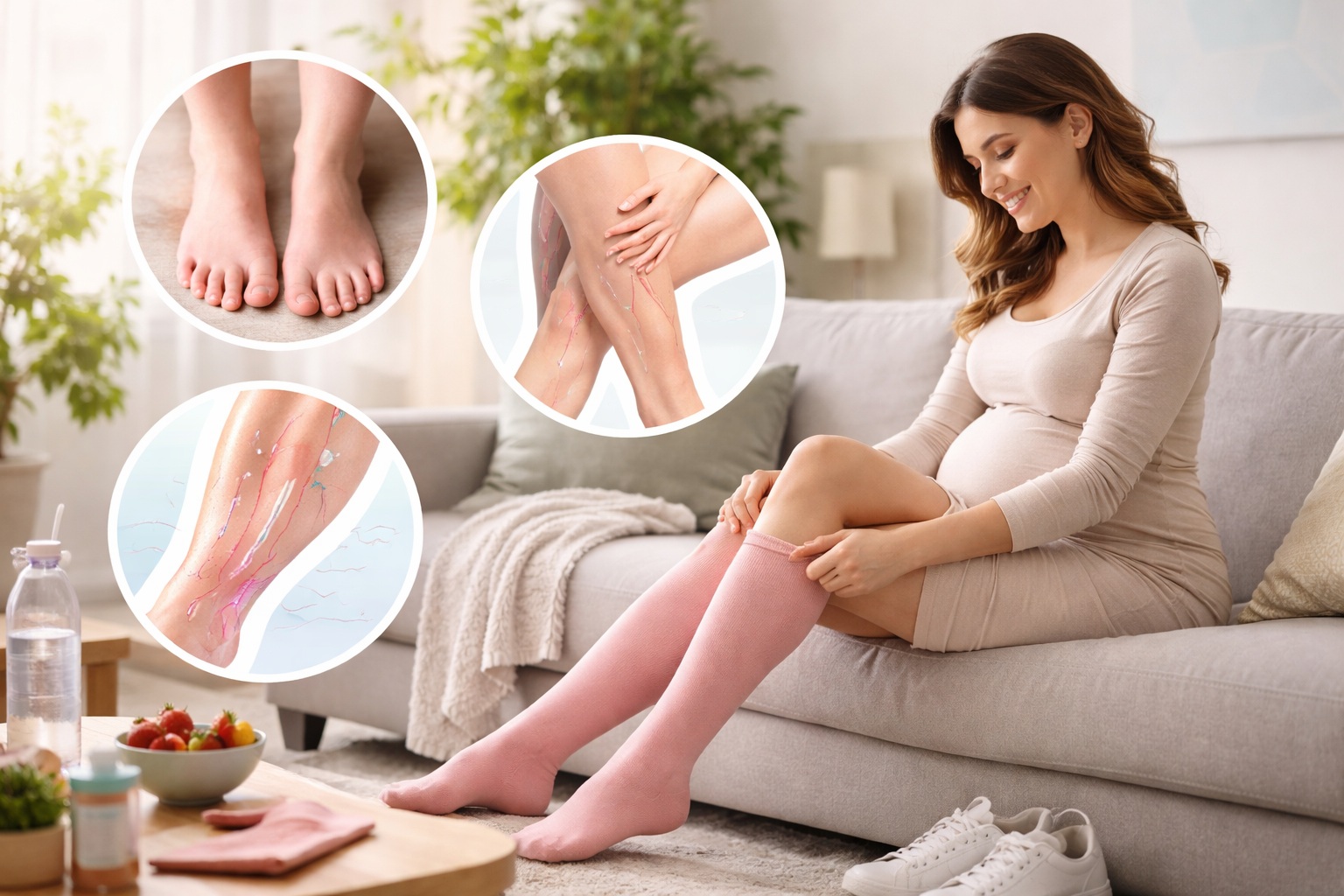
Pregnancy changes your body in incredible ways — but it also brings physical discomfort, especially in the lower legs and feet.
Swelling, poor circulation, leg cramps, varicose veins, and heavy legs are common pregnancy symptoms caused by increased blood volume, hormonal shifts, and pressure from the growing uterus.
One of the most recommended maternity support solutions by healthcare providers is compression socks during pregnancy.
But how do maternity compression socks work? And are they truly effective for pregnancy swelling and circulation problems?
Let’s break it down.
Why Do You Experience Swelling and Leg Pain During Pregnancy?
During pregnancy:
- Blood volume increases by up to 50%
- Progesterone relaxes blood vessel walls
- The uterus compresses the inferior vena cava
- Venous blood return from the lower extremities slows
This can lead to:
- Pregnancy edema (fluid retention in feet and ankles)
- Ankle swelling
- Calf tightness
- Spider veins
- Varicose veins
- Deep vein thrombosis (DVT) risk
- Restless legs syndrome
- Leg fatigue after standing
These symptoms are especially common in the second and third trimesters.
How Do Compression Socks Work During Pregnancy?
Maternity compression socks use graduated compression technology, meaning:
- Firm pressure at the ankle
- Moderate compression through the calf
- Decreasing pressure toward the knee
This gradient pressure supports:
- Venous circulation
- Lymphatic drainage
- Reduced fluid buildup
- Improved oxygen delivery
- Lower venous pressure
By promoting healthy blood flow, compression therapy helps prevent blood pooling in the lower legs.
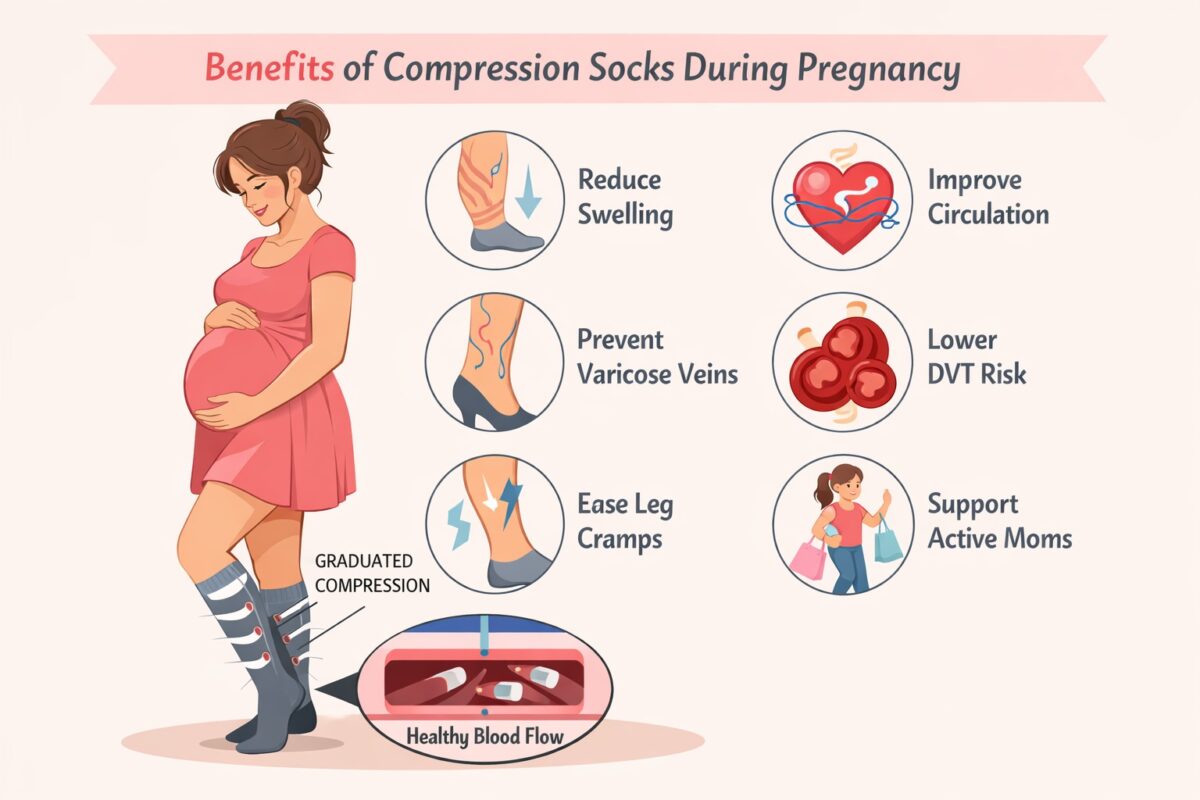
1. Reduce Pregnancy Swelling (Edema Relief)
One of the top searched concerns is “how to reduce swollen feet during pregnancy.”
Compression socks help:
- Minimize fluid retention
- Prevent ankle puffiness
- Reduce inflammation in the lower limbs
- Improve lymphatic system function
Wearing compression socks in the morning before swelling starts is most effective.
2. Improve Blood Circulation in the Lower Extremities
Healthy circulation is essential during pregnancy for both maternal health and overall comfort.
Compression socks:
- Support venous return to the heart
- Reduce pressure in leg veins
- Enhance microcirculation
- Help maintain optimal oxygen supply
Improved circulation reduces that “heavy leg” sensation many pregnant women experience.
3. Help Prevent Varicose Veins and Spider Veins
Increased blood volume and weakened vein walls often lead to:
- Bulging veins
- Visible varicose veins
- Leg discomfort
Graduated compression supports vein valves and reduces vein dilation.
While genetics also play a role, consistent use of maternity compression stockings can slow the progression of varicose veins during pregnancy.
4. Lower the Risk of Deep Vein Thrombosis (DVT)
Pregnancy increases the risk of blood clots due to:
- Reduced mobility
- Increased clotting factors
- Slower venous flow
Compression socks help reduce:
- Blood stagnation
- Venous pooling
- Circulatory strain
They are especially recommended during:
- Long flights
- Road trips
- Desk jobs
- Bed rest
Always consult your healthcare provider if you have high-risk pregnancy conditions.
5. Reduce Leg Cramps and Muscle Fatigue
Nighttime leg cramps during pregnancy are common.
Compression socks may:
- Stabilize calf muscles
- Improve oxygen delivery
- Reduce muscle vibration
- Minimize lactic acid buildup
This can improve sleep quality and reduce discomfort in later trimesters.
6. Provide Daily Support for Active or Working Moms
If you:
- Stand for long periods
- Work in healthcare, retail, or teaching
- Travel frequently
- Exercise lightly during pregnancy
Compression socks provide structured support without limiting mobility.
They’re breathable, flexible, and designed for extended wear.
What Compression Level Is Best for Pregnancy?
The most common compression levels for maternity use:
15–20 mmHg (mild compression)
Ideal for everyday swelling prevention and comfort.
20–30 mmHg (moderate compression)
Compression socks 20-30mmHg recommended for stronger support, varicose veins, or circulation issues (under medical advice).
Always check with your healthcare provider before choosing higher compression grades.
When Should You Start Wearing Compression Socks?
You can begin wearing them:
- In the first trimester if swelling appears
- During the second trimester preventatively
- Daily in the third trimester
For best results:
- Put them on in the morning
- Wear throughout the day
- Remove before bed
Consistency improves outcomes.
Are Compression Socks Safe During Pregnancy?
Yes — when properly fitted and medically appropriate.
Compression therapy is widely recommended by obstetricians and vascular specialists for:
- Pregnancy edema
- Venous insufficiency
- Circulation support
- DVT prevention
Avoid overly tight or incorrectly sized socks.
Final Thoughts: Should You Wear Compression Socks While Pregnant?
If you’re experiencing:
- Swollen feet and ankles
- Leg heaviness
- Varicose veins
- Leg cramps
- Circulatory discomfort
Compression socks during pregnancy can significantly improve comfort and support vascular health.
At BrasiChic.com, we believe maternity essentials should combine function, comfort, and confidence — because feeling supported physically helps you feel empowered emotionally.
Pregnancy is demanding. The right support makes all the difference.
FAQ
Do compression socks really help during pregnancy?
Yes. They improve blood circulation, reduce swelling, and lower the risk of varicose veins and blood clots.
How many hours a day should a pregnant woman wear compression socks?
Most women wear them 6–10 hours daily, especially during activity or long standing periods.
Can compression socks prevent swelling completely?
They significantly reduce swelling but may not eliminate it entirely, especially in late pregnancy.
Are compression socks safe for the baby?
Yes. They support maternal circulation and do not affect fetal development.