
Blog
What Clothes Should I Buy for Postpartum Recovery in Plus Size

If you’re trying to figure out what clothes to buy for plus-size postpartum recovery, you’re already asking a smarter question than most guides answer. Many mainstream postpartum clothing guides assume a standard body, a standard recovery, and a wardrobe that somehow carries over from pregnancy. None of those assumptions hold up after delivery, especially when you’re navigating extended sizing, C-section healing, or a chest that changed overnight when your milk came in. At BrasiChic, our collection is built to address this gap; the questions plus-size moms ask us most often aren’t about fashion, they’re about function and fit during recovery.
This article gives you a category-by-category postpartum wardrobe checklist for plus-size women: what to buy before the baby arrives, how many pieces you actually need, and what features to prioritize depending on your delivery type. Whether you’re building a hospital bag or stocking up for the first six weeks at home, this guide is your starting point.
Why your maternity wardrobe won’t cover postpartum recovery
The postpartum belly doesn’t disappear after delivery, and that catches a lot of new moms off guard. The uterus typically returns to its pre-pregnancy size around six weeks postpartum, though it can take longer for some women, and the midsection stays soft, sensitive, and swollen well past discharge from the hospital. The bump-shaped cuts, belly panels, and stretch zones in your maternity clothes were designed for a round, forward-projecting belly, not the softer, lower postpartum shape you’re working with now.
Reaching for your maternity wardrobe in those first weeks often leads to poor coverage, uncomfortable pressure on healing tissue, or tops that gap in the wrong places. Your postpartum body deserves clothes that were built for it specifically.
The first six weeks ask a lot from your clothes
Postpartum clothes need to handle lochia (postpartum bleeding that can last up to six weeks through three distinct stages), alongside night sweats, rapidly changing breast size, and frequent nursing sessions. That’s a lot of competing demands to resolve through a single wardrobe, and most standard postpartum advice ignores them entirely. C-section recovery adds another layer: any waistband or seam sitting at incision height can cause real pain and interfere with healing, which means the standard maternity legging with a belly panel is often off the table for weeks.
Building a dedicated postpartum shopping list before your due date removes decision fatigue at the worst possible time. You don’t want to be ordering underwear from your hospital bed.
What clothes to buy for plus-size postpartum recovery: underwear and lower-body basics
For vaginal birth recovery, soft high-waisted briefs in combed cotton (look for 95% cotton, 5% spandex) give you gentle, breathable coverage without rubbing against perineal stitches or oversized postpartum pads. For C-section recovery, ultra-high waist styles that sit two to four inches above the belly button are essential. They cover the incision without pressing across it, especially in styles with a seamless front panel and no elastic running directly over the lower abdomen.
Disposable underwear in XL or XXL sizes is a smart first-week choice, particularly for the heavy lochia days. There’s no washing, no worrying about staining your good pairs, and the absorbency holds up for most women during early postpartum. When you move to reusable underwear, look specifically for brands that design for wider hips and apron belly shapes, with extended sizing up to 3X or 6XL. For recommendations on fit and absorbency, see this guide to postpartum underwear.
Leggings and bottoms that won’t press on healing areas
Soft-waistband leggings in a stretchy modal or cotton blend are the workhorse of early postpartum. They hold things together without squeezing, which matters enormously when your midsection is still tender. (Note: some bamboo-rayon blends can trap moisture, which is worth avoiding during night sweats, breathable natural fibers like cotton and modal are the better call.) For C-section moms specifically, avoid compression leggings for at least the first two weeks. Save those for later recovery, once the incision is sealed and the swelling has reduced significantly, and consider a postpartum belly wrap later on if you want focused abdominal support.
The best feature to look for is a foldover waistband that sits below the incision line rather than crossing it. Beyond that, choose dark colors: black and navy hide staining without requiring you to think twice about laundry at 4 a.m.
Nursing tops and upper-body layers built for recovery
A nursing top needs three things to work in the postpartum weeks: easy one-hand latch access, soft breathable fabric that doesn’t irritate sensitive skin, and enough stretch to accommodate a chest that may increase by one to two cup sizes when your milk comes in. Clip-down necklines, pull-aside panels, and wrap styles all work well. The key is that you can feed without removing the shirt entirely, which matters at 3 a.m. when coordination is low and everyone is exhausted.
Fabric matters more than most moms expect. Postpartum night sweats are real, and synthetic blends trap heat while natural fibers breathe. Cotton and modal are your best options for both daytime tops and sleep layers during recovery.
Where BrasiChic’s nursing collection fits into this wardrobe
BrasiChic’s nursing tops are designed with plus-size bodies in mind from the start, not standard tops scaled up through a grading process. The common problem with plus-size nursing tops from general retailers is that they run too tight across the shoulders, too short in the torso, or the nursing access doesn’t sit at the right height for a fuller bust. Starting from a plus-size fit rather than arriving there through grading eliminates those frustrations. Learn more about our approach to plus-size nursing clothes for comfort and style.
Instead of piecing together tops from three different places and hoping something works, BrasiChic has nursing-friendly options in one spot, in the extended sizing that fits real postpartum bodies.
How many nursing tops to have ready before baby arrives
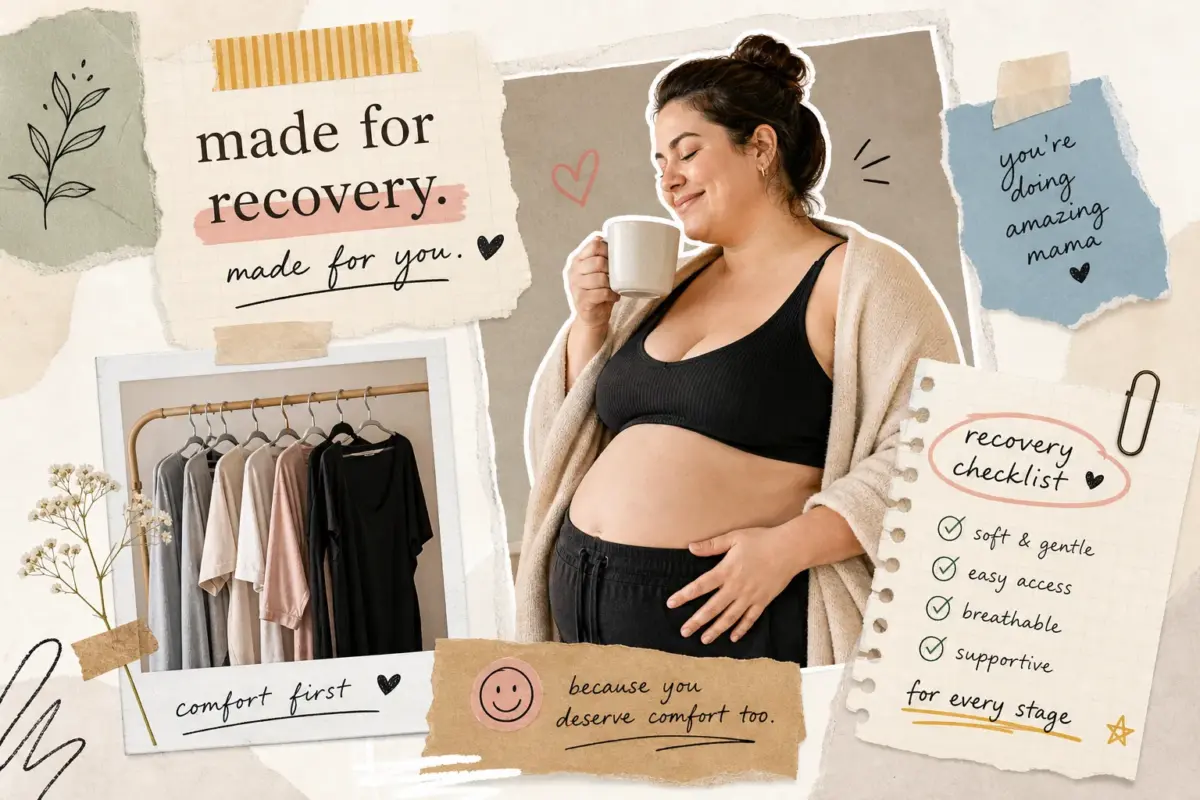
Aim for at least five nursing tops for the first six weeks, and up to seven if you prefer fewer laundry runs. That gives you enough to rotate through without running the washing machine every other day. Build a mix of short-sleeve, long-sleeve, and one or two layering tanks so you can adapt to temperature changes, which are unpredictable during early postpartum. At least two should be dark-colored for daytime reliability when leaks happen. When you’re shopping, look for tops cut specifically for plus-size proportions, a longer torso length and nursing access positioned for a fuller bust make a real difference in daily use. Browse our nursing tops designed for those exact needs.
Nursing bras, nightgowns, and hospital bag essentials
The postpartum chest changes fast, and it changes in ways that are hard to predict. Milk coming in within two to four days of delivery can temporarily increase cup size by one to two cups, which means any nursing bra you pack for the hospital needs an adjustable band and genuine stretch. For extended sizing up to 4X or 5X, several brands offer wire-free nursing bras with solid extended-size options, look for ones with three or more hook positions and a wide, non-binding band. Pack two for the hospital stay and have a third at home for rotation.
When sizing nursing bras ahead of delivery, go one size up from your current bra size. An adjustable band with multiple hook positions gives you room to breathe as your ribcage shifts in the weeks after birth, and you’ll use every one of those adjustment points.
Nightgowns and gowns for the hospital stay and recovery at home
Hospital gowns are functional but cold and impersonal. A soft button-down nightgown or front-snap sleep dress gives you nursing access, warmth during those first vulnerable nights, and more coverage and dignity when visitors come by. Look for nightgowns with a hidden snap placket, a built-in shelf bra or lightly elasticated support, and short sleeves in 100% cotton or modal. For the hospital, one is enough. At home, two to three for the first two weeks will save you from doing laundry when getting dressed already feels like too much.
Sizing matters here: look for gowns cut to extended measurements, not vanity-sized “one size fits most.” A 2X to 4X with a fuller bust and hip cut fits very differently from a standard large stretched to fit.
How to size postpartum clothing when your body is still shifting
If you’re buying ahead for your hospital bag, size up one from your pre-pregnancy size. Postpartum swelling, breast changes, and the softer belly shape in week one mean your pregnancy size is often too snug right after delivery. If you’re buying after delivery, measure your current waist, hips, and bust and use the brand’s extended-size chart rather than assuming your normal number translates across brands.
Check extended-size reviews specifically, not just the overall star rating. Some brands run large and may need sizing down, while others run small in the torso or hips. The information you need is in the reviews from women at your size, not the average.
Fabric stretch and fit by garment type
For leggings, prioritize four-way stretch fabrics. A fabric with limited stretch may feel fine when you’re standing but will bind and pull when you sit, bend, or get up from the couch repeatedly, the opposite of what recovery requires. For nursing bras, band size matters more than cup size in the postpartum period. For nightgowns, err on the side of roomy: a loose fit is always better than a fitted one for sleep comfort and easy nursing access in the dark.
Your complete plus-size postpartum wardrobe checklist
Hospitals provide mesh underwear and gowns, so you don’t need to overpack. Keep your hospital bag lean and targeted:
- 2 nursing bras with adjustable bands
- 1 button-down nightgown or front-snap sleep dress
- 1 comfortable going-home outfit (loose top plus soft-waistband leggings or joggers)
- Optional: your own disposable underwear if you prefer over hospital mesh
That’s genuinely all you need clothing-wise. The hospital handles the rest. For a practical, itemized list you can use to pack your bag, see this hospital bag checklist.
First six weeks at home: quantities by category
This is the list that matters most, because the first six weeks at home are when your wardrobe carries the most weight:
- Underwear: 10 to 15 pairs of high-waisted cotton or modal briefs, or a mix with disposables for weeks one and two
- Nursing bras: 3 total (2 everyday, 1 backup)
- Nursing tops: 5 to 7, with a mix of sleeve lengths and at least 2 dark colors
- Leggings or soft pants: 2 to 3 pairs with soft or foldover waistbands (individual needs vary depending on bleeding, activity level, and laundry frequency)
- Nightgowns or sleep shirts: 2 to 3 with easy nursing access
Dark colors, breathable fabrics, and forgiving waistbands are the three features that matter most across every category on this list.
Building your postpartum wardrobe with confidence
Now you know what clothes to buy for plus-size postpartum recovery, and the answer is more specific than most guides let on. High-waisted underwear that honors your healing body, nursing-accessible tops in extended sizes, adjustable bras that flex with your changing chest. Have enough pieces in each category to get through a full week without a laundry emergency. That’s the practical foundation.
For nursing tops and recovery-friendly basics designed specifically for plus-size bodies, BrasiChic is a natural place to start. The collection is built from the ground up with the sizing, fabric, and access features that matter most during postpartum recovery. You shouldn’t have to search five different stores to find what you need.
Your comfort in those first weeks isn’t a luxury. It’s the foundation for everything else you’re doing, and you deserve clothes that actually support that.
