

Blog
How Long to Wear Compression Stockings After Knee Surgery


Compression stockings are commonly recommended after knee surgery to help reduce swelling, improve blood circulation, and lower the risk of potentially serious complications such as deep vein thrombosis (DVT). Whether you have undergone total knee replacement, partial knee replacement, arthroscopic knee surgery, ligament reconstruction, or another orthopedic procedure, understanding how long to wear compression stockings is an important part of the recovery process.
Many patients ask the same question after surgery: “How long should I wear compression stockings after knee surgery?” The answer depends on several factors, including the type of surgery performed, your overall health, mobility level, risk factors for blood clots, and your surgeon’s recommendations.
This guide explains the purpose of compression stockings, how long they are typically worn after knee surgery, factors that influence wear time, benefits, risks, and best practices for recovery.
Why Compression Stockings Are Used After Knee Surgery
Knee surgery often results in temporary inflammation, reduced mobility, and changes in blood circulation. During recovery, patients tend to spend more time sitting or lying down, which can slow blood flow in the legs.
Compression stockings apply graduated pressure to the lower limbs. The pressure is strongest at the ankle and gradually decreases toward the calf and thigh. This design helps encourage blood to move back toward the heart more efficiently.
Healthcare providers commonly prescribe compression stockings after surgery to:
- Reduce postoperative swelling
- Improve venous circulation
- Lower the risk of blood pooling
- Reduce the likelihood of deep vein thrombosis (DVT)
- Support healing tissues
- Improve comfort during recovery
- Decrease feelings of heaviness or fatigue in the legs
For many patients, compression stockings become a routine part of recovery during the first several weeks after surgery.
Typical Duration for Wearing Compression Stockings After Knee Surgery
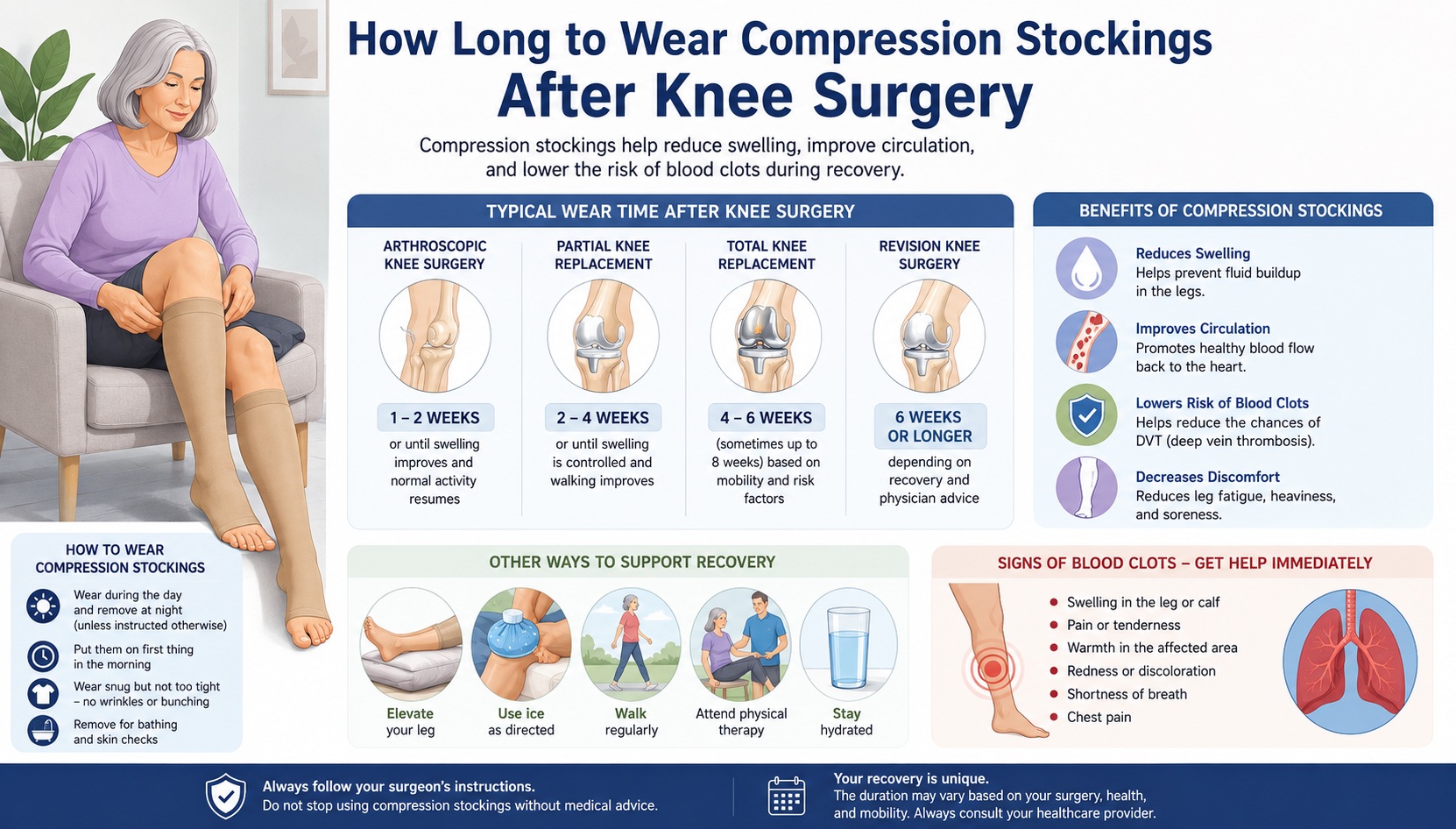
The exact timeline varies among patients, but most orthopedic surgeons recommend wearing compression stockings for approximately 2 to 6 weeks following knee surgery.
General guidelines include:
Arthroscopic Knee Surgery
For minimally invasive procedures such as meniscus repair or diagnostic arthroscopy, compression stockings may be recommended for:
- 1 to 2 weeks
- Until swelling significantly decreases
- Until normal walking activity resumes
Patients who recover quickly and regain mobility early may stop using stockings sooner with physician approval.
Partial Knee Replacement
Patients undergoing partial knee replacement often wear compression stockings for:
- 2 to 4 weeks
- Until postoperative swelling is controlled
- Until walking improves substantially
Total Knee Replacement (TKR)
Total knee replacement typically requires the longest period of compression therapy.
Most surgeons recommend:
- 4 to 6 weeks
- Sometimes up to 8 weeks in higher-risk patients
- Daily use during waking hours
Some orthopedic practices advise wearing them continuously except for bathing and skin checks during the initial recovery period.
Revision Knee Surgery
Revision procedures generally involve more extensive recovery.
Compression stockings may be recommended for:
- 6 weeks or longer
- Until mobility improves significantly
- According to individualized surgeon recommendations
Factors That Influence How Long You Need Compression Stockings
Recovery timelines differ among patients. Several factors determine how long compression stockings should be worn.
Type of Surgery
Major procedures such as total knee replacement usually require longer compression therapy than minimally invasive surgeries.
Larger surgical interventions create:
- More tissue trauma
- Greater inflammation
- Increased swelling
- Higher clotting risk
As a result, compression therapy often continues longer.
Mobility Level:
Patients who return to walking and physical activity sooner may require stockings for a shorter duration.
Individuals who:
- Spend prolonged periods sitting
- Have difficulty walking
- Use assistive devices extensively
may need longer use.
Age:
Older adults often have slower circulation and longer healing times. Surgeons may recommend extended compression therapy for elderly patients.
History of Blood Clots:
Patients with previous DVT or pulmonary embolism typically require additional precautions.
Compression stockings may be worn longer if there is:
- Personal history of blood clots
- Family history of clotting disorders
- Known thrombophilia
Obesity:
Excess body weight increases pressure on leg veins and raises the risk of postoperative complications.
Many surgeons recommend longer compression use in patients with obesity.
Swelling Severity:
Persistent swelling often indicates a need for continued compression therapy.
If swelling remains significant after several weeks, your healthcare provider may recommend ongoing use.
Why Preventing Blood Clots Matters
One of the primary reasons compression stockings are prescribed after knee surgery is to reduce the risk of deep vein thrombosis.
DVT occurs when a blood clot forms in a deep vein, usually in the calf or thigh.
Risk factors after surgery include:
- Reduced mobility
- Tissue injury
- Increased clotting activity
- Older age
- Obesity
- Smoking
- Previous blood clots
If a clot breaks loose and travels to the lungs, it can cause a pulmonary embolism, a potentially life-threatening condition.
Symptoms of DVT may include:
- Leg swelling
- Warmth in the affected area
- Pain or tenderness
- Skin discoloration
Symptoms of pulmonary embolism may include:
- Sudden shortness of breath
- Chest pain
- Rapid heartbeat
- Dizziness
Patients experiencing these symptoms should seek immediate medical attention.
How Many Hours Per Day Should You Wear Compression Stockings?
Most surgeons recommend wearing compression stockings throughout the day.
Typical recommendations include:
- Wear them immediately after waking
- Keep them on during daily activities
- Remove them before bedtime if instructed
- Reapply the next morning
Some surgeons may recommend wearing stockings day and night during the first postoperative days.
Always follow your surgeon’s specific instructions.
Can You Sleep in Compression Stockings?
Whether you should sleep in compression stockings depends on your surgeon’s instructions and the type of stockings prescribed.
Many patients are instructed to:
- Wear stockings continuously during the first few days
- Remove them briefly for hygiene and skin inspection
- Continue overnight wear initially
After the early recovery period, patients are often advised to remove stockings while sleeping.
Because recommendations vary, always follow the guidance provided by your orthopedic team.
Benefits of Wearing Compression Stockings Consistently
Patients sometimes stop wearing compression stockings because they feel uncomfortable or inconvenient. However, consistent use provides several important benefits.
Reduced Swelling
Compression stockings help prevent excess fluid accumulation in the tissues.
Many patients notice:
- Less ankle swelling
- Less calf swelling
- Improved comfort
- Better mobility
Improved Circulation
Graduated compression supports healthy venous blood flow back toward the heart.
Better circulation can contribute to improved healing and reduced complications.
Less Leg Fatigue
Patients frequently report that their legs feel lighter and less tired when wearing compression stockings.
Better Physical Therapy Participation
Reducing swelling and discomfort can make rehabilitation exercises easier to perform.
Successful physical therapy is essential for restoring knee function.
Lower Risk of Venous Complications
One of the greatest benefits is reducing the likelihood of postoperative venous issues such as DVT.
Choosing the Right Compression Level
Compression stockings are available in different pressure levels measured in millimeters of mercury (mmHg).
Common compression ranges include:
Mild Compression (8–15 mmHg)
Often used for:
- Minor swelling
- Mild fatigue
- Everyday support
Usually not sufficient after major knee surgery.
Moderate Compression (15–20 mmHg)
Commonly recommended for:
- Mild postoperative swelling
- Early recovery support
Medical Compression (20–30 mmHg)
Frequently prescribed after orthopedic surgery.
Benefits include:
- Improved circulation
- Better swelling control
- Enhanced DVT prevention
Higher Compression (30–40 mmHg)
Reserved for specific medical situations under physician supervision.
Patients should only use higher-pressure stockings if recommended by their healthcare provider.
Signs That You May Need Compression Stockings Longer
Some patients benefit from extended use beyond the standard recovery timeline.
Possible reasons include:
- Ongoing swelling
- Persistent leg heaviness
- Limited mobility
- Chronic venous insufficiency
- Previous blood clot history
- Physician recommendation
If symptoms return after discontinuing stockings, discuss this with your healthcare provider.
Potential Problems From Incorrect Use
Compression stockings are generally safe when properly fitted.
However, issues may occur if:
- Stockings are too tight
- Incorrect size is used
- Fabric bunches behind the knee
- Stockings are worn improperly
Potential problems include:
- Skin irritation
- Numbness
- Discomfort
- Pressure sores
- Restricted circulation
Contact your healthcare provider if you experience:
- Severe pain
- Tingling
- Color changes in the feet
- Significant skin irritation
Tips for Wearing Compression Stockings After Knee Surgery
Successful use often depends on proper technique.
Put Them On Early
Apply stockings first thing in the morning before swelling develops.
Smooth Out Wrinkles
Avoid folds or bunching that may create pressure points.
Keep Skin Clean
Wash and dry your legs before applying stockings.
Inspect Skin Daily
Check for:
- Redness
- Irritation
- Blisters
- Pressure marks
Wash Stockings Regularly
Clean stockings maintain elasticity and hygiene.
Replace Worn-Out Stockings
Compression effectiveness decreases over time.
Other Strategies to Reduce Swelling After Knee Surgery
Medical Compression socks work best when combined with other recovery strategies.
- Elevation: Elevating the leg above heart level can help reduce fluid buildup.
- Ice Therapy: Cold therapy helps manage inflammation and discomfort.
- Walking: Frequent walking promotes circulation and reduces clotting risk.
- Physical Therapy: Structured rehabilitation supports recovery and improves mobility.
- Hydration: Proper hydration supports healthy circulation and healing.
- Medication Compliance: Many patients are prescribed blood-thinning medications after surgery. These medications should be taken exactly as directed.
When Can You Stop Wearing Compression Stockings?
Patients can usually stop wearing compression stockings when:
- Their surgeon approves discontinuation
- Swelling has significantly improved
- Mobility has returned to near-normal levels
- Blood clot risk has decreased
Do not stop wearing prescribed compression stockings solely because symptoms improve.
Always follow the timeline recommended by your healthcare provider.
Frequently Asked Questions (FAQ)
How long do most people wear compression stockings after knee replacement surgery?
Most patients wear compression stockings for approximately 4 to 6 weeks after total knee replacement. Some individuals may need them longer based on mobility and clotting risk.
Should compression stockings be worn all day?
In many cases, yes. Patients are often advised to wear them throughout the day and remove them only as directed by their surgeon.
Can compression stockings reduce knee swelling?
Yes. Compression stockings help control fluid accumulation and can significantly reduce swelling throughout the lower leg.
What happens if I stop wearing compression stockings too early?
Stopping prematurely may increase swelling, discomfort, and potentially raise the risk of circulatory complications in some patients.
Are compression stockings uncomfortable?
A properly fitted stocking should feel snug but not painful. Significant discomfort may indicate an incorrect size or fit.
Can I wear compression stockings after the recommended recovery period?
Some patients continue wearing them longer for comfort, swelling management, or chronic vein conditions. Discuss extended use with your healthcare provider.
Should both legs wear compression stockings after knee surgery?
Many surgeons recommend wearing stockings on both legs because circulation and clot prevention remain important throughout recovery.
Can compression socks replace blood-thinning medication?
No. Compression socks and blood-thinning medications serve different purposes and are often used together after surgery.
Conclusion
Compression stockings play an important role in recovery after knee surgery by reducing swelling, improving circulation, and helping prevent serious complications such as deep vein thrombosis. While many patients wear compression stockings for 2 to 6 weeks, the exact duration depends on factors including the type of surgery, mobility level, overall health, and individual risk factors.
Patients recovering from total knee replacement often require the longest period of use, while those undergoing minor arthroscopic procedures may only need compression therapy for a shorter time. Following your surgeon’s instructions, participating in physical therapy, staying active, and monitoring symptoms can help support a safe and successful recovery.
When used correctly, compression stockings are a simple yet highly effective tool that contributes significantly to postoperative healing and long-term knee function.
Disclaimer
This article is for informational and educational purposes only and should not be considered medical advice. Recovery recommendations after knee surgery vary based on individual health conditions, surgical techniques, and physician preferences. Always consult your orthopedic surgeon, healthcare provider, or qualified medical professional regarding the use of compression stockings, medications, rehabilitation programs, and postoperative care.
References
- American Academy of Orthopaedic Surgeons (AAOS). Recovery and rehabilitation guidance following knee replacement surgery.
- National Blood Clot Alliance. Prevention of deep vein thrombosis after orthopedic surgery.
- Centers for Disease Control and Prevention (CDC). Venous thromboembolism and blood clot prevention.
- American College of Chest Physicians (ACCP). Guidelines for prevention of venous thromboembolism in surgical patients.
- National Institute for Health and Care Excellence (NICE). Venous thromboembolism prevention recommendations.
- Society for Vascular Surgery. Compression therapy and venous disease management.
- Journal of Arthroplasty. Research on postoperative swelling management after total knee replacement.
- Journal of Bone and Joint Surgery. Clinical studies involving compression therapy following knee surgery.
- Mayo Clinic. Deep vein thrombosis overview and prevention.
- Cleveland Clinic. Compression stockings and postoperative recovery guidance.
