

Blog
Who Should Wear Stepwell Compression Socks?

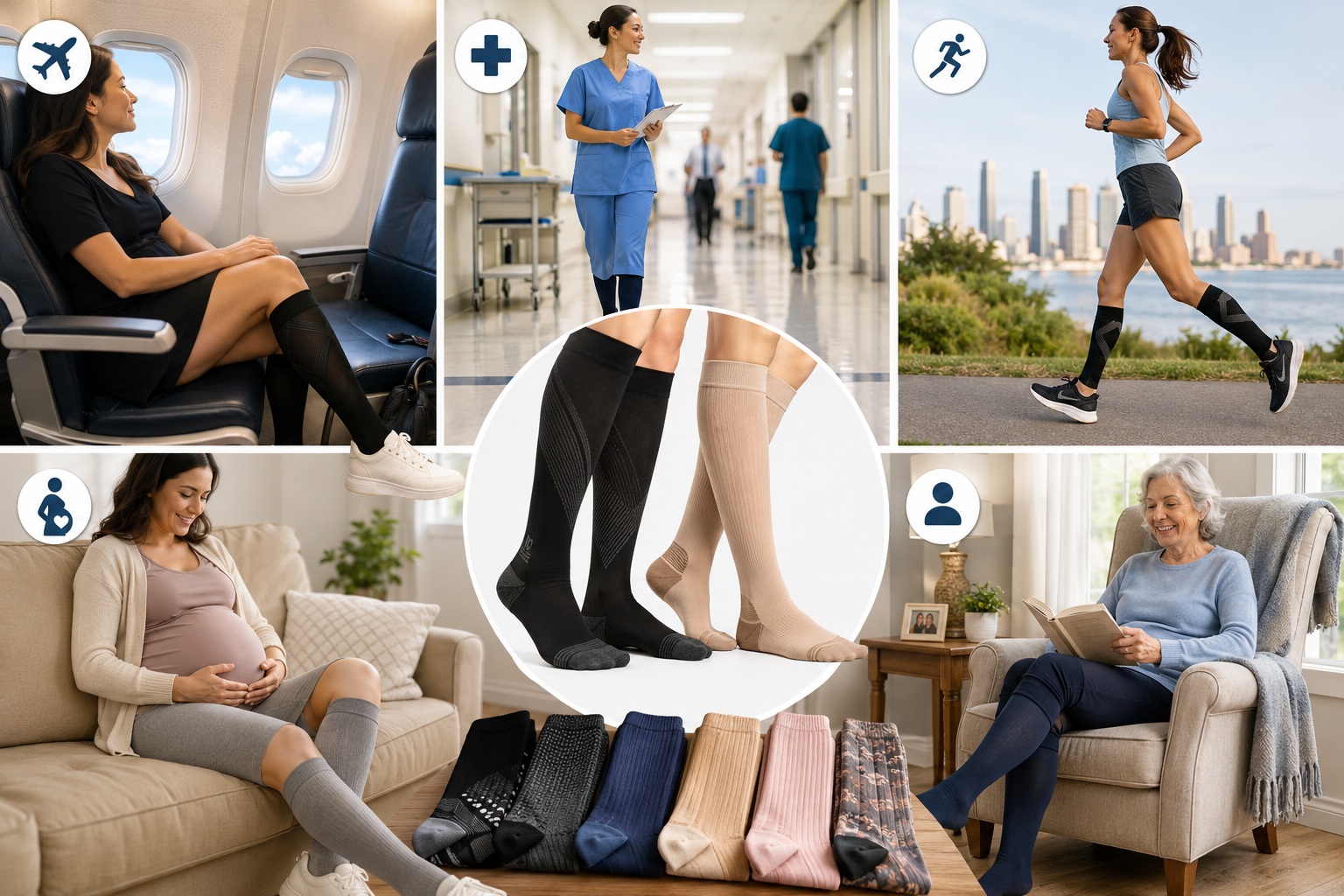
If you’ve ever ended a long day with tired, heavy legs or felt your calves ache after a long run, STEPWELL Bamboo Viscose Compression Socks might be exactly what you need. These socks use graduated compression (tighter at the ankle, gentler up the calf) to support circulation, reduce swelling, and help your legs feel lighter and recover faster. In this friendly, practical guide, we’ll walk through who benefits most from Stepwell Compression Socks, who should take precautions, how to pick the right pair, and tips to get the most from them.
Why Stepwell Compression Socks help
Stepwell Compression Socks apply graduated pressure to your lower leg. That pressure supports the veins and muscle pump that move blood back toward the heart, which helps prevent blood from pooling in the ankles and feet. The result? Less swelling, reduced muscle soreness after activity, and a lighter, more comfortable feeling in your legs. Many people wear compression socks for everyday comfort, travel, athletic recovery, or as a supportive tool during pregnancy or extended standing.
Everyday benefits include:
- Better circulation during long periods of sitting or standing.
- Less visible and physical swelling after travel or long work shifts.
- Faster recovery after workouts due to improved removal of metabolic waste.
- Reduced sensations of heaviness or fatigue in the calves and ankles.
Who should wear STEPWELL Bamboo Viscose Light Compression Socks
- Travelers and frequent flyers: Long flights and road trips put you at risk of prolonged immobility, which can cause swelling and discomfort. Wearing Stepwell Compression Socks during travel supports steady circulation and helps reduce that heavy, puffy feeling when you land.
- People who stand or walk all day: Nurses, teachers, retail workers, servers, hair stylists, and warehouse staff often report aching legs after long shifts. Stepwell socks reduce fluid buildup and support the calf muscles that pump blood upward, making evenings more comfortable.
- Athletes and active people: Runners, cyclists, gym-goers, and weekend warriors use compression socks to support performance and recovery. Stepwell socks help stabilize muscles, reduce vibration during impact, and speed post-workout recovery.
- People who experience mild to moderate swelling: If your lower legs swell after standing, heat, or travel, Stepwell’s moderate compression options can help manage that edema without requiring medical-grade garments.
- People with varicose or spider veins (mild cases): Compression can reduce aching and slow progression of visible veins. For more serious vein disease, consult a healthcare professional about medical treatments and appropriate compression levels.
- Pregnant people dealing with leg fatigue and swelling: Many pregnant people find graduated compression provides comfort and reduces end-of-day swelling. Check with your clinician for personalized guidance.
- Older adults and people with limited mobility: For seniors or those who move less during the day, Stepwell socks support circulation and ease feelings of heavy, tired legs.
Who should be cautious or see a doctor first
Compression socks are helpful for many, but they’re not suitable for everyone. Get medical advice before using compression socks if you have:
- Peripheral arterial disease (PAD), significant arterial insufficiency, or severe peripheral vascular disease.
- Open wounds, severe dermatitis, or active infections on the lower legs.
- Congestive heart failure or serious cardiac conditions (because increased venous return can affect heart load).
- Diabetes with neuropathy and poor circulation; reduced sensation can mask compression-related problems.
- Any uncertainty about the proper compression level—medical-grade strengths (20–30 mmHg and higher) should be used under a clinician’s guidance.
How to choose the right Stepwell Compression Socks
Picking the right socks matters for comfort and effectiveness. Here’s what to consider:
- Compression level (mmHg): For general daily comfort, travel, and mild swelling, light to moderate compression (8–20 mmHg or typically 15–20 mmHg) works well. For more significant symptoms or medical use, a physician may recommend higher levels (20–30 mmHg or 30–40 mmHg).
- Measure for fit: Measure ankle circumference at the narrowest point and calf circumference at the widest point, preferably in the morning before swelling sets in. A proper fit should be snug but not painfully tight or numb-inducing.
- Length: Ankle-length socks suit athletes or casual wear; crew and knee-high socks are best for circulation benefits and travel. Knee-high is the most common choice for full lower-leg support.
- Fabric and features: Choose moisture-wicking, breathable materials with reinforced heels and seamless toes for comfort. Look for flat seams if you’ll wear them all day.
- Style: Stepwell offers neutral tones for professional wear and patterned or colorful options for sport and casual outfits.
How to use Stepwell Compression Socks effectively
Follow these simple steps to get the most from your socks:
- Put them on in the morning before your legs swell.
- Smooth out wrinkles and avoid bunching, which reduces effectiveness.
- Wear them during the activity that causes symptoms — flights, long drives, work shifts, or workouts.
- Start gradually if you’re new to compression: use lighter compression and shorter wear times, then increase as comfortable.
- Wash as instructed to maintain elasticity; replace socks when they lose stretch or show wear (often every 3–6 months with regular use).
Practical scenarios and real user examples
- The frequent traveler: A business traveler who used to land with puffy ankles now slips into Stepwell Compression Socks before takeoff and notices much less swelling on arrival — and more comfortable walking through airports.
- The on-your-feet professional: A nurse who works 12-hour shifts found that wearing knee-high Stepwell socks reduced end-of-shift swelling and leg fatigue, so she’s more comfortable during evenings and can sleep better.
- The weekend athlete: A recreational runner uses ankle-length Stepwell socks for recovery runs and reports reduced muscle soreness the day after hard sessions.
Common myths, debunked
- Myth: “Compression socks will cure varicose veins.” Reality: Compression helps manage symptoms and slow progression but doesn’t remove varicose veins—medical procedures are needed for removal.
- Myth: “Higher compression is always better.” Reality: Too much compression can be uncomfortable or harmful. Use the right level for your needs.
- Myth: “Size doesn’t matter.” Reality: Wrong sizes reduce effectiveness and can cause discomfort. Accurate measurements are important.
Quick buying checklist
- Know your primary need: travel, work, athletic recovery, or medical management.
- Measure ankle and calf in the morning.
- Start with moderate compression if you’re new to compression socks.
- Check product sizing, read reviews, and confirm return policies.
- Replace socks when elasticity fades.
Disclaimer
This article provides general information only and is not medical advice. Compression socks can offer comfort and support for many people, but they are not a substitute for professional medical evaluation or treatment. If you have a medical condition — including circulatory, cardiac, or skin issues — or if you experience pain, numbness, or increased swelling while using compression garments, stop use and consult your healthcare provider for personalized guidance. For specific recommendations about compression levels (measured in mmHg) and whether compression hosiery is appropriate for you, seek advice from a licensed clinician.
If you’re ready to try Stepwell Compression Socks or need help with sizing and style options, visit brasichic.com to browse the collection and find the pair that fits your needs.