
Blog
Thigh High Compression Socks: A Complete Buyer’s Guide

You're halfway through a long shift, or you've just stepped off a flight, and your legs feel puffy, heavy, and a little too warm to think clearly. The hard part isn't just deciding whether compression might help, it's figuring out which length, which pressure, and which fit will stay comfortable on your body. For a lot of people, the core question is simpler than the marketing makes it sound, will thigh high compression socks solve a problem knee-highs can't, or are they just harder to wear?
Table of Contents
- Why Thigh High Compression Socks Deserve a Closer Look
- How Graduated Compression Works
- Thigh High vs Knee High Compression Socks
- Choosing the Right mmHg Level for Your Situation
- Getting the Size Right for Real Bodies
- Keeping Thigh High Socks in Place All Day
- Three Real Scenarios That Bring the Choices Together
- Smart Buying Checklist and Common Questions
Why Thigh High Compression Socks Deserve a Closer Look
A pregnant nurse ending a twelve-hour shift doesn't usually want a lecture on vein mechanics. She wants her legs to stop throbbing, she wants socks that won't slide, and she wants to know whether the taller version is worth the hassle. A traveler stepping off a long flight wants the same thing, just in a different setting, less swelling, less stiffness, and fewer regrets about what they packed.
Thigh-high compression socks are medical-style or support garments that cover the foot and leg up to the thigh, while using pressure to help move fluid and blood upward. They're often chosen by people whose symptoms don't stop at the knee, including pregnant and postpartum wearers, plus-size adults, shift workers, and some people recovering after vein procedures. That doesn't mean they're automatically better than knee-highs, it means the problem might be happening higher up the leg.
Why the length matters so much
The industry often treats length like a style choice, but the body doesn't work that way. If a person's heaviness, swelling, or visible veins live mostly below the knee, a knee-high garment may be enough. If the discomfort, reflux, or varicose veins extend above the knee, a thigh-high can cover more of the affected area and give support where it's needed.
That is where body geometry enters the picture. Thigh-highs are not just longer knee-highs, they have a different fit challenge because the upper leg is wider, softer, and more variable from person to person. A garment that would stay put on one body can roll, pinch, or bunch on another.
Practical rule: start with the body part that hurts or swells most, not with the longest product on the shelf.
You'll usually end up deciding between four things, length, pressure level, sizing approach, and garment features. Once those are clear, the shopping process gets much easier, because you can evaluate the sock against your body instead of against a generic product photo.
How Graduated Compression Works
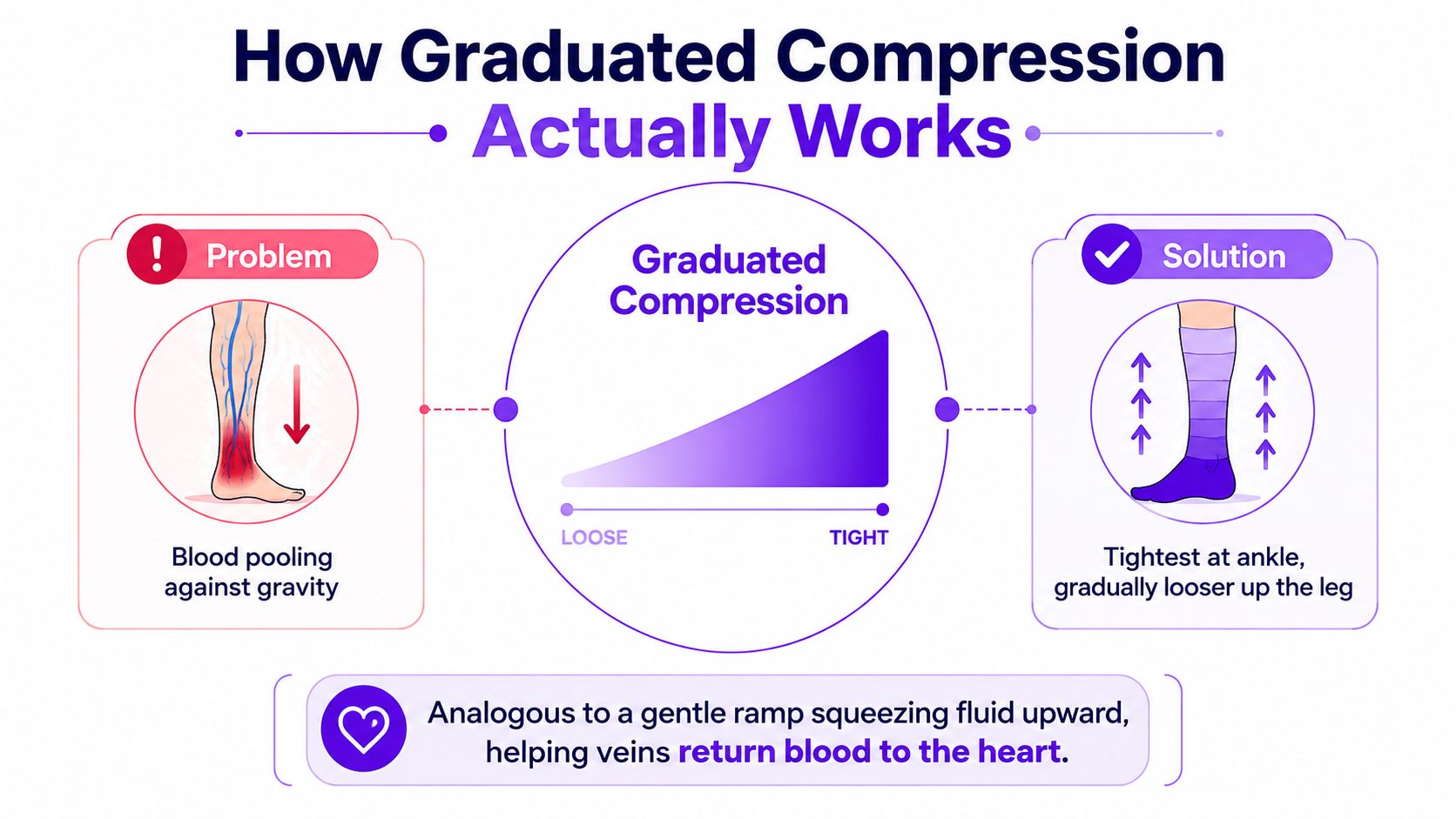
Gravity is the starting point. When you stand, sit for long periods, travel, or move through a long workday without much chance to rest, blood and fluid can pool in the lower legs. Graduated compression works like a gentle ramp, with the strongest pressure at the ankle and less pressure as it moves upward, so the leg gets support that helps move fluid and blood back toward the heart.
What graduated compression means in plain language
Graduated compression means the pressure is not identical across the sock. Expert guidance describes the usual pattern as about 100% of the stated compression at the ankle, ~70% at the calf, and ~40% at the thigh (source guidance). That drop in pressure matters because the goal is not to squeeze the leg evenly from top to bottom. The goal is to support venous return against gravity.
Compression is measured in mmHg, the unit used for pressure in medical and support garments. A pair labeled 20–30 mmHg feels firmer than one labeled 15–20 mmHg, but the label is not a scorecard for toughness. It tells you how much support the garment is designed to provide.
What a firmer pair feels like
A lower-pressure pair usually feels like light, all-day support. A firmer pair feels more structured, especially around the ankle and calf, and it can be harder to pull on. That difference is normal. A garment that feels gentle may be the better choice for comfort or daily wear, while a firmer one may make more sense for swelling control or a more medical level of compression.
A simple way to judge it is by use, not by pride. The strongest option is not automatically the smartest one if it is too hot to wear, too difficult to put on, or likely to slide down during the day.
Fit and pressure have to work together. A sock can be correct on paper and still fail in real life if it rolls at the top, bunches at the ankle, or feels so demanding that you stop wearing it.
Thigh High vs Knee High Compression Socks
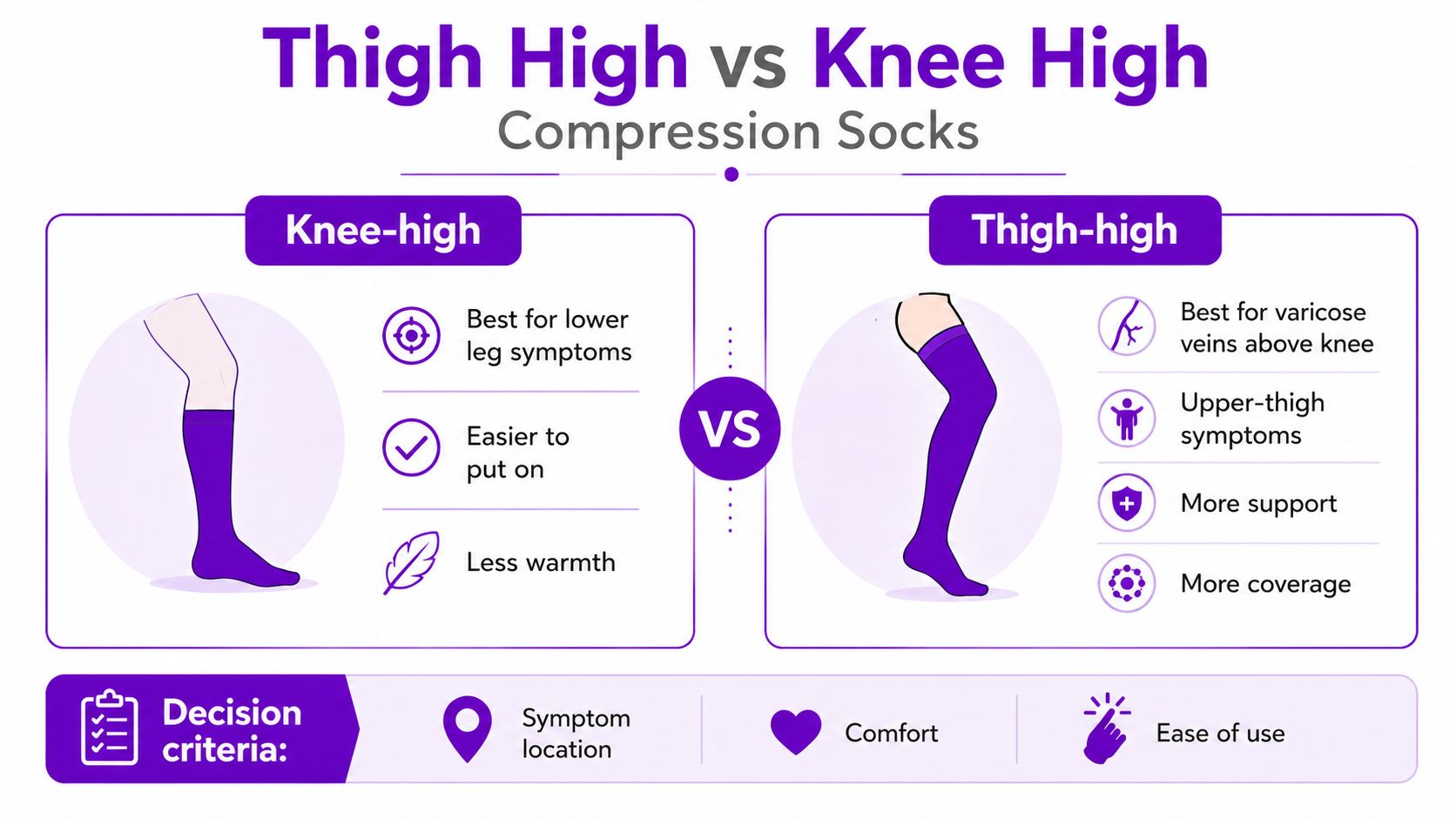
The core question is not which length is “better,” but where the problem starts on the leg. A knee-high pair can be enough when swelling, aching, or vein support needs stay below the knee. A thigh-high pair makes more sense when symptoms extend above the knee, or when the clinician wants support to cover more of the leg. That is why shoppers often get mixed signals from product pages. The right answer depends on body shape, symptom location, and how the sock will be worn day after day.
Where the symptoms actually live
Clinical comparisons have been closer than many buyers expect. A review of patient outcomes found thigh-high stockings were slightly more effective at preventing DVT, but the advantage reached statistical significance in only 1 of 4 studies, and the overall review concluded there was no significant difference between the two lengths for DVT prevention (review). That same body of evidence also included a comparative study that reported DVT in 26.8% of patients using thigh-high stockings versus 38.3% using knee-high stockings during the first 10 days of hospitalization, while still finding the difference not statistically significant, with P = 0.25 (review).
For a first-time buyer, that can sound contradictory. It is more useful to read it as a fit question than a victory contest between two lengths. If veins, swelling, or discomfort sit above the knee, a thigh-high garment can cover the area where support is needed. If the issue stays below the knee, a shorter sock is often easier to live with and simpler to keep on.
Usability can outweigh theory
Knee-high socks are usually easier to pull on, cooler to wear, and less likely to shift during the day. Thigh-high socks cover more of the leg, but that extra coverage can bring more heat, more effort when dressing, and more chances for rolling if the sizing or leg shape is not a good match.
| Decision factor | Knee-high | Thigh-high |
|---|---|---|
| Symptom location | Lower leg symptoms | Above-knee or upper-leg symptoms |
| Ease of use | Usually simpler | More fit-sensitive |
| Warmth | Less coverage, often cooler | More coverage, can feel warmer |
| Real-life priority | Convenience | Full-leg support |
For shoppers comparing pressure levels and coverage together, this 20–30 mmHg compression sock category is a practical place to look at fuller-support options alongside shorter styles. The useful question is not whether thigh-highs sound more medical. It is whether the extra length matches the symptom pattern and the body that has to wear the garment.
Choosing the Right mmHg Level for Your Situation
Pressure level is where many first-time buyers get stuck, because the numbers sound more precise than the choice really is. A useful way to read mmHg is as a support scale, not a scorecard. Lower numbers are easier to wear through a full day, while higher numbers give firmer compression that is more likely to be used with medical guidance.
Matching pressure to the setting
For daily comfort and lighter travel support, mild compression is often the starting point. The source brief notes that 8–15 mmHg is commonly used for travel and everyday wear, while 15–20 mmHg is a familiar range for pregnancy and mild swelling, and 20–30 mmHg is often used for varicose veins, chronic venous insufficiency, and post-procedure support. A 30–40 mmHg garment sits in a prescription-level range and should not be self-selected.
Travel studies help keep expectations grounded. In a Cochrane review of airline passengers, stockings reduced symptomless DVT from 47 cases among those not wearing stockings to 3 cases among those wearing stockings out of 2,637 participants with follow-up data, with an odds ratio of 0.10 and P < 0.001. The same review found a mean difference of −4.72 for leg edema across 1,246 participants in 6 studies (Cochrane review). That supports compression as a useful tool for swelling and travel, but it does not mean every situation calls for the strongest pair.
A simple decision table
| mmHg Range | Typical Use | Who It's For | Clinician Input |
|---|---|---|---|
| 8–15 mmHg | Light travel, daily comfort | People wanting gentle support | Optional |
| 15–20 mmHg | Pregnancy, mild swelling | First-time wearers, lighter support needs | Helpful if symptoms are persistent |
| 20–30 mmHg | Varicose veins, chronic venous insufficiency, post-procedure support | People needing firmer support | Often recommended |
| 30–40 mmHg | Prescription-level compression | More advanced medical needs | Required |
For shoppers comparing pressure levels and coverage together, this 20–30 mmHg compression sock category is a practical place to look at fuller-support options alongside shorter styles.
When to pause and ask before buying
If you are dealing with numbness, severe pain, color changes, open skin issues, or a condition that affects circulation, stop the self-selection process and check with a clinician. Compression should feel snug, not punishing. It should help your day, not create new symptoms.
If you are choosing between two pressures, pick the one you can tolerate for a full day.
Getting the Size Right for Real Bodies
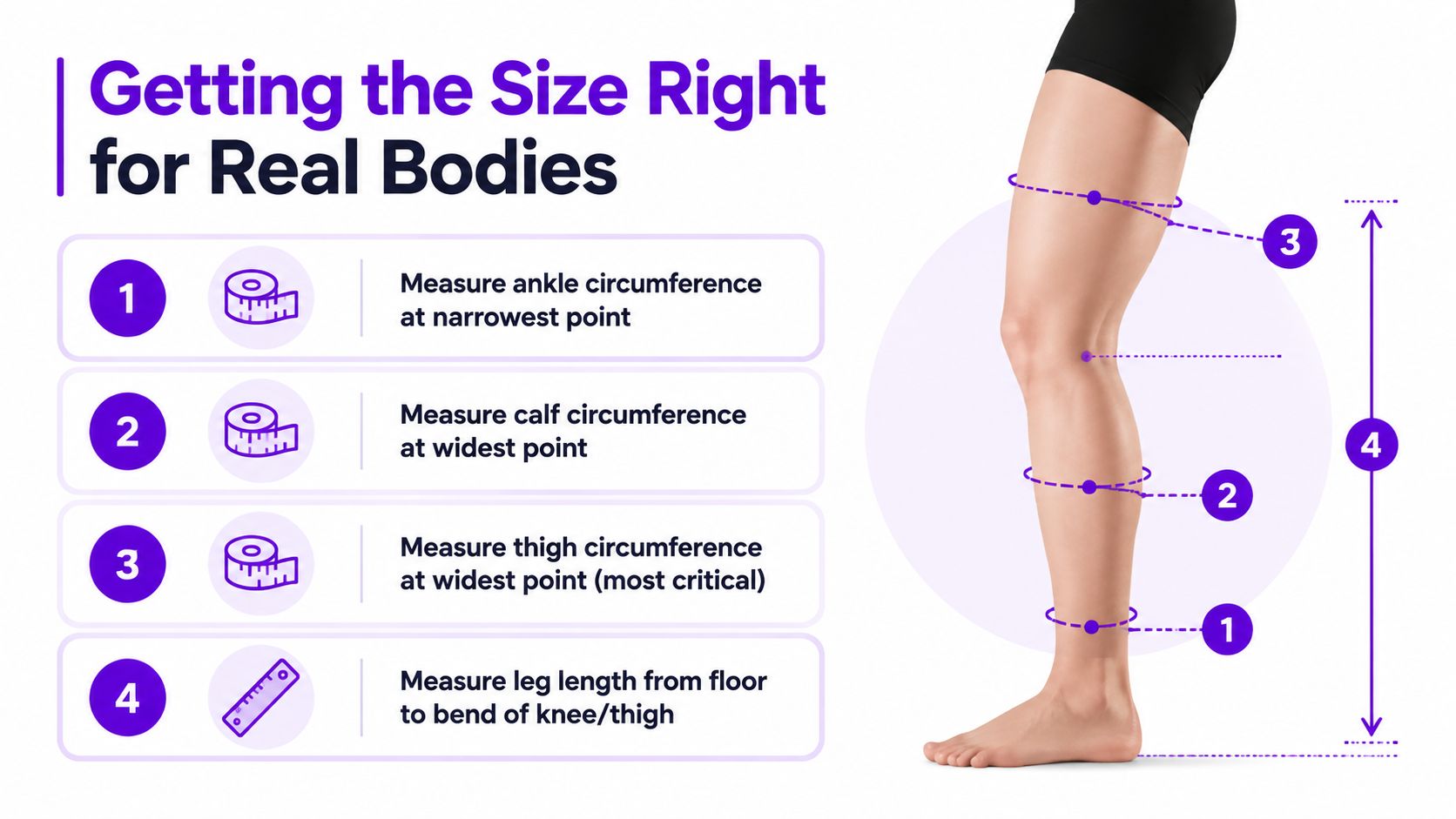
Sizing thigh-highs is less about guessing your clothing size and more about measuring the shape of your leg. Manufacturers specify ankle, calf, and thigh circumferences because the wrong measurement in any one of those places can weaken the gradient, make the top band dig in, or let the sock slide down during the day. For many plus-size and wide-calf shoppers, the thigh measurement is the one that decides whether the pair stays wearable.
The measurement ritual
The cleanest way to do this is to measure snugly, not tightly. Keep the tape close to the skin, but don't compress the tissue while you measure. One medical thigh-high product lists a thigh circumference of 18-1/8 to 27-1/2 inches at 20–30 mmHg with a closed toe and 71% nylon / 25% spandex / 4% silicone construction (product listing).
Use the size chart that matches all of your points, not just the one that's easiest to fit. If your thigh lands outside the range, don't assume a tighter size will “work itself out.” That usually creates rolling, pressure marks, or discomfort at the top.
How to read a chart when your body is not average
A lot of shoppers with fuller thighs or wider calves get trapped by charts that only ask for height and weight. That can work for some garments, but it misses the very thing that makes thigh-highs difficult, the upper-leg transition. If a brand has separate fits for wide calf, plus size, zipper entry, or open-toe construction, those clues matter because they're trying to solve different body shapes, not just different shoe sizes.
The simplest self-check is this:
- Measure all four points first: ankle, calf, thigh, and leg length.
- Compare every number to the chart: don't size by your smallest measurement only.
- Watch the thigh zone closely: if the top band would sit on soft tissue and not stay flat, the fit is probably wrong.
- Respect the garment's intended range: if your numbers sit at the edge, ask whether a different design would work better.
For readers looking for a broader maternity-and-support apparel context, Brasi Chic's compression sock collection for moms is one example of a retailer organizing options around support needs and body changes. The more important point is not the brand, it's the fit logic. Thigh-highs succeed when the measurements fit the leg you have.
Keeping Thigh High Socks in Place All Day
The most common complaint about thigh-highs is not that they fail to compress. They slide down, fold over, or start to bite into the upper thigh after a few hours. That is usually a fit and leg-shape problem, not a matter of willpower. If the top band and your upper leg do not match well, pulling harder only makes the problem worse.
What helps them stay in place
Silicone grip bands are common because they help the garment hold without needing extreme tightness. Some designs also use knit-in support, zipper entry, or an open-toe shape that can make dressing easier, especially for pregnant, postpartum, or plus-size wearers. The aim is to reduce friction and improve hold, not to squeeze a larger upper leg into a smaller garment.
Material matters too. Bamboo viscose and copper-infused knits appear in some product lines because some wearers want a different feel against the skin, especially when heat or sweat makes a standard synthetic knit less comfortable. Those materials do not change the prescribed pressure level on their own, but they can affect whether you will keep the socks on long enough to get the benefit.
Fit features worth paying attention to
- Silicone grip bands: useful when the top band needs gentle hold without extra tightness.
- Zipper entry: helpful for people who struggle pulling a snug garment over the leg.
- Open-toe designs: can improve comfort if toe coverage feels crowded.
- Wide-calf or wider-thigh cuts: more forgiving for fuller legs and pregnancy-related shape changes.
A garment can still cause problems if it wrinkles, bunches, or squeezes the top band too much. The solution is not to buy the tightest version possible. The better choice is a sock that matches the upper leg without creating a pinch point.
The same idea applies to pregnancy and postpartum fit questions, where the upper leg can change shape faster than the rest of the body. For shoppers comparing support options around swelling, Brasi Chic's pregnancy swelling resource is one example of how brands group products by use case.
Fit beats force. If a sock stays up only because it is digging in, it is not the right sock.
Three Real Scenarios That Bring the Choices Together
A pregnant teacher, a postpartum warehouse worker, and a traveler with varicose veins can all buy compression socks, but they won't buy the same pair for the same reason. The useful part is seeing how the same decision rules shift when the body, schedule, and symptom pattern change.
A teacher on her feet all day
A first-trimester teacher who wants classroom comfort usually doesn't need to overbuy on pressure. If swelling is mild and the discomfort sits below the knee, a lower or mid-range option may be easier to wear through the school day. If she notices upper-leg heaviness or thigh pressure, a thigh-high can make sense, but only if the sizing chart fits her thigh.
A postpartum warehouse worker returning to shifts
A postpartum warehouse worker has a different issue, because long standing, lifting, and heat make wearability as important as support. She may benefit from firmer compression if swelling is persistent, but she'll want to pay special attention to donning effort, grip bands, and whether a wide-calf or open-toe design makes the garment realistic for a full shift. For pregnancy and swelling-focused shoppers, Brasi Chic's pregnancy swelling resource is one example of a retailer grouping support options around this use case.
A traveler with varicose veins
Someone flying long-haul with varicose veins has to think about where the veins are, not just that travel is involved. If symptoms are below the knee, knee-highs may be sufficient and easier to live with. If the veins extend above the knee, or if a clinician wants full-leg coverage, thigh-highs become more sensible, especially in a firmer range that matches the symptom pattern.
The common thread is simple. Length follows symptom location, pressure follows medical need, and fit decides whether the pair gets worn at all.
Smart Buying Checklist and Common Questions
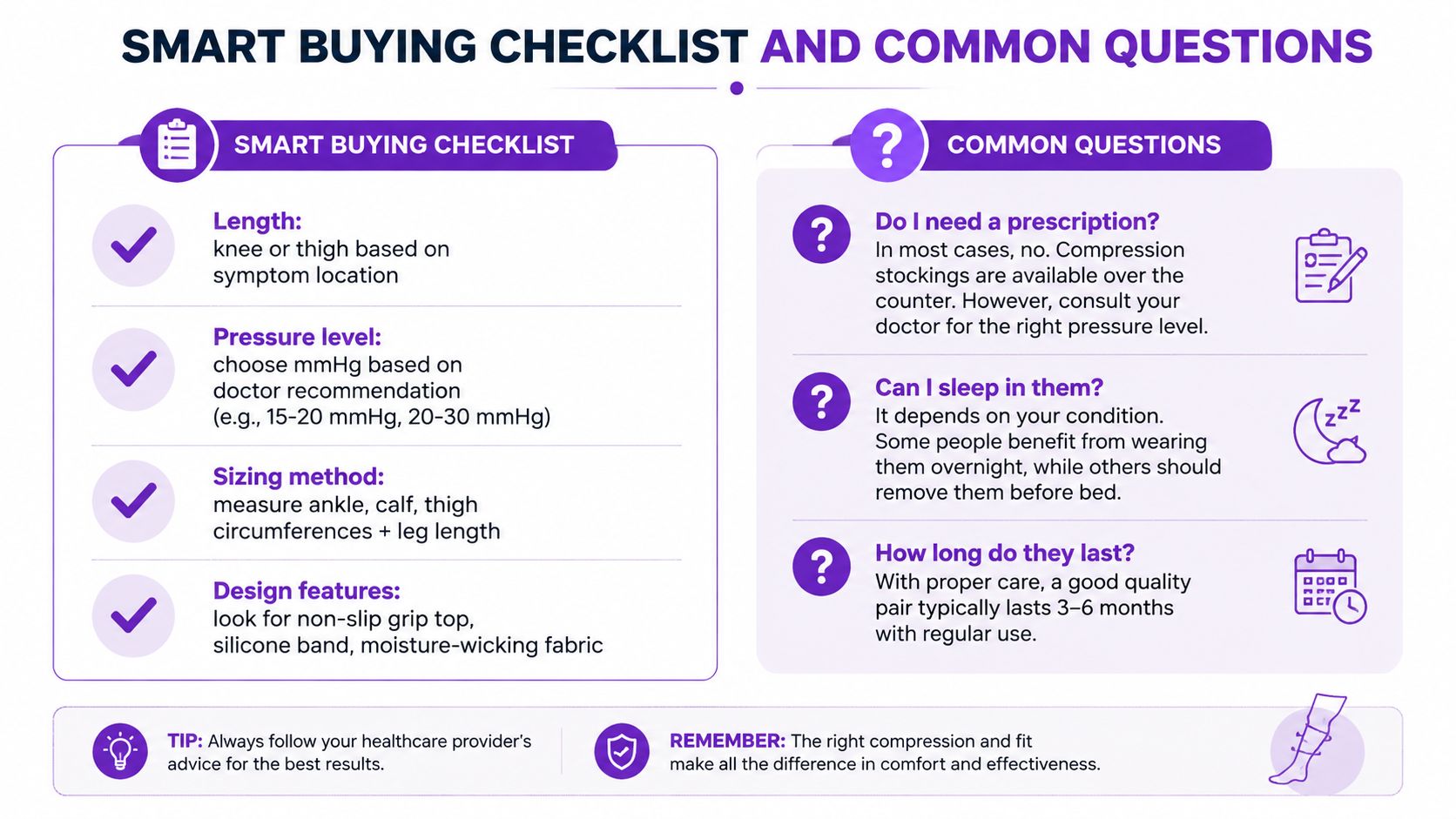
A first-time buyer usually gets better results by checking fit before style. A pair can look right on the shelf and still fail on a real leg, especially if the leg is fuller at the thigh, the wearer is pregnant, or the swelling sits higher than the knee.
Use this short checklist before you decide:
- Length: choose knee-high or thigh-high based on where the symptoms live. If discomfort stays below the knee, a shorter sock often makes daily wear easier. If heaviness reaches the thigh, a thigh-high may match the problem better.
- Pressure level: match mmHg to the reason you're wearing them, and don't self-select prescription-level compression. Higher support is not a casual upgrade, it should match a real need.
- Sizing method: measure ankle, calf, thigh, and leg length, then compare every point to the chart. A thigh-high is only useful if the top band and the full leg dimensions work together.
- Design features: look for non-slip grip tops, silicone bands, moisture-wicking fabric, zipper entry, or open-toe options if your body needs them. These details matter when putting the sock on is the hardest part of the day.
Common questions
Do I need a prescription?
Not always. Lower support ranges are often sold without one, but firmer compression and certain medical situations should be guided by a clinician.
Can I sleep in them?
Do not wear compression to bed unless a doctor says otherwise. Compression is usually a daytime tool, meant to work while you are upright and moving.
How long do they last?
That depends on use, washing, and fabric care. If they start losing structure, slipping, or no longer feel evenly supportive, it is time to reassess the pair.
How do I know if they fit badly?
Persistent rolling, deep marks, pinching at the top band, numbness, or pain usually points to a sizing or pressure mismatch, not just a break-in period. A sock that slides down all day is telling you something about the shape of the leg, not just the brand.
What helps them stay in place
The top band does most of the work, but it cannot fix a mismatch by itself. A thigh-high stays up when the thigh measurement, leg length, and band design all fit the wearer's body, the same way a belt only stays useful when it matches the waist instead of the hips.
Pregnancy, postpartum changes, and plus-size legs can change where a sock wants to settle. A wider upper leg may need a different top band, and a shorter torso with fuller thighs may make a thigh-high bunch even if the compression level is right. That is why two people can choose the same mmHg and still need different constructions.
If your symptoms are changing, spreading, or accompanied by skin color changes, numbness, or strong pain, stop guessing and talk with a clinician before buying another pair.
Brasi Chic offers compression socks for women in multiple pressure levels, plus wide-calf, open-toe, and zipper styles that are useful when fit is the main problem, not just compression strength. If you're comparing thigh-high options for pregnancy, postpartum wear, or long days on your feet, visit Brasi Chic and use the sizing and support features to narrow the choice to something your body can tolerate.