

Blog
Compression Socks for Pregnancy Swelling: Best Picks for Swollen Ankles

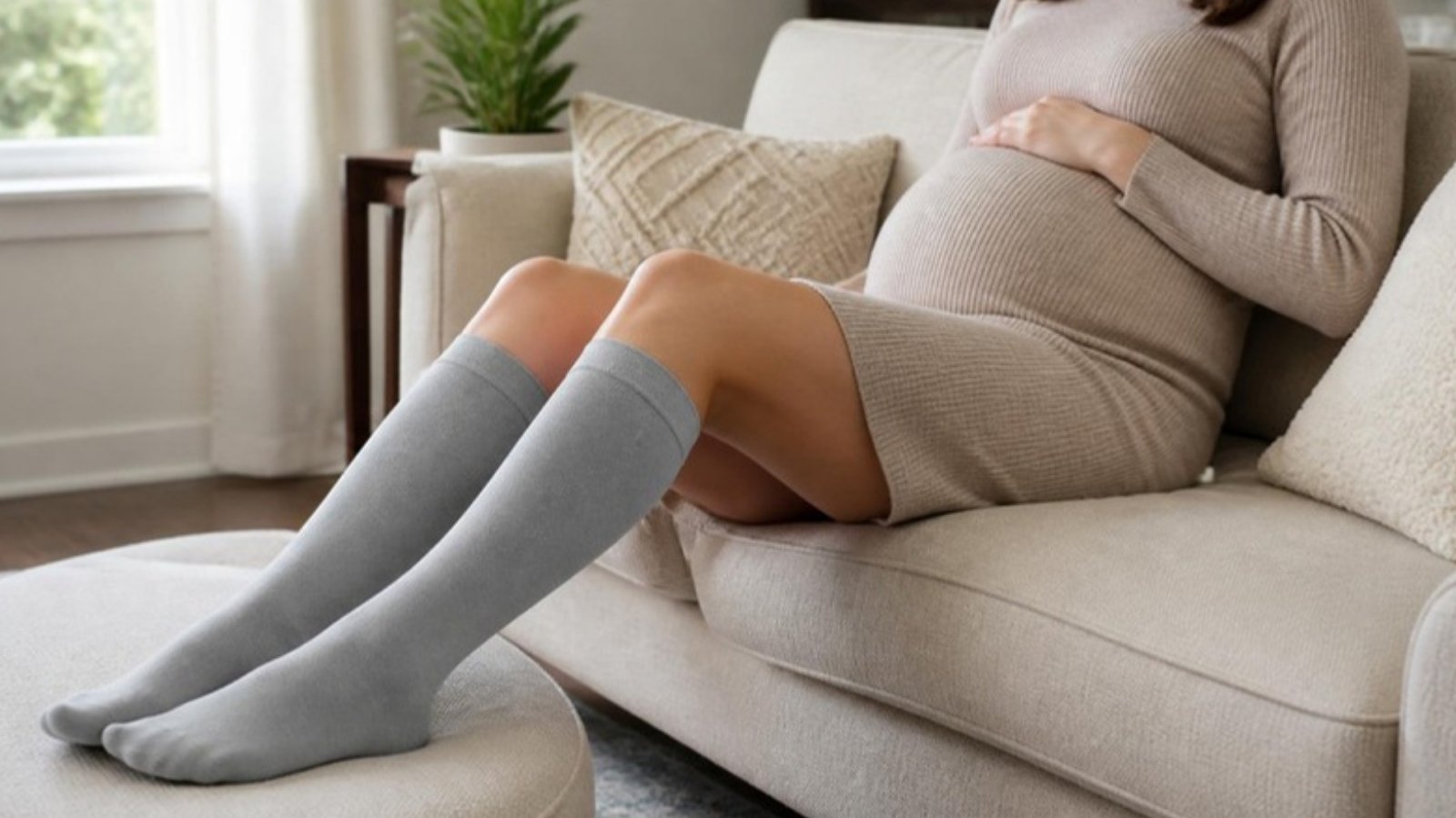
The best compression socks for pregnancy swelling are graduated, knee-high socks in the 15–20 mmHg range that fit your measured ankle and calf, feel comfortable enough to wear from morning until evening, and are easy for you to put on as your bump grows. For most pregnant women with ordinary end-of-day ankle swelling, that moderate level is the practical starting point. Firmer 20–30 mmHg socks are better chosen with your OB or midwife, and sudden swelling, especially in the face or hands, needs a call to your care team rather than a new pair of socks.
This guide explains why ankles swell in pregnancy, what the research does and does not show about compression, and the features that separate a sock you will actually wear every day from one that stays in the drawer. You will also find three BrasiChic pairs that match these criteria.
Why Do Ankles Swell During Pregnancy?
Mild swelling of the feet and ankles is one of the most common pregnancy complaints, and it usually builds as the day goes on. NHS guidance explains that the body holds more water than usual during pregnancy, and that extra fluid tends to gather in the lowest parts of the body, especially in hot weather or after long periods of standing.
The growing uterus also plays a role. As it enlarges, it can press on the blood flow in the legs, which makes it harder for fluid to move back up toward the heart. The result is the familiar pattern many moms notice: socks leave deep marks by late afternoon, shoes feel tighter, and the ankles look puffier than they did in the morning.
Common triggers that make ordinary pregnancy swelling worse include:
- Standing for long stretches, such as retail, teaching, nursing or salon shifts
- Sitting still for hours at a desk, in a car or on a flight
- Hot, humid weather
- Later stages of pregnancy, when the uterus is largest
When Swelling Is Not Normal
Before shopping for socks, it is worth knowing which kinds of swelling need medical attention instead.
NHS guidance advises contacting your midwife, doctor or maternity unit right away if you notice a sudden increase in swelling in your face, hands or feet, especially together with a very bad headache, vision problems such as blurring or flashing lights, severe pain just below the ribs, or feeling very unwell. These can be signs of pre-eclampsia, a pregnancy condition that needs prompt monitoring.
Swelling in only one leg is another warning sign. The CDC notes that pregnancy raises the risk of blood clots about fivefold, and that the higher risk continues through childbirth and the three months after delivery. Signs of a deep vein thrombosis (DVT) in the leg include swelling in that leg, pain or tenderness not caused by an injury, and skin that feels warm, looks red or is discolored. If you notice these signs, contact a doctor promptly. Compression socks are not a treatment for a suspected clot.
Do Compression Socks Help Swollen Ankles During Pregnancy?
Graduated compression socks apply the most pressure at the ankle and gradually less up the leg. The idea is simple: gentle, even pressure from the outside supports the veins and helps limit how much fluid pools around the ankles during the day.
The research picture is encouraging but limited:
- A Cochrane review of interventions for leg swelling and varicose veins in pregnancy (2015) found seven small trials involving 326 women. Its single trial comparing compression stockings with rest found no significant difference in lower leg volume, and the reviewers concluded there is not enough high-quality evidence on treatments for leg swelling in pregnancy.
- A later randomized controlled trial of 60 pregnant women in Brazil, published in 2022, reported that women who wore compression stockings had much smaller increases in calf and ankle measurements over their pregnancy than women who did not. Every woman in the stocking group reported a difference in leg symptoms and said she would wear them again, although about a third found them somewhat difficult to wear and one in five needed help putting them on.
- Cleveland Clinic notes that a healthcare provider may suggest compression socks during pregnancy, because blood can pool in the legs when you are less active.
In short, compression socks are a reasonable, low-risk comfort tool for many pregnant women with ordinary swelling, alongside movement, rest with your feet up and comfortable shoes. They do not cure swelling, and they do not replace prenatal care.
What Compression Level Is Best for Pregnancy Swelling?
Compression is measured in millimeters of mercury (mmHg). The number tells you how firmly the sock presses at the ankle. Cleveland Clinic describes four common levels:
| Compression level | Pressure | How it is typically used during pregnancy |
|---|---|---|
| Mild | 8–15 mmHg | Light everyday support; a gentle first pair if you are new to compression |
| Moderate | 15–20 mmHg | The usual starting point for everyday ankle swelling, long shifts and travel |
| Firm | 20–30 mmHg | Stronger support; best chosen with your OB or midwife, especially if swelling is more pronounced or you have varicose veins |
| Extra firm | 30–40 mmHg | Usually prescription-only and used under a doctor’s supervision |
For most moms-to-be, 15–20 mmHg is the sweet spot: firm enough to notice by evening, but comfortable for a full day. If you are considering 20–30 mmHg, or you have a history of blood clots, vein disease or any circulation problem, ask your provider which level suits you before buying.
How to Choose the Best Compression Socks for Pregnancy Swelling
The right pair depends less on the brand and more on a handful of practical features. Use this checklist when you compare options.
1. Graduated, clearly labeled pressure
Look for socks that state a specific mmHg range rather than vague terms such as “light support.” Graduated compression, tightest at the ankle, is the design used for swelling.
2. Knee-high length for everyday wear
Knee-high socks cover the ankle and calf, where pregnancy swelling usually shows up, and they are much easier to pull on over a growing bump than thigh-high stockings or maternity tights. They also work under pants, leggings and long dresses.
3. A fit based on your measurements
Size charts for compression socks are usually based on ankle and calf circumference, not just shoe size. Measure first thing in the morning, before swelling builds, and re-measure later in pregnancy if your legs change. If you fall between sizes or your calves are wide, choose a wide-calf style rather than forcing a standard pair.
4. Breathable, stretchy fabric
Nylon and spandex blends give compression socks their recovery and shape, while polyester and cotton blends add softness. Pregnancy can make you feel warmer, so breathable knits and moisture-wicking fabrics make all-day wear more pleasant.
5. A comfortable top band and smooth seams
A top band that digs into the calf can feel worse than no sock at all. Look for a wide, soft cuff, a reinforced heel that keeps the sock in place, and flat or smooth toe seams to reduce rubbing.
6. Ease of putting them on
If bending is getting harder, an easier-to-don sock matters. Moderate compression is generally easier to pull on than firmer levels. Turning the sock inside out to the heel, then rolling it up the leg, helps a lot.
7. Enough pairs to rotate
Compression socks work best when you wear them most days, so having at least two pairs lets you wash one while wearing the other. Multi-pair packs can also lower the cost per pair.
Our Picks: Compression Socks for Swollen Ankles at BrasiChic
These three pairs from BrasiChic match the checklist above. Specifications come from each product page; prices were the starting prices at publication and can change.
Best everyday pick: 15–20 mmHg knee-high socks for swollen ankles
Our 15–20 mmHg compression socks for swollen ankles are a good first pair for typical end-of-day swelling. They offer:
- 15–20 mmHg graduated, knee-high compression
- Nylon, polyester and spandex knit with stretch
- Reinforced heel and smooth stitching to reduce slipping and chafing
- Sizes S, M, L and XL in six colors, including blue, light gray, dark gray and rose red
- One pair per order, starting at about $6 at publication
Best for: moms who stand or walk a lot, work long shifts, or simply want moderate support from morning to evening.
Best for patterned everyday wear: 15–20 mmHg knee-high pregnancy socks
The BrasiChic Compression Socks for Restless Legs During Pregnancy offer the same moderate 15–20 mmHg knee-high compression in a soft, breathable stretch blend, with a wide choice of colors and patterns. Sizes come in S–M and L–XL, starting at about $6 at publication. They are a good way to build a rotation so you always have a clean pair ready.
Best for: moms who want several fun designs for daily wear at work, at home or while traveling.
Best for wide calves: plus size 20–30 mmHg knee-high socks
The BrasiChic Plus Size Compression Socks for Pregnancy are designed with wide-calf stretch in a breathable polyester knit. They are labeled 20–30 mmHg, which is firm compression, so check with your OB or midwife that this level is right for you. They come in sizes XXL to 5XL, as single pairs or three-pair sets, starting at about $9 at publication.
Best for: plus size moms and anyone whose calves feel squeezed by standard compression socks, once a provider has confirmed firm compression is appropriate.
You can compare these and other options in our maternity compression sock collection.
How to Wear Compression Socks During Pregnancy
A few habits help you get the most comfort from your socks:
- Put them on in the morning, before swelling has a chance to build. Cleveland Clinic recommends this timing.
- Smooth out wrinkles so pressure stays even, and make sure the heel sits in the heel pocket.
- Do not fold or roll down the top band, because it can create a tight ring around the leg.
- Take them off at bedtime. Cleveland Clinic advises against sleeping in compression socks, apart from short naps.
- Keep moving. Short walks and simple ankle exercises, such as flexing each foot up and down and rotating it in circles, help circulation, according to NHS guidance.
- Rest with your feet up when you can, and choose comfortable shoes without tight straps.
Remove your socks and contact your provider if you notice pain, numbness, tingling, skin color changes or skin damage, or if your swelling gets worse.
Who Should Check With a Doctor First?
Compression is not right for everyone. Cleveland Clinic advises avoiding compression socks if you have open wounds, skin infections or very fragile skin, and talking with a provider first if you have:
- Sudden or severe swelling, or swelling linked to heart or kidney disease
- Peripheral artery disease or other circulation problems
- Reduced feeling in your legs or feet, such as from neuropathy
It is also wise to check with your OB or midwife before choosing 20–30 mmHg socks, or if you have had blood clots or vein problems in the past.
Caring for Your Compression Socks
Follow the care instructions that come with each pair. Gentle washing and air drying generally help the elastic fibers keep their stretch longer. NHS orthotic guidance suggests replacing compression hosiery about every six months, or sooner if it develops a run or no longer holds its shape, since worn-out socks lose pressure. Because your legs can change during pregnancy and after birth, re-check your size if your socks start to feel too loose or too tight.
Frequently Asked Questions
Can I wear compression socks all day while pregnant?
Many women wear them from morning until evening. Put them on soon after getting up and take them off before bed. If they cause pain, numbness or marks that do not fade, take them off and ask your provider.
Should I keep wearing compression socks after giving birth?
The CDC notes that the higher blood clot risk of pregnancy continues for about three months after delivery. Some women keep wearing their compression socks postpartum for comfort, but ask your provider what is right for your recovery, especially after a cesarean birth.
Are compression socks good for flying while pregnant?
Long flights and car rides mean hours of sitting, which can make swelling worse. Many women wear moderate compression socks when traveling, along with walking the aisle and flexing their ankles. Ask your provider about travel plans, especially later in pregnancy.
What is the difference between compression socks and maternity support tights?
Knee-high socks support the ankles and calves and are easier to put on. Maternity compression tights also cover the thighs and have a stretchy belly panel, which some women prefer for varicose veins higher up the leg. For ankle swelling alone, knee-high socks are usually enough.
The Bottom Line
For swollen ankles during pregnancy, start with graduated, knee-high compression socks at 15–20 mmHg, sized to your morning ankle and calf measurements, in a breathable fabric with a comfortable top band. Wear them from morning until evening, keep moving, and rest with your feet up when you can. Choose firmer 20–30 mmHg socks only with your provider’s guidance, and call your care team right away about sudden swelling, one-sided leg swelling or warning signs of pre-eclampsia.
Want to understand more about how compression works for this common symptom? Read how compression socks help swollen ankles during pregnancy.
This article is for general information and is not a substitute for advice from your OB, midwife or doctor.
References
- NHS. Swollen ankles, feet and fingers in pregnancy. nhs.uk.
- Centers for Disease Control and Prevention (CDC). Pregnancy and blood clots. cdc.gov.
- Smyth RMD, Aflaifel N, Bamigboye AA. Interventions for varicose veins and leg oedema in pregnancy. Cochrane Database of Systematic Reviews, 2015.
- Saliba-Júnior OA, Rollo HA, Saliba O, Sobreira ML. Positive perception and efficacy of compression stockings for prevention of lower limb edema in pregnant women. Jornal Vascular Brasileiro, 2022.
- Cleveland Clinic. Everything you need to know about compression socks. health.clevelandclinic.org.
- Sherwood Forest Hospitals NHS Foundation Trust. Compression hosiery: information for patients. sfh-tr.nhs.uk.