

Blog
Best Affordable Compression Socks: Bamboo Pairs Under $30 Worth Buying

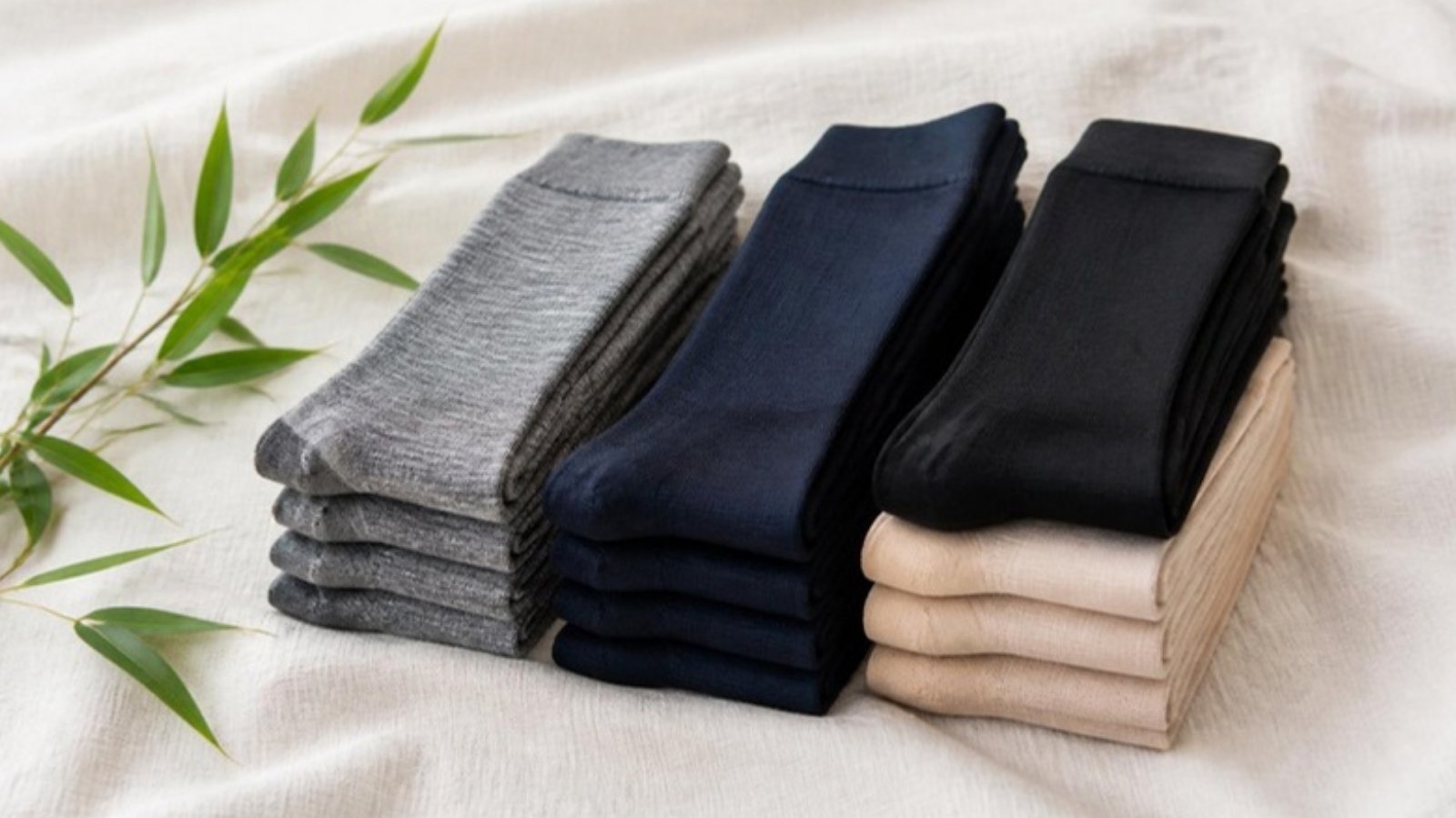
Quick answer: The best affordable compression socks in bamboo viscose give you a clearly stated pressure range (usually 15–20 mmHg for everyday wear), an honest fiber label, a size chart based on your ankle and calf, and enough pairs in the pack to rotate. Under $30, multi-pair packs are where the value is: at publication, our lowest cost-per-pair bamboo options worked out to roughly $4.50–$8.50 per pair, compared with paying the full $30 or more for a single pair.
Price alone does not make a sock a good deal. A cheap pair that is the wrong size, loses its stretch in a few weeks or never states its compression level costs you more in the long run. This guide explains how to judge value in bamboo compression socks, what a sub-$30 budget can realistically buy, and three budget-friendly packs from the BrasiChic catalog that are worth a closer look.
What “best value” means for bamboo compression socks
Value is the combination of what you pay, how long the socks keep working and how well they fit your legs. For compression socks, four things matter more than the price tag:
- Cost per pair, not cost per pack. A $17 three-pack and an $18 four-pack look almost identical on a price list, but one costs about $5.67 per pair and the other about $4.50.
- A stated pressure range. Look for a specific mmHg number, such as 8–15 or 15–20 mmHg. A listing that only says “compression” without a range gives you no way to compare products.
- Real sizing information. Good listings size by ankle and calf circumference or by a clear chart. Socks that are too tight dig in; socks that are too loose do not deliver the stated pressure.
- Enough pairs to rotate. Compression socks are usually washed after each wear. With only one pair, you either wear them unwashed or go without. Multi-packs solve that problem.
When you weigh these four points together, multi-pair bamboo packs in the $15–$30 range often beat single “premium” pairs on everyday value, especially if you wear compression socks most days of the week.
What you can expect from bamboo compression socks under $30
Most affordable bamboo compression socks sold in the U.S. share a similar recipe: a knit made mostly from viscose (rayon) derived from bamboo, blended with nylon and spandex for stretch and recovery. Here is what a budget of up to $30 typically gets you:
| What you get | Typical under-$30 option | What to check |
|---|---|---|
| Pairs per pack | 2 to 6 pairs | Divide the price by the number of pairs |
| Pressure range | 8–15 or 15–20 mmHg | A stated range on the listing or packaging |
| Fabric | Viscose from bamboo blended with nylon and spandex | The fiber percentages, if listed |
| Length | Knee-high (most common) or crew | Cuff height for your calf length |
| Sizing | 2 to 3 size groups, plus wide-calf versions | Ankle and calf measurements, not just shoe size |
| Extras | Reinforced heel and toe, cushioned sole, mesh panels | Whether the extras match how you will wear them |
Higher pressure levels, such as 20–30 mmHg and above, also appear at low prices online. Those firmer levels are the ones most often recommended by doctors for specific conditions, so they are not the right place to start if you are simply shopping for comfortable everyday support.
How to read the label on cheap bamboo socks
“Bamboo” usually means viscose or rayon made from bamboo
Under U.S. textile labeling rules, most bamboo socks should be labeled as “rayon made from bamboo” or “viscose made from bamboo.” The Federal Trade Commission has explained that rayon is a manufactured fiber made from plant cellulose through a chemical process, and that process removes the natural properties of the bamboo plant. Brands should not claim that a bamboo-derived fabric keeps bamboo’s natural antimicrobial properties unless they can prove it.
That does not make bamboo viscose a poor choice. Many shoppers like it because it feels soft and smooth against the skin and handles moisture well. It simply means you should judge a sock by its fit, pressure and construction rather than by bold claims about the plant it came from.
Fiber percentages tell you how the sock will feel
A sock with a high viscose percentage tends to feel softer and drapier. Nylon adds durability, and spandex (also called elastane) provides the stretch that creates and maintains compression. If a listing gives no percentages at all, you have less to go on. When two packs are priced about the same, the one with a clear fiber breakdown is usually the safer buy.
Look for a pressure range, not a promise
Compression is measured in millimeters of mercury (mmHg). Common over-the-counter ranges are:
- 8–15 mmHg (light): general support for tired legs during long periods of standing or sitting.
- 15–20 mmHg (mild to moderate): day-to-day relief for achy, heavy legs and the most popular range for work and travel socks.
- 20–30 mmHg (firm): the level most commonly prescribed by doctors. It is sold online without a prescription, but it is best chosen with medical advice.
For most budget shoppers looking for everyday comfort, 15–20 mmHg is the practical sweet spot. If you are new to compression, 8–15 mmHg can be an easier starting point.
Three affordable bamboo compression sock packs under $30
The three packs below were chosen from our bamboo collection because they combine a stated pressure range, bamboo viscose fabric and a multi-pair count at a starting price under $30. Prices are the starting prices listed on BrasiChic when this guide was published in October 2026. Prices can change and some size or color options may cost more, so always check the product page before you order.
| Pack | Pressure | Pairs | Starting price | Approx. cost per pair | Best for |
|---|---|---|---|---|---|
| KKuSoxyy Bamboo Compression Socks | 15–20 mmHg | 4 | $18 | $4.50 | Lowest cost per pair and daily rotation |
| Scenicamp Bamboo Compression Socks | 15–20 mmHg | 3 | $17 | $5.67 | Lowest pack price and color variety |
| Sockswift Bamboo Wide Calf Compression Socks | 15–20 mmHg | 3 | $25 | $8.33 | Plus-size and wide-calf fit on a budget |
1. KKuSoxyy Bamboo Compression Socks 15–20 mmHg, 4 Pairs
If your goal is the lowest cost per pair, the KKuSoxyy four-pair bamboo knee-highs are the standout. Four pairs at a starting price of $18 works out to about $4.50 per pair, which makes it easy to wear a fresh pair every day of the work week with only one load of laundry.
- Pressure: 15–20 mmHg graduated compression
- Fabric: bamboo viscose (the listing does not give exact fiber percentages)
- Style: knee-high with a stretch cuff designed to stay in place
- Sizes: two size groups listed as 5–8 and 9–12; check the size chart on the product page before ordering
- Care: machine washable
Good value if: you want enough pairs to rotate through a full week and prefer a light, breathable knee-high for work, travel or driving.
2. Scenicamp Bamboo Compression Socks 15–20 mmHg, 3 Pairs
Scenicamp has the lowest starting pack price of the three at $17 for three pairs, or about $5.67 per pair. Its listing is also more detailed than many budget options, which helps when you are comparing value.
- Pressure: 15–20 mmHg graduated compression, firmest at the ankle and easing toward the calf
- Fabric: listed as an 80% bamboo blend with spandex
- Style: lightweight knee-high designed for women and men
- Sizes: Small–Medium and Large–X-Large
- Colors: several three-pair color sets, including solid gray and mixed blue and purple sets
Good value if: you want the smallest upfront spend and like having a few color choices for work and casual outfits.
3. Sockswift Bamboo Wide Calf Compression Socks 15–20 mmHg, 3 Pairs
Wide-calf compression socks often cost more, and many budget packs simply do not fit fuller calves. Sockswift is a three-pair, plus-size bamboo option that starts at $25, or about $8.33 per pair. The price can rise to $38 for some size and color options, so check the exact option you need.
- Pressure: 15–20 mmHg graduated compression
- Fabric: listed as 80% bamboo viscose
- Fit: made for wide calves, with 3XL, 4XL and 5XL size options currently listed
- Colors: navy, dark gray and black mixed set, solid black and two polka-dot sets
- Care: machine washable
Good value if: standard sizes roll down or pinch at your calf, and you want an affordable wide-calf bamboo pack instead of paying for single specialty pairs.
Want to compare more options? You can browse every bamboo viscose pair we carry, including light 8–15 mmHg packs and additional wide-calf styles.
Cost per pair: why multi-packs usually win
Compression socks work best when they are clean and when the knit still has its full stretch. University of Florida Health guidance on compression stockings suggests washing them each day with mild soap and water, letting them air dry, and owning at least two pairs so you can wear one while the other dries. The same guidance suggests replacing compression stockings every 3 to 6 months so they keep their compression. A U.K. prescribing guideline similarly expects garments to last at least three months and plans for two garments per leg, with replacement about every six months.
Those wear-and-replace cycles make the math simple. Here is how pack size affects what you spend over a year if you replace your socks about every six months:
| Scenario | Pairs bought per year | Example yearly cost |
|---|---|---|
| One $30 premium pair, replaced every 6 months | 2 | $60 for just 2 pairs and no rotation |
| Two $30 premium pairs, replaced every 6 months | 4 | $120 for basic rotation |
| One $18 four-pack, replaced every 6 months | 8 | $36 for a full weekday rotation |
These examples use the starting prices above and a six-month replacement cycle. Your own costs will depend on how often you wear the socks, how you wash them and the options you choose. The point stands either way: if you wear compression most days, a multi-pair pack under $30 usually delivers more wear for the money than a single expensive pair.
How to make affordable compression socks last longer
A budget sock that lasts its full lifespan is a better deal than one that wears out early. These habits help protect the stretch fibers:
- Wash after each wear. Use mild detergent and cool or lukewarm water. Skip fabric softener, which can coat the fibers.
- Air dry when you can. High dryer heat is hard on spandex. Lay the socks flat or hang them to dry.
- Rotate pairs. Giving each pair a rest day helps the knit recover its shape.
- Put them on carefully. Turn the sock inside out down to the heel, slip your foot in and roll it up gradually rather than yanking on the cuff. Smooth out wrinkles so pressure stays even.
- Watch for wear signs. Thinning at the heel, a loose cuff, a sock that slides down, or one that goes on much more easily than it used to are all signs that it is time to replace it.
Putting socks on in the morning, before your legs have had time to swell, also makes them easier to wear, especially with knee-high styles.
Fit and sizing: the most common budget mistake
Many low-cost listings size by shoe size alone. Shoe size gives you a starting point, but compression depends on the circumference of your ankle and calf. A sock that fits your foot but is too tight at the calf can dig in at the cuff; one that is too loose will not deliver its stated pressure.
- Measure the narrowest part of your ankle and the widest part of your calf, ideally in the morning.
- Compare both numbers with the size chart on the product page. If you fall between sizes, read the brand’s guidance on which way to go.
- If your calf measurement is above the chart for standard sizes, choose a wide-calf or plus-size style rather than forcing a standard sock.
- For knee-highs, the cuff should sit about two finger-widths below the bend of your knee.
For more help with choosing comfortable bamboo socks for long shifts and busy days, read our guide to choosing bamboo socks for all-day wear.
When to skip the bargain and talk to a professional
Light and mild compression socks are widely used for everyday comfort, but compression is not right for everyone. Medical guidance advises against compression hosiery for people with symptomatic peripheral arterial disease, an active leg or foot infection, a suspected deep vein thrombosis (DVT), or leg numbness and weakness. Fragile or damaged skin also needs extra care.
Talk with a doctor before buying if you have any of these conditions, diabetes with reduced feeling in your feet, unexplained swelling in one leg, or if you think you need 20–30 mmHg or firmer compression. If compression socks cause pain, numbness, tingling, skin marks that do not fade or color changes in your toes, take them off and get medical advice. Affordable socks are a great everyday comfort option, but they are not a substitute for a professional assessment.
Frequently asked questions
Are cheap bamboo compression socks worth it?
They can be, if they list a clear mmHg range, offer a real size chart and come in a multi-pair pack. Low price becomes poor value only when the sock does not fit, does not state its pressure or wears out much faster than other pairs.
What compression level should I choose on a budget?
For everyday comfort at work or while traveling, 15–20 mmHg is the most common choice. If you are new to compression or want lighter support, start with 8–15 mmHg. Choose firmer levels only with advice from a healthcare professional.
How many pairs of compression socks do I need?
At least two, so one pair can be washed and dried while you wear the other. If you wear compression socks every workday, a four- to six-pair pack lets you rotate through the week with less laundry.
Is bamboo really bamboo in compression socks?
Usually it is viscose or rayon made from bamboo pulp. Under U.S. labeling rules it should be identified that way. It can still feel soft and comfortable, but it does not keep the natural properties of the bamboo plant.
How long do affordable compression socks last?
Health guidance commonly suggests replacing compression stockings every 3 to 6 months. With daily wear, budget socks may reach the shorter end of that range, which is another reason multi-packs and rotation offer better value.
The bottom line
The best affordable compression socks are not simply the cheapest ones. In bamboo viscose, look for a stated 15–20 mmHg (or 8–15 mmHg) range, honest fiber labeling, measurement-based sizing and a multi-pair pack that brings the cost per pair down to a few dollars. KKuSoxyy offers the lowest cost per pair, Scenicamp the lowest pack price, and Sockswift a budget-friendly route for wide calves. Measure first, rotate your pairs and replace them on schedule, and a sub-$30 pack can give you months of comfortable everyday wear.
Sources
- Federal Trade Commission. “FTC Charges Companies with ‘Bamboo-zling’ Consumers with False Product Claims.” ftc.gov.
- SGS. “US FTC Fines Companies for False Labeling on So-Called Bamboo Textiles” (SafeGuardS 063/22), 2022. sgs.com.
- University of Florida Health. “Compression stockings.” ufhealth.org.
- Derbyshire Joint Area Prescribing Committee (NHS). “Guidelines for the Use of Compression Hosiery.” derbyshiremedicinesmanagement.nhs.uk.
- SIGVARIS. “Compression levels and indications.” sigvaris.com.