
Blog
Best Pregnancy Belt for Round Ligament Pain: Fit Guide

That sudden, sharp tug low in your belly can make you freeze halfway out of bed, wince on a short walk, or wonder if something's wrong. If you're plus-size, the frustration can be doubled, because many maternity belts look supportive online but ride up, roll down, or squeeze the wrong spot once you put them on. The right pregnancy support belt can help, but only if it matches the pain pattern, your body shape, and the way your bump sits on your frame.
Table of Contents
- Understanding Round Ligament Pain During Pregnancy
- What the Clinical Evidence Says About Support Belts
- Comparing Belt Types for Round Ligament Relief
- Key Fit Features for Plus-Size Pregnant Bodies
- Round Ligament Pain Versus Pelvic Girdle Pain
- How to Wear and Care for Your Pregnancy Belt
- Your Plus-Size Pregnancy Belt Buying Checklist
Understanding Round Ligament Pain During Pregnancy
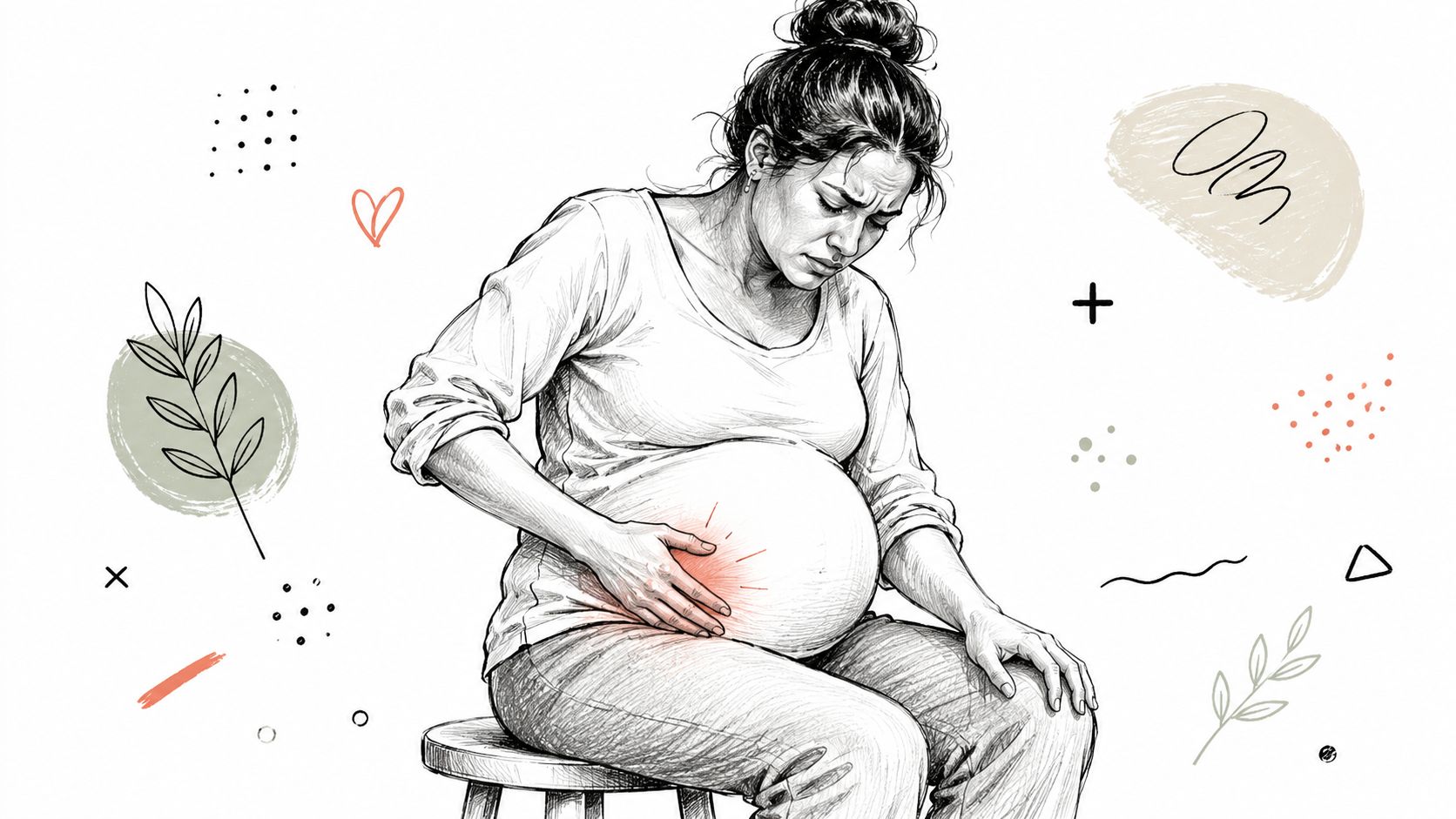
She stands up from the couch, and a sharp pain catches low on one side of her abdomen. A minute later, it's gone. Then it returns when she rolls over in bed or coughs too hard. That pattern is classic for round ligament pain, which is commonly reported in pregnancy and often starts in the second trimester. One consumer health source cited that it affects up to 30% of pregnant women and usually begins once the uterus has grown enough to put more strain on the ligaments that support it, while broader pregnancy discomfort is also common, including up to 80% experiencing lower back pain at Cedars-Sinai and as many as 1 in 5 expecting mothers experiencing pelvic girdle pain at the NHS (The Bump).
What the pain actually is
The round ligaments are rope-like supports that help anchor the uterus toward the groin. As the uterus expands, those ligaments stretch, and sudden movement can make them spasm or tug. That's why the pain often feels brief, sharp, stabbing, or pulling, not like a steady ache.
Practical rule: if the pain shows up with a position change and fades quickly, it sounds more like round ligament pain than a deep, persistent pelvic problem.
The movement triggers matter. Standing up quickly, rolling over, sneezing, laughing, walking, and coughing can all create that sudden pull. Many pregnant women describe it as a quick “jab” in the lower belly or groin, sometimes on one side, sometimes both.
When a belt makes sense
A support belt can help when the pain is coming from downward abdominal pull, because it gives the uterus a little lift and reduces traction on those ligaments. That's especially relevant for plus-size shoppers, since a belt that sits too high or too loose won't change the mechanics enough to matter. The common thread is simple, the belt needs to support the bump from below, not squeeze the top of the abdomen.
If the pain is constant, deep in the pelvis, or tied to walking pain that doesn't ease when you rest, don't assume it's round ligament pain. The wrong label leads to the wrong belt choice, and the wrong belt usually just becomes expensive frustration.
What the Clinical Evidence Says About Support Belts
The research on maternity support belts has moved in a more reassuring direction, but it still isn't magic. An older review from 2009 concluded that evidence was insufficient to prove belts reduce pregnancy-related low back or pelvic girdle pain, which is useful to know because it shows why some shoppers still feel skeptical (PMC systematic review). More recent findings are more supportive, but the benefit depends on belt type, fit, and consistency of use.
What newer studies found
In one systematic review, a belt-plus-information group showed statistically significant reductions in pain scores and disability scores at 3 and 6 weeks (PMC systematic review). One included study reported a 36% reduction in PSFS scores with a nonrigid belt and a 34% reduction with a rigid belt, which suggests that both styles can help when used appropriately. Another randomized comparison found that pain in the prior 24 hours was significantly lower with a flexible belt than with a rigid belt, with p=0.049, and longer daily use was associated with a 3.9 mm greater pain decrease per additional hour worn (PMC systematic review).
Those details matter because they push the buying question away from “which brand is best?” and toward “which structure matches the problem?”
The belt only helps if it changes the force pattern that's irritating the tissue.
A separate 63-participant study of sacroiliac joint belts found immediate improvement in one functional measure after application, and 82% of participants reported improvement after 4 weeks (PMC systematic review). That's encouraging for structured pelvic support, but it also points to something important. Round ligament pain and pelvic girdle pain aren't identical, so the same belt won't be equally useful for both.
How to read product claims critically
A page can say “supportive,” “doctor-recommended,” or “extra comfortable,” and none of that tells you whether the belt will work on a larger abdomen or under a bump that needs lift rather than compression. The evidence points to a practical rule, targeted support beats generic squeezing. Flexible or nonrigid designs may be easier to tolerate for daily wear, while structured belts may be better when the issue is pelvic stability instead of a simple tugging sensation.
Comparing Belt Types for Round Ligament Relief
The biggest mistake I see is people buying a belt by name instead of by mechanics. An under-belly band and a pelvic/SI belt can both be called “maternity support,” but they don't do the same job, and that's especially true on a plus-size body where placement and tension are harder to get right.
How the main styles differ
An under-belly band sits low and cradles the bump from below. That makes it the most straightforward option for round ligament pain because it helps reduce the downward pull that can trigger that sharp tug during movement. The tradeoff is that lighter bands may shift if they aren't sized generously or adjusted often.
An over-belly wrap reaches higher and spreads compression across more of the abdomen. That can feel reassuring, but if it sits too high it may miss the mechanics that matter for round ligament pain. It can also feel warmer and less forgiving on larger bodies if the fabric isn't breathable.
A full-wrap support belt combines lower lift with broader support. This is often the most flexible category for shoppers who want a middle ground, especially if they have both belly tugging and lower back fatigue. The risk is complexity, because more straps can also mean more chance of twisting or uneven tension.
A pelvic or SI joint belt is built to stabilize the pelvis rather than cradle the abdomen. That makes it better for deeper pelvic pain patterns than for a quick abdominal tug.
| Pregnancy Belt Types Compared | Support Location | Best For | Plus-Size Fit Notes |
|---|---|---|---|
| Under-belly band | Below the bump | Round ligament pain, light activity | Works best when the band stays low and doesn't roll up |
| Over-belly wrap | Across the abdomen | Broader compression needs | Comfort depends heavily on breathable fabric and correct height |
| Full-wrap support belt | Lower abdomen and back | Mixed symptoms, longer wear | Look for wide panels and multiple adjustment points |
| Pelvic or SI joint belt | Around the pelvis | Pelvic stability concerns | Needs secure positioning below the abdomen |
A good rule is to start with the pattern of pain, not the style you've seen most often. If the pain is a quick, sharp tug when you move, a low-sitting under-belly design usually makes more sense than a rigid pelvic brace. If the pain feels deeper and more function-limiting, the more structured option may be the better match.
For a broader browse of maternity support categories, see this pregnancy support belt collection.
Key Fit Features for Plus-Size Pregnant Bodies
The best belt on paper can still fail on a plus-size body if it rides up, folds, or digs into soft tissue. Fit geometry matters more than a brand slogan. A wide posterior panel paired with targeted anterior lift usually does more good than uniform tightness, because it stabilizes the lower back while reducing the downward pull on the bump.
What to look for on product pages
Start with the closure system. Dual-strap or hook-and-loop designs are useful because they let you fine-tune tension during the day, which matters when swelling changes or you need more support for a walk than for standing at the sink. Fixed-tension bands often feel okay for ten minutes, then become either too loose to help or too tight to tolerate.
Then check the band shape. A belt that sits low under the bump is usually the better fit for round ligament relief, because it counters the mechanical force that stretches the ligaments during movement. If the product photos show the support sitting high across the midsection, that's a warning sign for this pain type.
Fit rule: if you can't easily reposition the belt lower under the bump, it's probably not the right shape for round ligament pain.
Material matters too. Breathable, moisture-wicking fabric is worth prioritizing if you wear a belt for errands, work shifts, or warm weather. On a larger abdomen, trapped heat and friction become real comfort issues, and they can make a good-support belt feel unusable by midday.
Sizing and wearability cues
Look for sizing that explicitly accommodates larger abdomens without assuming a standard curve. The belt should stay flat against the body rather than curling at the edges or creating pressure points at the side seams. If you see phrases like “one size fits most,” be cautious, because support belts depend on actual fit, not optimism.
A few practical checks help separate decent design from marketing fluff:
- Low-profile back panel: Helps the belt stay anchored instead of sliding upward.
- Adjustable front lift: Lets you change support as the bump grows.
- Smooth edges and soft lining: Reduces rubbing where the band crosses skin.
- Postpartum flexibility: Extends the investment if you want support after birth.
That last point matters because a well-designed belt can keep helping once the belly shape changes, especially if you're planning to use it for early postpartum walking and daily tasks.
Round Ligament Pain Versus Pelvic Girdle Pain
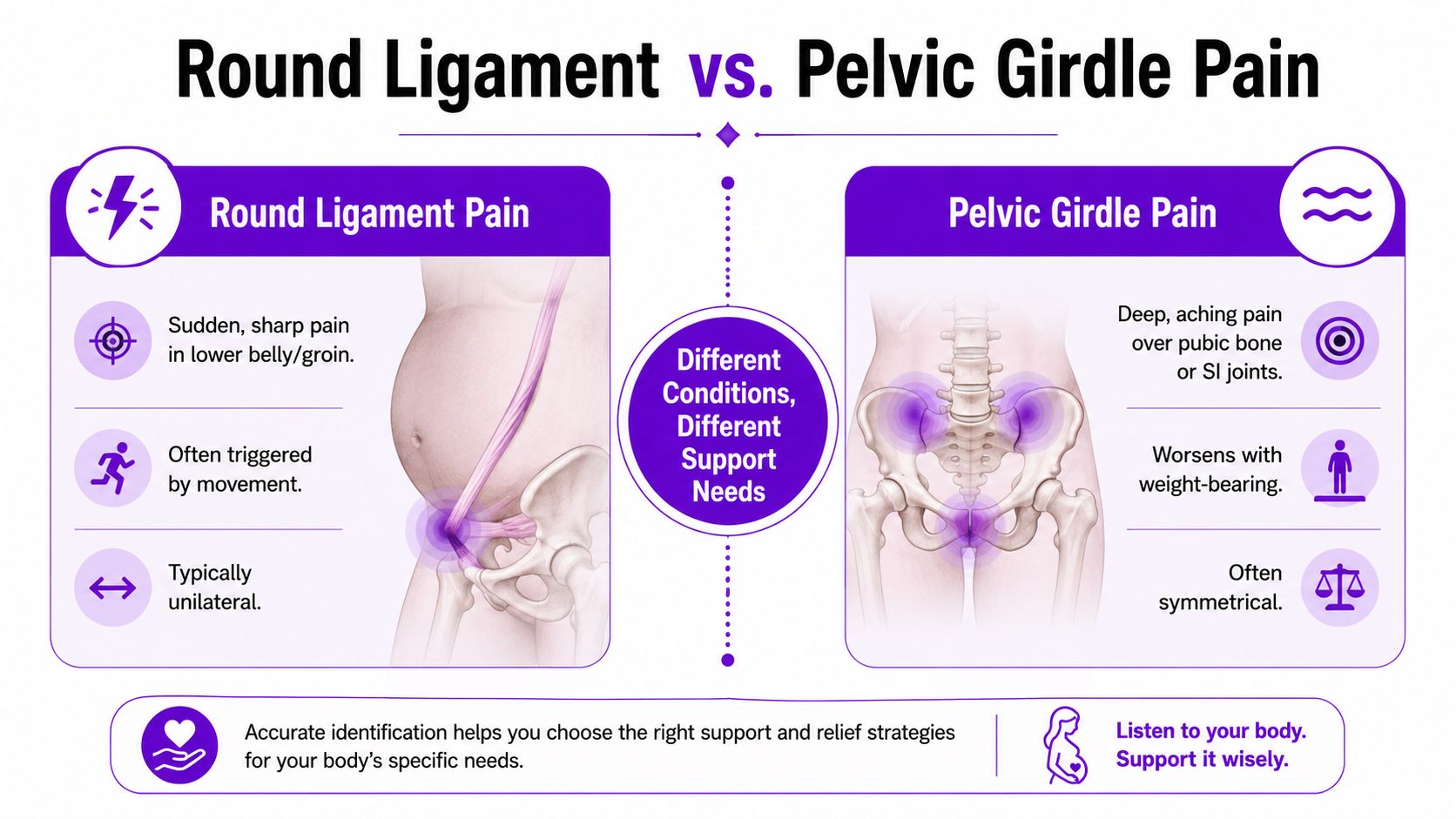
A lot of shoppers use “pelvic pain,” “round ligament pain,” and “symphysis pubis pain” as if they all mean the same thing. They don't. That confusion leads to the wrong belt choice, especially when a generic recommendation pushes the same support style for every pregnancy ache.
The symptom pattern tells you a lot
Round ligament pain is usually brief, sharp, and movement-triggered. It tends to show up low in the belly or groin, often on one side, and then fade once the movement passes. A simple under-belly support can be enough because the issue is traction.
Pelvic girdle pain is different. It feels deeper, often around the pubic bone or sacroiliac joints, and it tends to be more persistent and harder to ignore during weight-bearing tasks. That's why structured pelvic support often makes more sense for PGP than a soft belly band.
If the pain makes stairs, getting out of a car, or turning in bed consistently harder, think beyond round ligament relief. If it's a quick tug that happens during a sudden motion, think about a lower, lighter support first.
A simple self-check
- Sharp and brief: more consistent with round ligament pain.
- Deep and lingering: more consistent with pelvic girdle pain.
- Triggered by standing, coughing, or rolling over: often round ligament pain.
- Worse with walking or weight-bearing: often pelvic girdle pain.
Different conditions need different support. That's the part most product pages skip.
If you want a deeper dive into pelvic discomfort options, this pelvic pain relief resource can help you compare support approaches without mixing up the symptom patterns. The point isn't to self-diagnose perfectly. It's to avoid buying a belt that solves the wrong problem.
How to Wear and Care for Your Pregnancy Belt
A good belt used badly feels like a bad belt. The sweet spot is snug, not restrictive, and the belt should sit low under the bump, not across the upper abdomen. If you're tempted to crank it tight, back off, because support works by lift and positioning, not by compression alone.
Getting the position right
Put the widest part of the belt under the bump and make sure the back panel lies flat across the lower back. If it rides up, it's too high or too loose. If it pinches when you sit, it may be too tight or placed over the wrong section of the abdomen.
Use the belt for movement, not for sleeping or sitting all day. It tends to make the most sense during errands, walking, commuting, or tasks that trigger the pain. Many shoppers find it useful to tighten it before activity, then loosen or remove it once they're resting.
Caring for the belt so it lasts
Most belts live longer if you treat the closure system gently. Close the hook-and-loop fasteners before washing so lint doesn't clog the grip. Air drying is usually safer for elasticity than high heat, and that matters because stretched-out support stops feeling supportive fast.
Wear it for the task, then let your body do the rest.
If the belt gets sweaty, clean it regularly so the fabric stays comfortable against skin. Store it flat or lightly folded, not crumpled under heavy clothes where the straps can warp. A belt that still opens and closes cleanly is easier to adjust when your body changes from morning to evening.
Your Plus-Size Pregnancy Belt Buying Checklist
The cleanest way to shop is to decide in order. First, identify the pain. Then match the belt type. Then check whether the size range, strap design, and fabric can work on your body, not just on the product photo. If you're comparing options, this best pregnancy support belts guide can help you narrow the field without losing sight of fit.
Five decisions that matter most
- Confirm the pain pattern. Quick, sharp, movement-triggered pain points toward round ligament support. Deeper, lingering pelvic pain points toward a more structured pelvic belt.
- Choose the right category. Under-belly bands suit round ligament tugs better than belts meant for pelvic stabilization.
- Check the size and adjustment range. Plus-size fit needs room for growth, swelling, and repositioning without rolling or riding up.
- Inspect the fabric and closure. Breathable material and reliable fasteners make the difference between something you wear once and something you use.
- Think beyond pregnancy. If postpartum support matters to you, choose a belt that can still be useful after birth.
Safety still comes first. Talk to your healthcare provider if pain is persistent, if it comes with bleeding or contractions, or if support doesn't improve it. A belt should ease movement, not mask a problem that needs evaluation.
The best purchase is rarely the fanciest one. It's the belt that stays in place, supports the right area, and feels believable on your body after an hour of real life.
Brasi Chic curates plus-size maternity apparel and support essentials for women who need fit that respects their body. If you're comparing support options for pregnancy discomfort, visit Brasi Chic to explore size-inclusive pieces that can make daily movement feel a little easier.