

20-30 mmHg Compression Socks
Shop premium 20-30 mmHg compression socks for women designed to improve circulation, reduce swelling, and provide all-day leg support. Ideal for nurses, travelers, pregnant women, and anyone who spends long hours standing or sitting. Our medical grade compression socks combine firm graduated compression with everyday comfort, making them perfect for work, travel, varicose veins, edema, recovery, and daily wear.
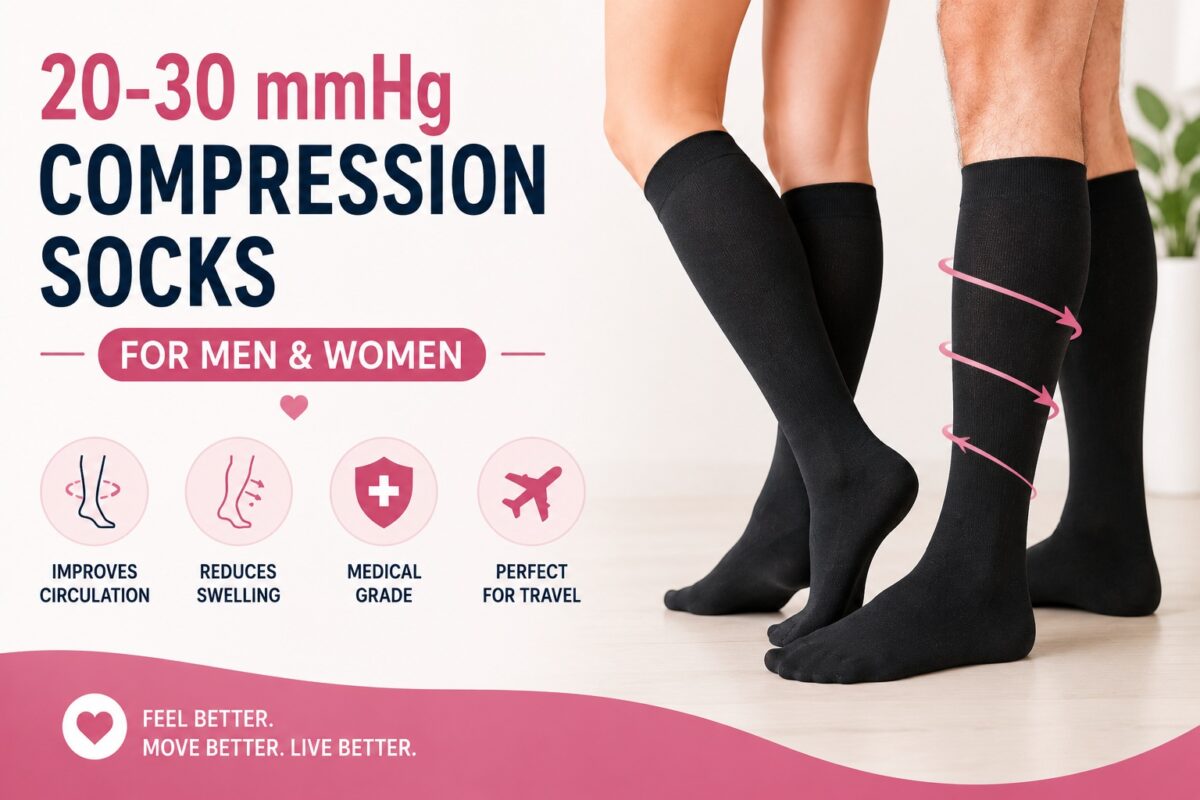
Medical-grade 20-30 mmHg compression socks designed for circulation support, swelling relief, and all-day comfort.
20-30 mmHg Compression Socks Medical-Grade Support That Actually Works
If your legs ache by afternoon, your ankles swell after a long flight, or your doctor has ever mentioned varicose veins, circulation problems, or DVT risk, you've probably been pointed toward 20-30 mmHg compression socks. And for good reason.
This compression level is the sweet spot: strong enough to make a real clinical difference, yet comfortable enough to wear all day. At BrasiChic, every pair in this collection is designed with women in mind — because your legs do a lot, and they deserve real support that doesn't look like it came from a hospital supply closet.
What Does 20-30 mmHg Actually Mean?
mmHg stands for millimeters of mercury — the same unit used to measure blood pressure. It tells you how much graduated pressure a compression sock applies to your leg.
Here's a simple breakdown of compression levels so you know exactly where 20-30 mmHg fits:
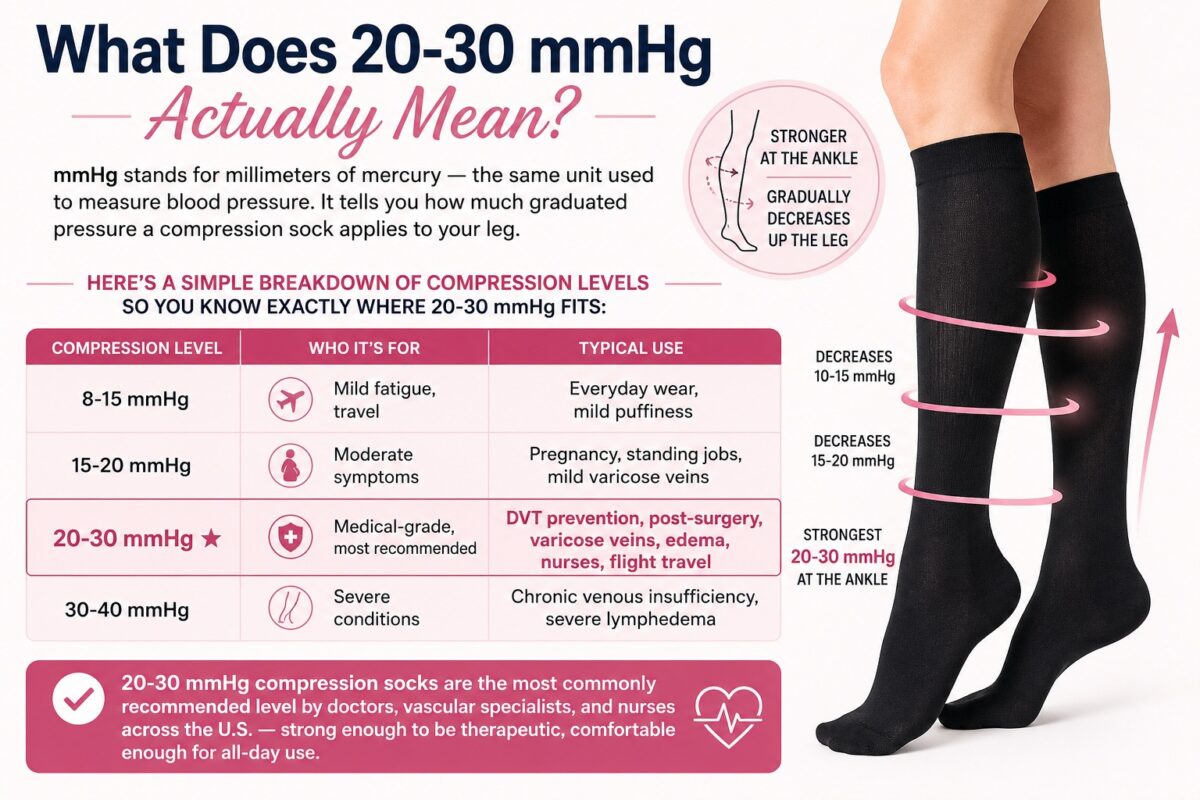
20-30 mmHg compression socks are the most commonly recommended level by doctors, vascular specialists, and nurses across the U.S. strong enough to be therapeutic, comfortable enough for all-day use.
Who Should Wear 20-30 mmHg Compression Socks?
You don't have to have a diagnosis to benefit from this compression level. Here's who reaches for 20-30 mmHg socks — and why:
Women Who Stand or Walk All Day
Nurses, teachers, retail workers, hair stylists, waitresses — if you're on your feet for 8+ hours, blood pools in your lower legs. That's why they ache, swell, and feel heavy. 20-30 mmHg compression pushes that blood back up where it belongs, so you can actually enjoy your evenings again.
Pregnant Women
Pregnancy increases blood volume by up to 50% and puts pressure on the veins returning blood from your legs. Swollen ankles, leg cramps, and that heavy feeling are common — and compression socks are one of the most doctor-recommended ways to manage them. Always check with your OB before wearing higher-compression socks during pregnancy.
Frequent Flyers and Road Trippers
Sitting still for hours — whether in a plane, car, or at a desk — significantly slows blood flow in your legs. This raises the risk of deep vein thrombosis (DVT), a blood clot that can be serious. Wearing 20-30 mmHg compression socks during long travel is one of the smartest, easiest prevention steps you can take.
Women With Varicose Veins or Spider Veins
Varicose veins happen when vein valves weaken and blood flows backward. Compression socks apply gentle, graduated pressure that helps those valves work better — reducing the appearance of varicose veins, preventing new ones from forming, and relieving the aching and heaviness they cause.
Post-Surgery Recovery
After surgeries — especially procedures on the legs, hips, or abdomen — doctors frequently prescribe 20-30 mmHg compression socks to reduce swelling, prevent blood clots, and speed healing. Always follow your surgeon's specific guidance.
Women With Edema (Leg or Ankle Swelling)
Edema is the medical term for fluid buildup in your tissues. It causes puffy ankles, tight skin, and that uncomfortable feeling of legs that feel twice their size. Compression socks help move that fluid through your lymphatic system and reduce swelling throughout the day.
Athletes in Recovery
More and more athletes — runners, cyclists, CrossFitters — are turning to 20-30 mmHg compression socks during recovery. Better circulation means faster clearance of lactic acid and reduced muscle soreness after intense training.
The Real Benefits — What You'll Actually Notice
Here's what women who wear 20-30 mmHg compression socks from BrasiChic regularly tell us:
- Legs feel noticeably lighter by the end of a long shift or workday
- Ankle and foot swelling goes down — shoes fit better at the end of the day
- Less leg cramping at night after being on your feet all day
- Varicose veins look less prominent and feel less achy
- More energy and less fatigue — because your body isn't working as hard to circulate blood
- Peace of mind on long flights knowing you're reducing DVT risk
- Faster muscle recovery after workouts
These aren't small improvements. When your legs feel better, everything feels better.
How to Wear 20-30 mmHg Compression Socks — and Get the Most Out of Them
Put Them On First Thing in the Morning
Your legs are least swollen right after you wake up. Putting compression socks on before you stand up gives them the best surface area to work from. If you wait until afternoon when swelling has already set in, they'll be harder to put on and less effective.
Wear Them for the Full Day — or As Directed
For most conditions, wearing your compression socks from morning until you sit down for the evening is ideal. For travel, wear them the entire duration of your trip. For post-surgery use, follow your doctor's specific instructions.
Getting Them On: It's Easier Than You Think
20-30 mmHg socks are firmer than regular socks. A few tips:
- Turn the sock inside out to the heel, then roll it up your foot first
- Smooth out any bunching — wrinkled compression fabric can dig into skin
- Rubber gloves give you better grip when pulling them up
- Compression sock aids (donning devices) are available if mobility is an issue
Wash and Care
Machine wash cold, gentle cycle. Lay flat or hang to dry. Avoid putting them in the dryer — heat breaks down the elastic fibers and reduces compression over time. With proper care, compression socks typically last 3-6 months of daily wear.
How to Choose the Right 20-30 mmHg Compression Socks
Get the Size Right, This Is Everything
Compression socks that are too small will be uncomfortably tight. Too large, and they won't provide the right pressure. Sizing is based on calf circumference (measure around the widest part of your calf) and sometimes shoe size. Always check the size chart for each specific product before ordering.
Knee-High vs. Thigh-High vs. Full Pantyhose
- Knee-high compression socks: The most common and versatile. Great for everyday use, varicose veins below the knee, and most circulatory support needs.
- Thigh-high compression stockings: Better for swelling that extends above the knee, or post-surgical use higher on the leg.
- Compression pantyhose: Often recommended during pregnancy for full-leg and abdominal support.
Open Toe vs. Closed Toe
Closed toe is the standard. Open toe is useful if you prefer to wear your own toe socks underneath, or if you have specific toe conditions. Both provide the same graduated compression along the leg.
Material Matters
Look for moisture-wicking, breathable fabrics — especially if you're on your feet all day or in warm climates. Nylon-spandex blends and microfiber options keep your legs dry and comfortable. Avoid rough textures that can irritate skin on long wear days.
A Note on Medical Advice
20-30 mmHg is considered a medical-grade compression level. While these socks are available without a prescription, we always recommend talking to your doctor, nurse practitioner, or vascular specialist before starting compression therapy — especially if you have:
- Peripheral arterial disease (PAD) or poor circulation in the arteries
- Open wounds, skin infections, or fragile skin on your legs
- Congestive heart failure
- Diabetes with neuropathy (reduced sensation in the legs)
For most healthy women using compression socks for preventive or comfort purposes, 20-30 mmHg is safe and highly effective.
Frequently Asked Questions
Are 20-30 mmHg compression socks too strong for everyday wear?
For most women, no — 20-30 mmHg is the most commonly recommended level for daily use in medical settings. However, if you have certain arterial conditions, check with your doctor first. If they feel uncomfortably tight initially, try 15-20 mmHg first and work up.
Can I sleep in my 20-30 mmHg compression socks?
Generally, no. Compression socks are designed to help while you're upright and active — they work with gravity. When you're lying down, your body already manages circulation more easily without compression. Most doctors advise removing them at bedtime unless specifically told otherwise.
How long does it take to feel a difference?
Many women notice their legs feeling lighter within the first few hours of wearing them. For visible reduction in varicose vein appearance or significant edema reduction, allow a few weeks of consistent daily use.
Do I need a prescription for 20-30 mmHg compression socks?
In the United States, 20-30 mmHg compression socks are available over the counter without a prescription. However, some insurance plans may cover them with a doctor's prescription. It's worth asking your doctor if you have a qualifying condition.
How do I know if my compression socks fit correctly?
They should feel snug — noticeably firmer than a regular sock — but not painfully tight or cutting off sensation. The sock should lay smooth with no bunching. Your toes shouldn't tingle or turn blue. If any of these happen, try a different size.
How often should I replace my compression socks?
With daily wear and proper washing, most quality compression socks maintain their therapeutic compression for about 3-6 months. After that, the elastic breaks down and the pressure level drops. Replace them regularly to keep getting full benefit.
What's the difference between compression socks and compression stockings?
'Compression socks' typically refers to knee-high styles. 'Compression stockings' usually means thigh-high or pantyhose styles. The compression level (like 20-30 mmHg) applies to both — the difference is coverage area, not strength.
Which is tighter, 15-20 mmHg or 20-30 mmHg compression socks?
20-30 mmHg compression socks provide a higher level of graduated compression than 15-20 mmHg socks. They offer firmer support and are commonly used for moderate swelling, varicose veins, extended standing, travel, and recovery, while 15-20 mmHg is ideal for everyday wear and mild leg fatigue.
What compression socks are best for POTS?
Many people with Postural Orthostatic Tachycardia Syndrome (POTS) benefit from compression socks in the 20-30 mmHg range because they help promote healthy circulation and reduce blood pooling in the legs. The best compression level depends on individual needs and should be chosen based on healthcare provider recommendations.
Not sure if 20-30 mmHg is right for you? Browse our 15-20 mmHg Compression Socks for gentle graduated compression and everyday wear.