
Blog
Hello Momoya Compression Socks: Complete Buying Guide

You're up late, the baby's finally asleep, and your legs feel thick, heavy, and stubbornly sore. That's usually the moment people search for Hello Momoya compression socks and get lost in a mess of patterns, pressure numbers, and vague promises.
Don't buy by color. Buy by mmHg, ankle circumference, and calf circumference. Compression is a fit problem first, a style problem second, and if you get the fit wrong, the sock ends up in a drawer.
| Quick decision point | What to look for | Why it matters |
|---|---|---|
| Everyday support | 15–20 mmHg | Light circulation support for common daily wear, as described in clinical guidance from Cleveland Clinic and Good Housekeeping's compression guide |
| Swelling, pregnancy, postpartum, long shifts | 20–30 mmHg | The most commonly physician-prescribed range for swelling-related needs, per Good Housekeeping and Harvard Health |
| Medical-strength support | 30–40 mmHg | Only with medical direction, according to Good Housekeeping |
| Wide calves or mixed body shapes | Measure first, don't guess | Correct sizing depends on the leg, not the shoe size, as shown in retailer sizing data from Target |
Table of Contents
- Why Hello Momoya Compression Socks Are a Common Search
- What Hello Momoya Compression Socks Offer
- Matching Pressure Level to Real Use Cases
- How to Measure Your Legs for the Right Hello Momoya Size
- Why Hello Momoya Socks Slip, Roll, or Feel Too Tight
- Comparing Hello Momoya to a Plus-Size Maternity Alternative
- The Five-Point Buying Checklist Before You Checkout
- Frequently Asked Questions About Hello Momoya Compression Socks
Why Hello Momoya Compression Socks Are a Common Search
People usually start looking for compression socks after their legs send a clear complaint. A long shift leaves the calves throbbing. A flight leaves the ankles puffy. Pregnancy changes how the lower legs feel, and suddenly ordinary standing feels heavier than it should.
Hello Momoya compression socks get attention because they sit in the middle of two needs, everyday comfort and actual circulation support. Cleveland Clinic describes compression socks as a standard option for circulation-related issues such as edema, varicose veins, and DVT prevention. Harvard Health notes that they are typically worn during the day and taken off at night.
Why the search intent is messy
Shoppers rarely know which problem they are trying to fix. Some want less swelling. Some want less heaviness. Some just want legs that do not feel battered by the end of the day.
That is why a useful buying decision starts with three details, not one. You need the pressure band, the ankle measurement, and the calf measurement. Leave any one of those out, and you are guessing.
Practical rule: if a listing does not tell you the mmHg and does not show a real size chart, move on.
The category has also moved past one plain medical stocking. Products now show up in multiple pressure bands, different entry styles, and fit options for wider calves and different body shapes. Business Insider reported that Bombas' compression products, first introduced in 2019, grew 231% over the prior three years and were up 31% in 2025 alone, which shows how far consumer demand has moved beyond hospital-only use Business Insider.
What this article is and isn't
This is a fitting guide, not a style roundup. The right pair depends on whether you need light daily support, stronger control for swelling, or a size that clears your calf without cutting into the leg or rolling down.
If you are shopping for Hello Momoya compression socks, start with fit. A cute pattern cannot compensate for a sock that is too tight, too loose, or built for a different leg shape.
What Hello Momoya Compression Socks Offer
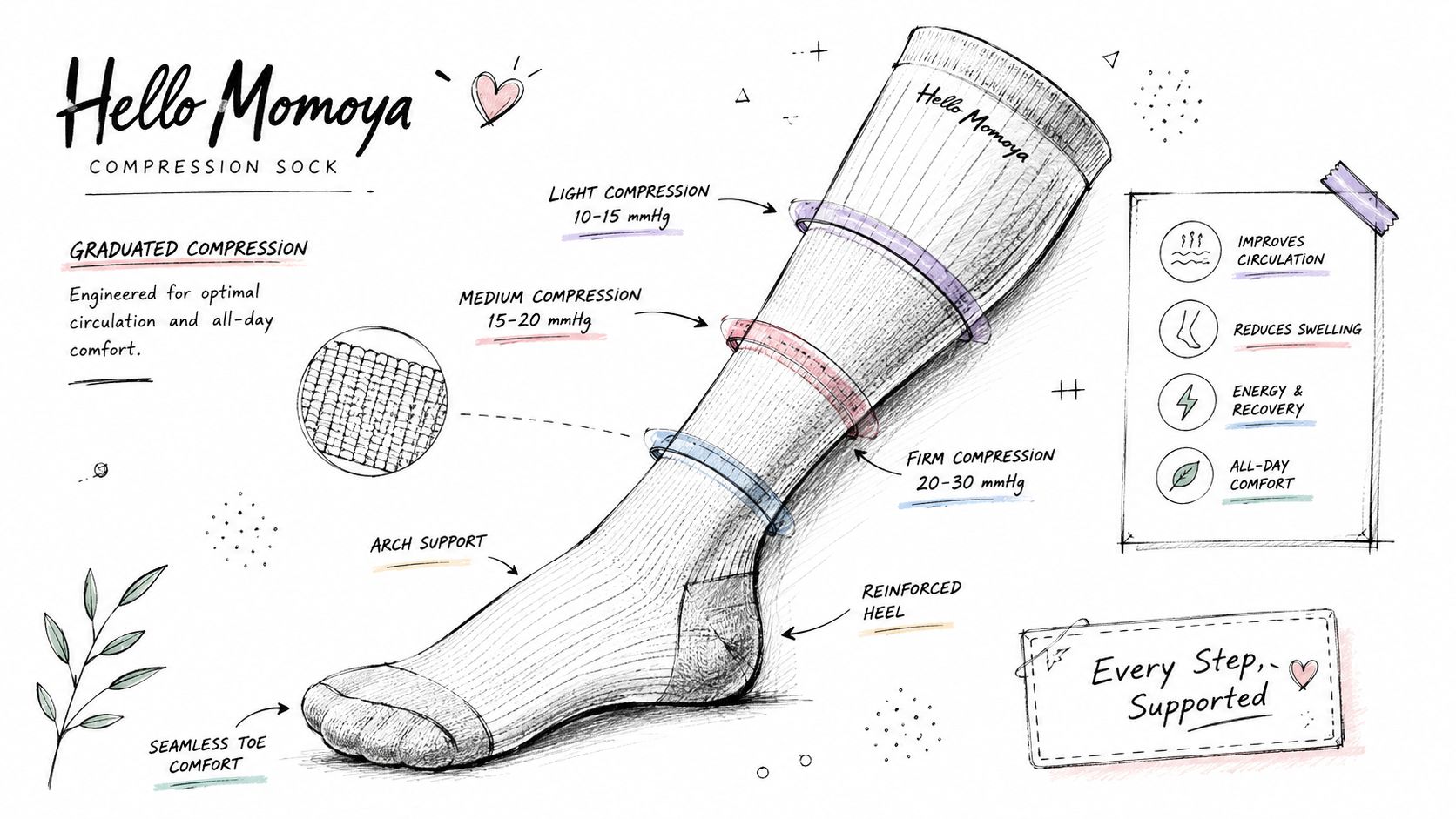
A serious compression listing should tell you three things clearly, the pressure level, the construction style, and the fit range. That is the baseline, not a bonus.
Pressure bands are the first filter
Graduated compression is strongest at the ankle and eases upward along the leg. The practical bands shoppers need to know are 15–20 mmHg for lighter daily support, 20–30 mmHg for stronger everyday compression, and 30–40 mmHg for medical-strength support that belongs under medical direction.
That matters because the right pressure depends on the leg in front of you. A teacher on her feet all day does not need the same compression as someone managing significant swelling, and a pregnant shopper with end-of-day heaviness needs a different answer again. If you want a quick reference on how pressure is commonly grouped, this women's compression socks guide lays out the basic bands in plain language.
Materials and fit styles are part of the product
Modern compression socks are no longer just plain medical hosiery. Listings now commonly include open-toe, zipper, wide-calf, and comfort-focused material variations such as bamboo-blend knits. That shift reflects how the category has moved into daily wear and a wider range of body shapes.
The extra options help, but they also confuse buyers. A bamboo blend may feel softer. A zipper may be easier to put on. Neither one fixes the main issue if the sock is built for the wrong calf or the wrong ankle. Fit still decides whether the pair stays up, compresses evenly, and feels usable by the end of the day.
If you cannot find the pressure band fast, the listing is not built for informed buying.
Use that rule on any Hello Momoya product page. If the listing gives you a pressure number and a real size chart, you have something you can work with. If it leans on vague comfort language and skips the measurements, keep looking.
Matching Pressure Level to Real Use Cases
| Use case | Suggested pressure band | Primary symptom targeted |
|---|---|---|
| Pregnancy swelling | 15–20 mmHg or 20–30 mmHg | Leg heaviness and swelling |
| Postpartum leg heaviness | 15–20 mmHg or 20–30 mmHg | Swelling and fatigue |
| Long shifts on your feet | 15–20 mmHg or 20–30 mmHg | Heaviness and standing-related fatigue |
| Travel days with long sitting | 15–20 mmHg or 20–30 mmHg | Swelling and circulation support |
| Diagnosed venous issues | 20–30 mmHg, sometimes higher under clinician direction | Swelling and venous support |
Pregnancy and postpartum
Pregnancy changes the decision fast. If the main issue is mild daily heaviness, 15–20 mmHg is the sensible starting point. If swelling shows up every afternoon, the day runs long, or your legs feel loaded by evening, move to 20–30 mmHg.
That is the practical split. A general compression guide also helps shoppers compare pressure bands before they buy, especially if they are sorting through maternity-friendly options and trying to avoid guessing the fit this women’s compression socks guide.
Postpartum follows the same logic, but the threshold for choosing a stronger everyday band is often lower. Mild puffiness and light support needs point to the lower range. Obvious swelling, long hours on your feet, or constant newborn care point to the stronger range, because you need a sock that can handle repeated wear without feeling flimsy by midday.
Shift work and travel
Long shifts and long sitting create the same mechanical problem: fluid pools when the legs stay still. Compression works best here when the pressure matches how hard your legs are pushing back.
For a first pair, 15–20 mmHg is the safe, practical starting point. If your legs regularly swell, feel tight, or ache after hours of standing, sitting, or flying, 20–30 mmHg is the better choice. Use the stronger band when the lighter one has already proved too soft, not because the label sounds more serious.
When lower or higher doesn’t make sense
Pressure that is too light does little for real swelling. Pressure that is too strong can feel miserable, especially if your leg shape does not match the sock’s cut or you are choosing without medical guidance.
Use the symptom, then choose the band. If you want a plain-language refresher on how compression levels are commonly grouped, the compression sock buying guide is the right place to sort out the difference between lighter daily support and the firmer range used for more stubborn swelling.
My blunt rule: if you do not know which band you need, do not start with the strongest one. Start with the lowest band that matches the problem in front of you.
How to Measure Your Legs for the Right Hello Momoya Size
Shoe size is a lazy way to buy compression socks. It’s also how people end up with socks that bunch at the ankle, strangle the calf, or won’t stay up.
Measure the ankle and calf, not just the foot
Grab a soft tape measure and measure your ankle circumference at the narrowest point just above the ankle bone. Then measure your calf circumference at the widest point of the calf. Those two numbers do the work, because compression performance depends on the leg, not the shoe box.
Retail sizing data show why this matters. One medical-support model sold in a major retail channel offers calf sizes from 11–13 in up to 20–23 in and ankle sizes from 7–8 in up to 12.5–14 in, which proves that calf and ankle measurements are the key technical variables for fit Target.
What to do if you sit between sizes
If your measurements fall between two sizes, don’t force the smaller pair. That’s how you get the tight band behind the knee, the top roll, or the feeling that the sock is trying to saw your circulation in half.
Use this order of judgment:
- Check the calf first. If the calf is on the edge, that usually drives the decision.
- Check the ankle second. A good compression sock must still anchor properly at the ankle.
- Choose the larger size if you’re between bands. Compression is only useful if you’ll wear it.
Wide calves need honest sizing
If your calf sits near the upper end of a standard chart, stop pretending a standard listing is “probably fine.” That’s how people buy the wrong pair and blame the category instead of the fit.
The market has clear evidence that sizing spans can get broad, and some products are built for very large calf circumferences, which is exactly why wide-calf and plus-size listings exist Target. If your legs are changing during pregnancy or swelling shifts across the day, remeasure before you order again.
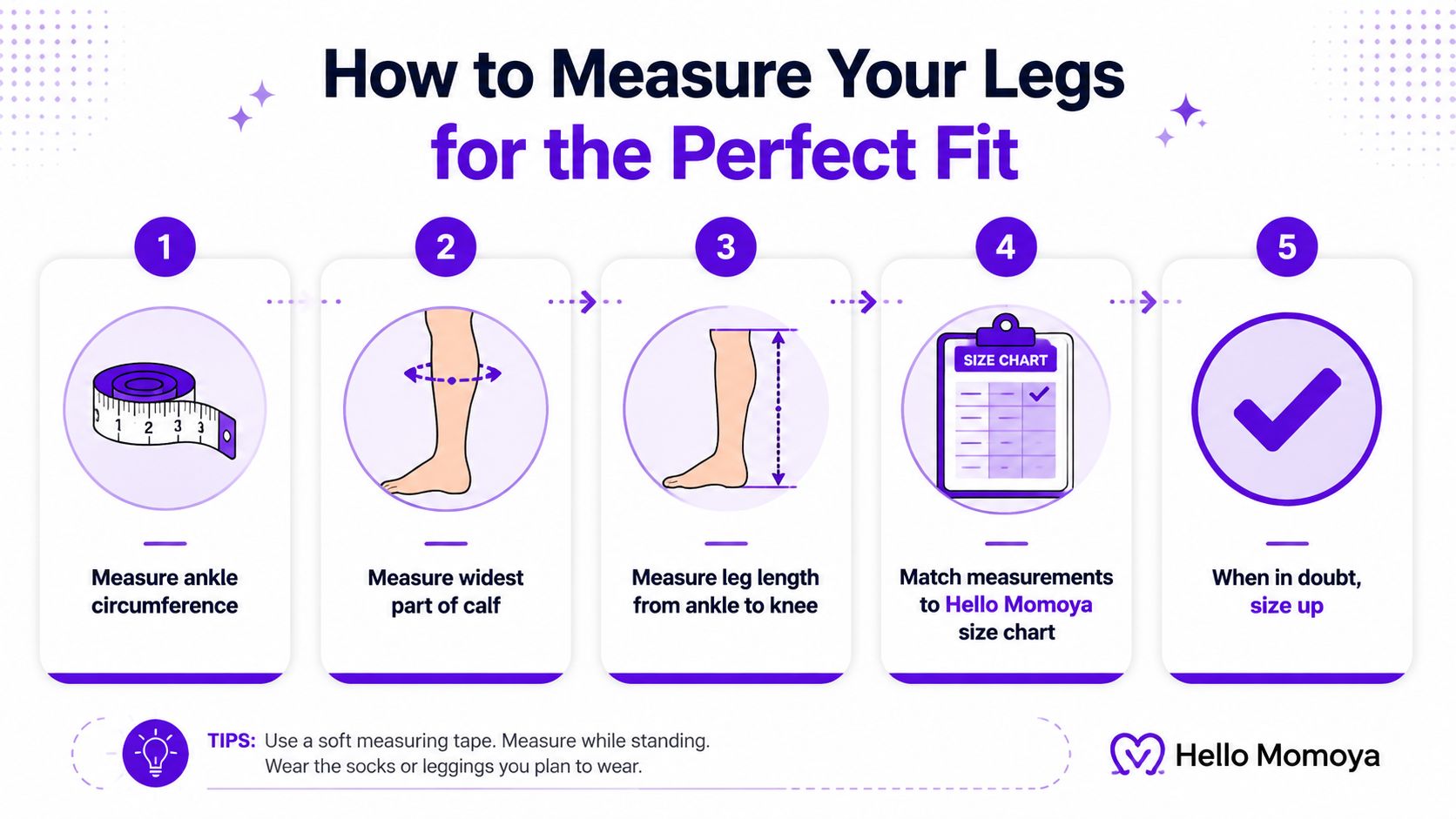
Compression sock fit and sizing guides are useful when you’re comparing charts across brands instead of assuming one size system works everywhere.
Why Hello Momoya Socks Slip, Roll, or Feel Too Tight
Most bad compression reviews come from fit mistakes, not from the idea of compression itself. The failure mode tells you what went wrong.
Four problems, four different causes
- Roll-down at the top: the calf is at the upper edge of the size band, or the sock is too short for your leg. The top can’t hold because the leg shape overwhelms the cut.
- Tourniquet feeling behind the knee: the sock is too small in the calf, or the pressure band is too aggressive for your tolerance. This is not “breaking in.” It’s a bad fit.
- Saggy ankle: the sock is too long in the foot or too large overall. The compression can’t anchor where it should.
- Toe-box pressure: the toe style is wrong for your foot shape. That’s a construction issue, not always a pressure issue.
Tight compression should feel firm, not punishing. If you’re thinking about the sock all day, it’s probably wrong.
How to diagnose the problem fast
If the sock rolls, inspect the calf measurement first. If it cuts into the back of your knee, size up or drop a pressure level. If the ankle pools, you likely bought too much sock for your leg. If your toes feel squeezed, look for a different toe style rather than blaming the whole brand.
That diagnostic habit matters during pregnancy and postpartum because leg shape can change quickly. A pair that fit well last month may fail now, especially if swelling has increased or decreased since the last fitting.
The takeaway is simple. Don’t keep wearing a pair that slips, rolls, or bites. Compression is only worth the hassle when it stays where it belongs and feels stable through the whole day.
Comparing Hello Momoya to a Plus-Size Maternity Alternative
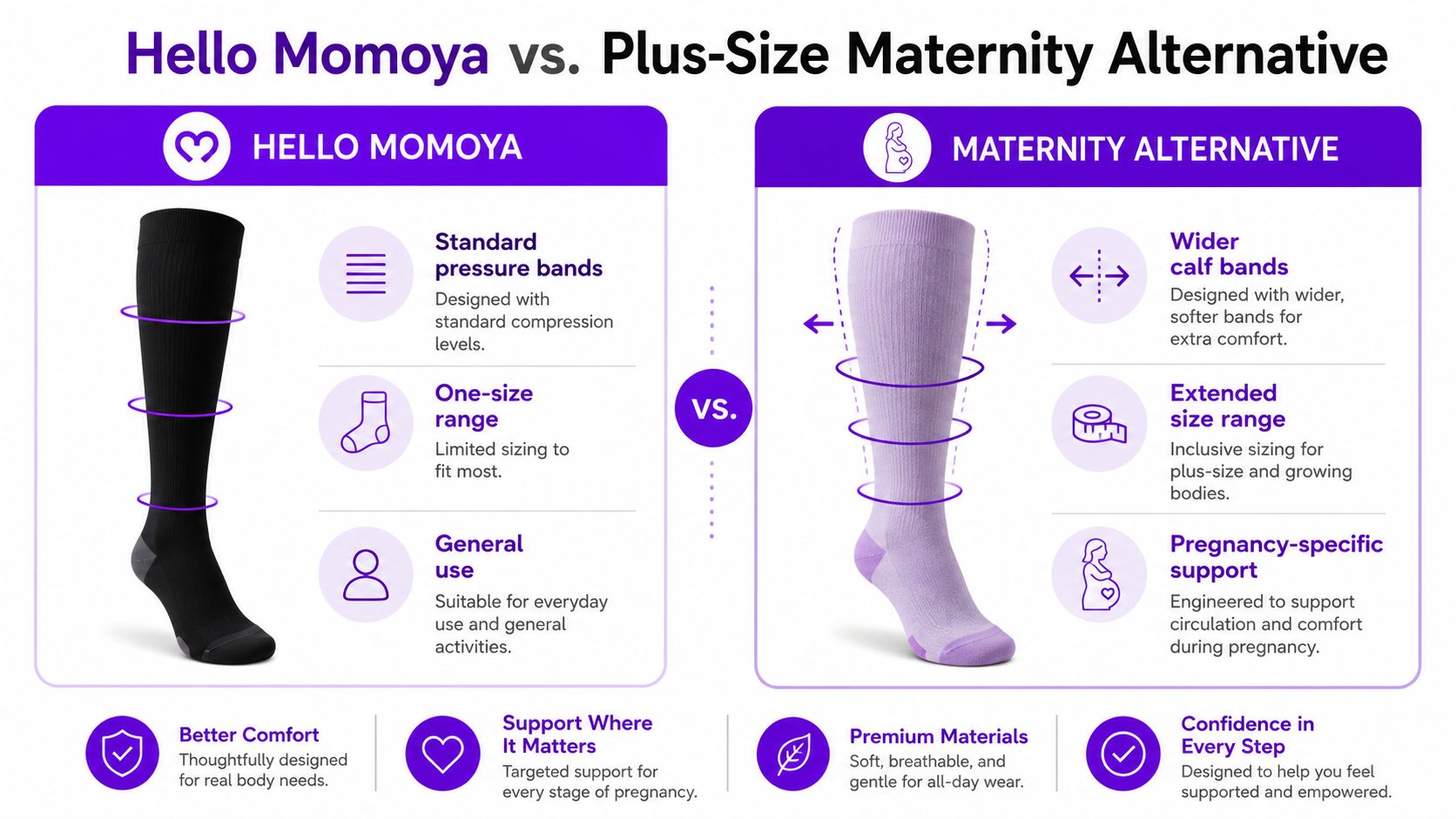
Hello Momoya can be a good fit for a lot of shoppers, but a plus-size maternity compression alternative is the better call when the leg shape is the main issue. That’s especially true if your calf needs more room than a standard listing comfortably covers.
Where Hello Momoya makes sense
Hello Momoya is the cleaner choice when you want a straightforward compression sock for everyday swelling, travel, or shift work, and your measurements fall inside the chart. If you’re comfortable with standard sizing and you’re comparing basic pressure levels, it can do the job.
Where a maternity or plus-size option wins
A specialized maternity or plus-size option is stronger when the calf is wider, the leg is changing during pregnancy, or the shopper wants more forgiving fabric and entry features. Retailers in this space commonly offer wide-calf, open-toe, zipper, and comfort-focused materials such as bamboo viscose or copper-infused options, which is exactly what many pregnancy shoppers need when one size system doesn’t work across the entire trimester.
Bottom line: if your calf is hard to fit, don’t try to “make” a standard sock work. Buy the sock built for your leg.
For a shopper comparing fit-first maternity options, this plus-size pregnancy compression option is the kind of alternative worth looking at before you settle for a standard pair that might roll or pinch.
My recommendation
Choose Hello Momoya if your measurements fit the chart and you want a normal compression purchase. Choose a plus-size maternity alternative if you’ve ever bought compression socks and immediately known the calf was the problem. That’s not a subtle distinction. It’s the difference between a sock you wear and a sock you resent.
The Five-Point Buying Checklist Before You Checkout
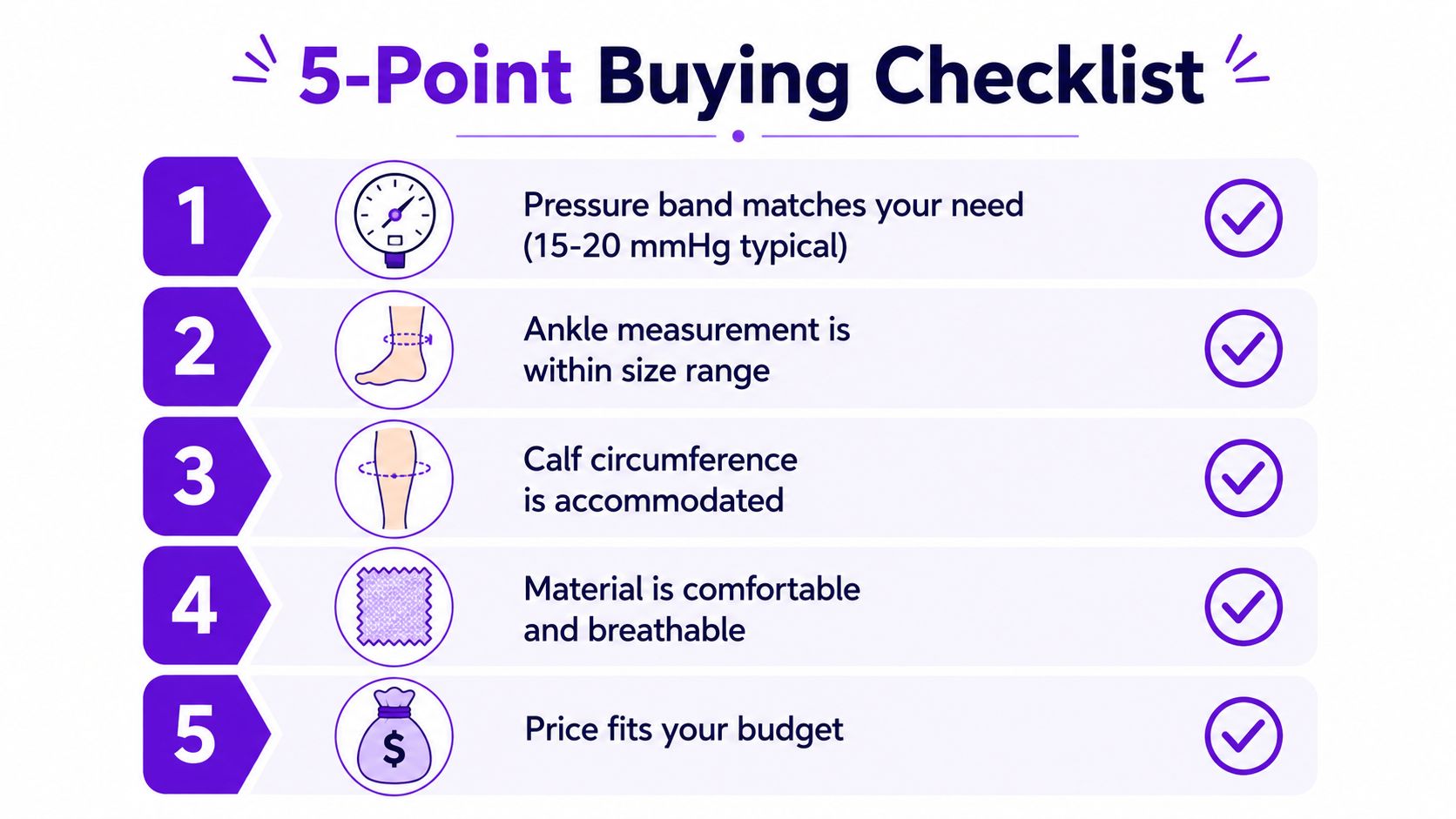
A Hello Momoya listing only makes sense if the fit and pressure work for your legs, not just your cart. Start with the numbers, then decide whether the sock matches the job you need it to do.
Run this list before you buy
- Pressure band matches the job. 15–20 mmHg is the everyday starting point. 20–30 mmHg is the stronger common support range for people who want firmer compression, while higher pressure belongs under medical direction.
- Ankle measurement fits the chart. If the ankle is off, the sock will not anchor correctly and the whole fit goes sideways.
- Calf circumference is accommodated. If the calf sits at the edge of the size range, do not gamble on a squeeze fit.
- Material and toe style are tolerable. If the fabric feels scratchy, stiff, or too hot, you will stop wearing them.
- The return policy is clear. Compression fit is personal, so you need room to exchange a pair that rolls, pinches, or slides.
One bad measurement can ruin the whole purchase. Calf circumference decides whether the sock stays up or turns into a tourniquet around the wrong part of the leg.
When Hello Momoya is the wrong choice
If you need 30–40 mmHg because a clinician told you to use medical-strength compression, do not shop casually. That pressure level is a medical tool, not a comfort pick.
If your calf exceeds the largest size on the chart, stop there and look for a wide-calf alternative. Sizing down to force the fit is how people end up with numb feet and compression socks they never wear.
Pregnancy and postpartum make this even less forgiving. If your swelling changes through the day, or the pressure feels uncomfortable enough that you are second-guessing the pair before you buy it, choose the sock that matches your measurements and pressure need, not the prettiest listing. That is the clean decision.
Frequently Asked Questions About Hello Momoya Compression Socks
Do Hello Momoya compression socks fit wide calves?
Sometimes, but only if the calf range on the listing matches your measurement. Compression fit is decided by calf circumference and ankle circumference, not by shoe size, marketing photos, or a hopeful guess.
If your calf sits at the edge of the chart, do not assume the sock will stretch enough to behave well. A pair that is too tight can bunch, pinch, or roll down, and a pair that is too loose will slide instead of compressing.
What pressure is best for pregnancy or postpartum?
For pregnancy and postpartum, 15–20 mmHg is the safer starting point for everyday wear. 20–30 mmHg is the stronger support range, and it belongs with heavier swelling, long days on your feet, or a clinician’s recommendation, not random trial and error Cleveland Clinic.
Do not buy up in pressure just because your legs feel tired. If the sock feels hard to get on, leaves deep marks, or makes your feet feel strange, the fit or pressure is wrong for you.
When should I avoid compression socks?
Skip self-selecting strong compression if you suspect a circulation problem, have a diagnosed vascular issue, or think you may need medical-strength support. Harvard Health frames compression hosiery as a structured tool for specific circulation-related problems, not a casual wellness accessory Harvard Health.
The same caution applies in pregnancy and postpartum. If swelling changes through the day, one leg is clearly more swollen than the other, or the sock feels uncomfortably tight before you even wear it, stop and get proper guidance before you buy.
Is zipper entry better than pull-on?
Zipper styles are easier to put on, especially if your legs are swollen or your mobility is limited. Pull-on styles usually feel more traditional and often have a simpler build, but they only work if you can get them on without fighting the fabric every morning.
That is the practical test. If a pull-on pair turns into a daily struggle, you will stop wearing it, and the better construction on paper will not matter.
If you want compression socks that fit the body you have right now, shop the measurement first and the style second. Brasi Chic carries size-inclusive maternity apparel and compression options built around pregnancy, postpartum, and wider calf needs, so start there if you are done gambling on one-size-fits-all listings.
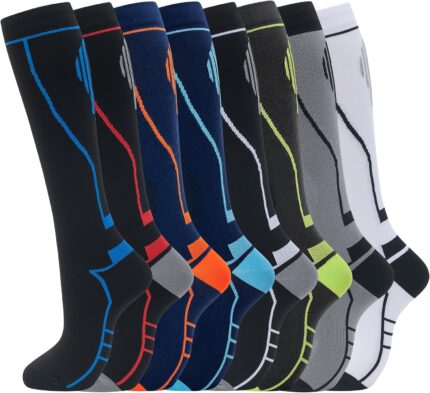
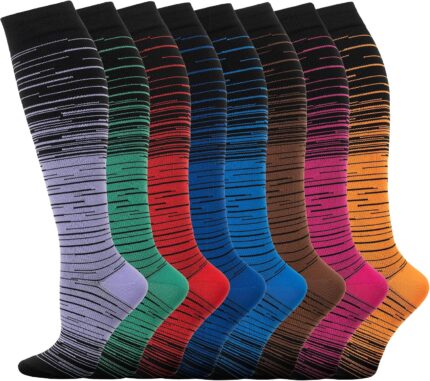
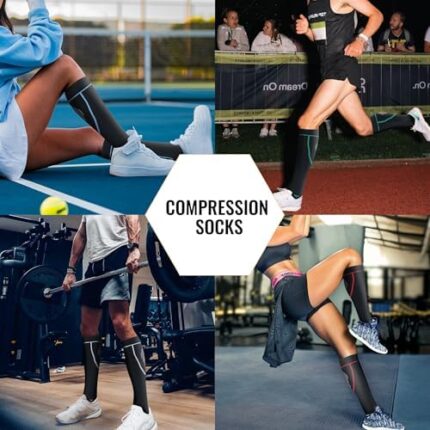
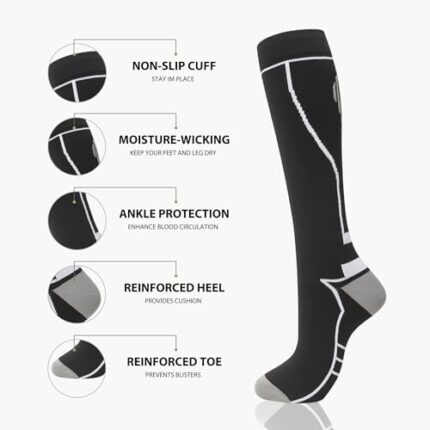
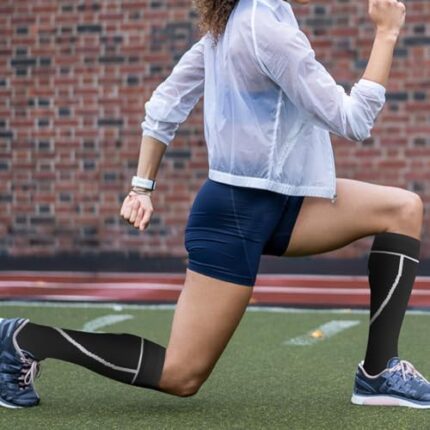
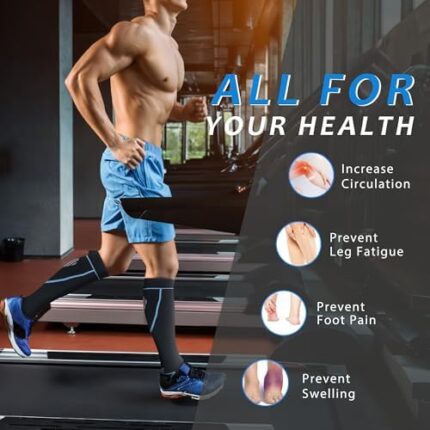
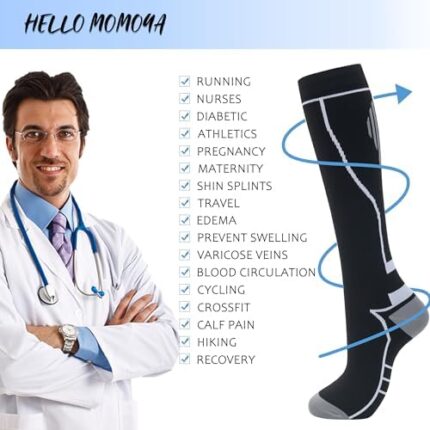
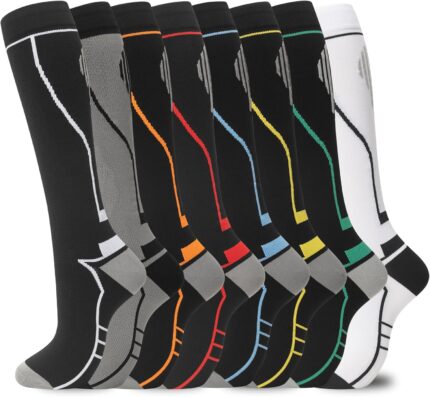
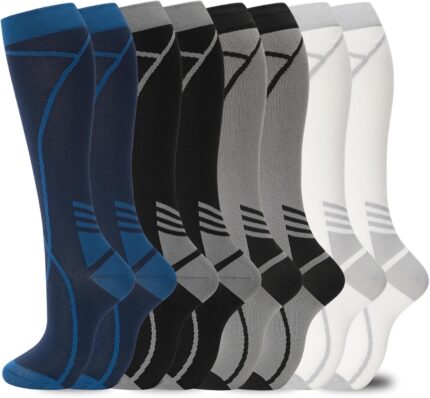
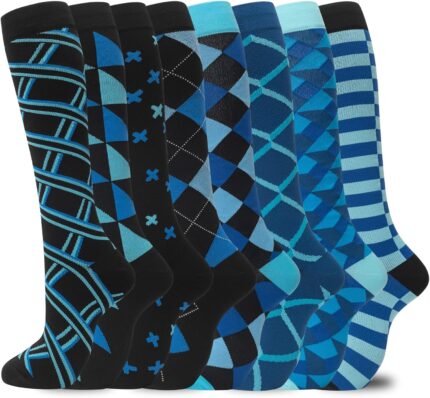
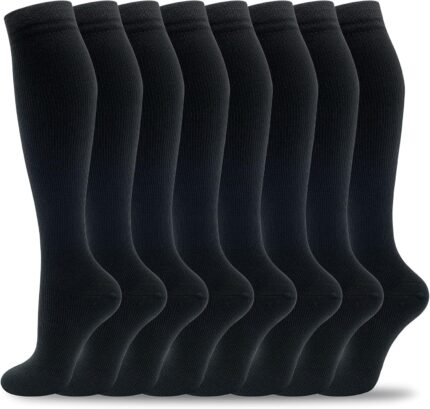
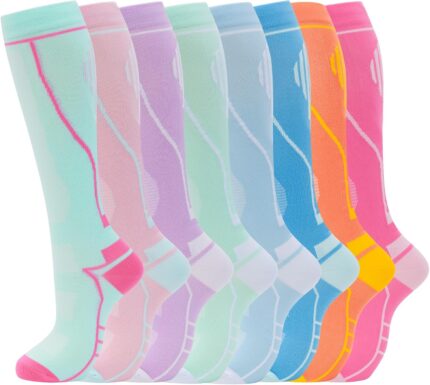
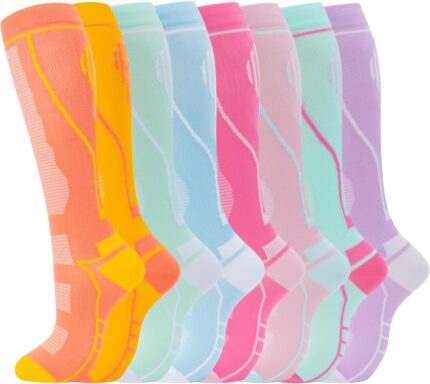
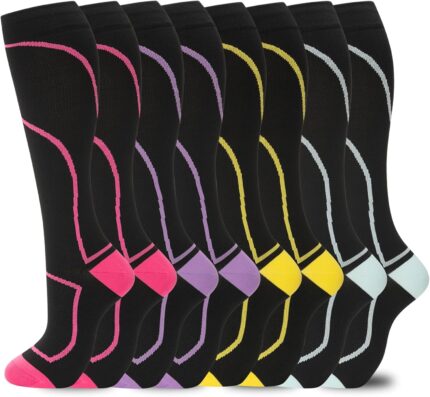
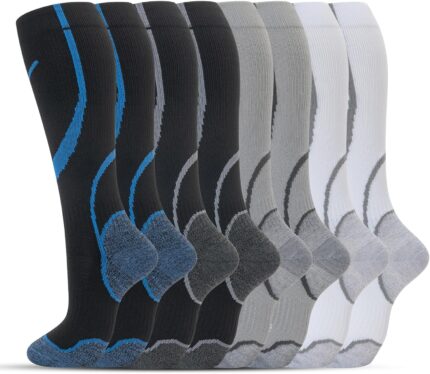
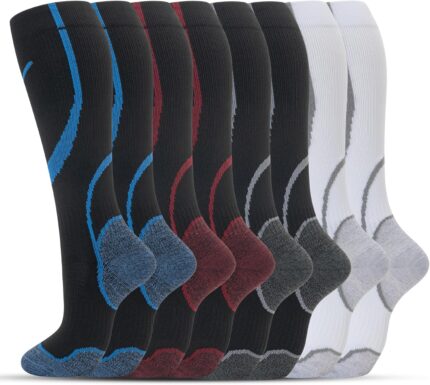
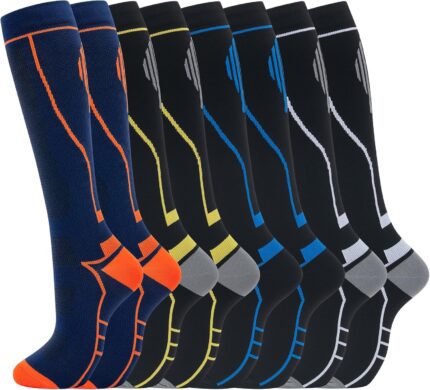
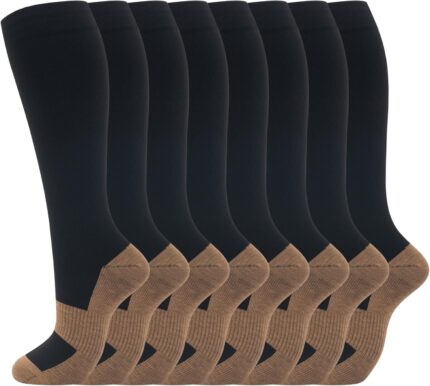
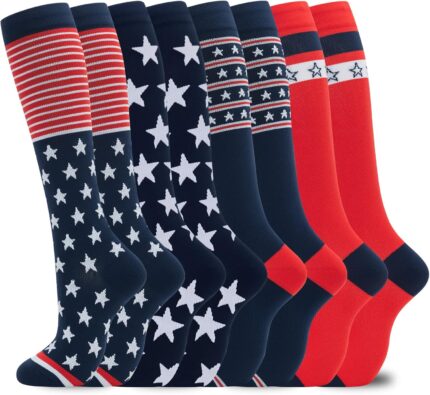
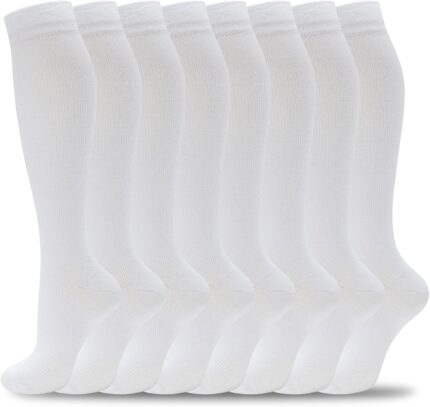
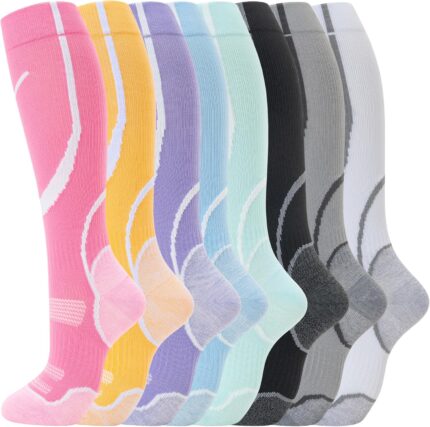
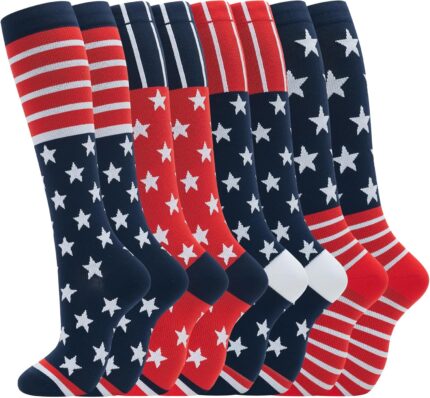
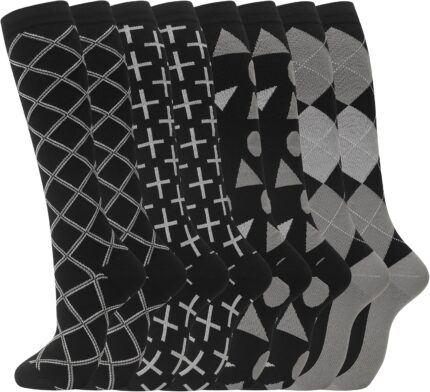
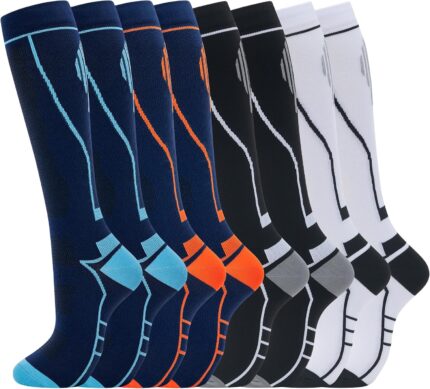
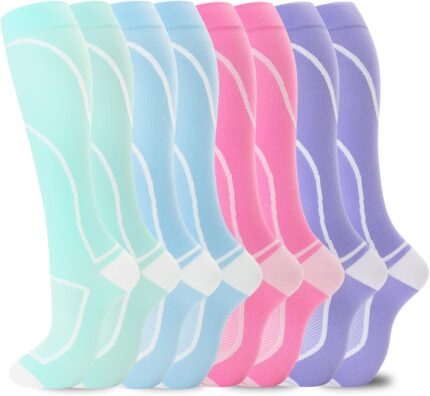
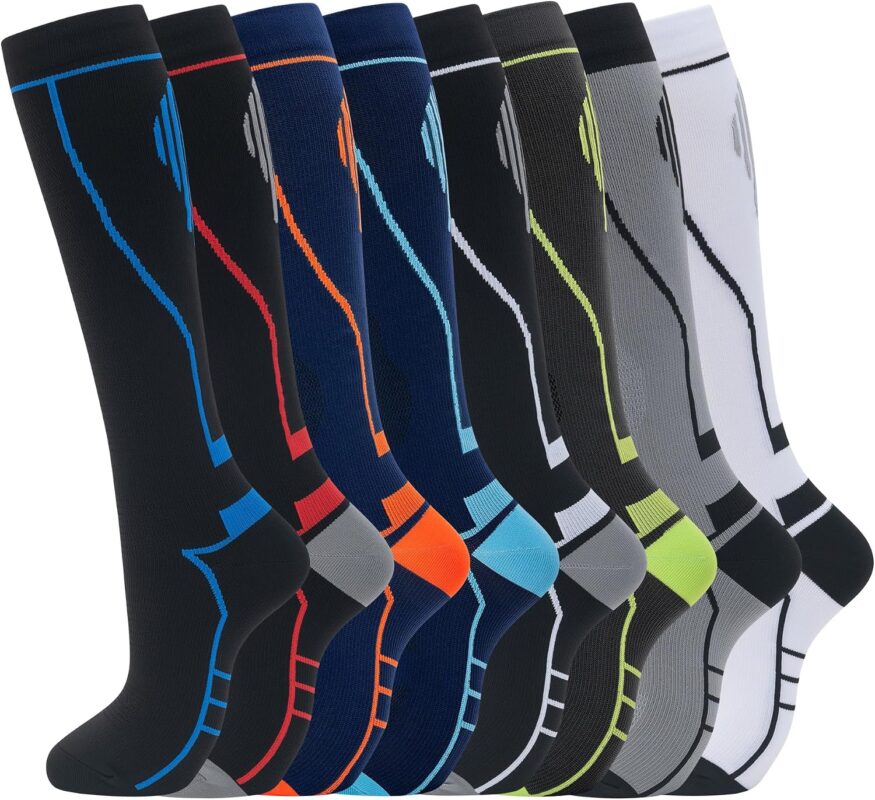
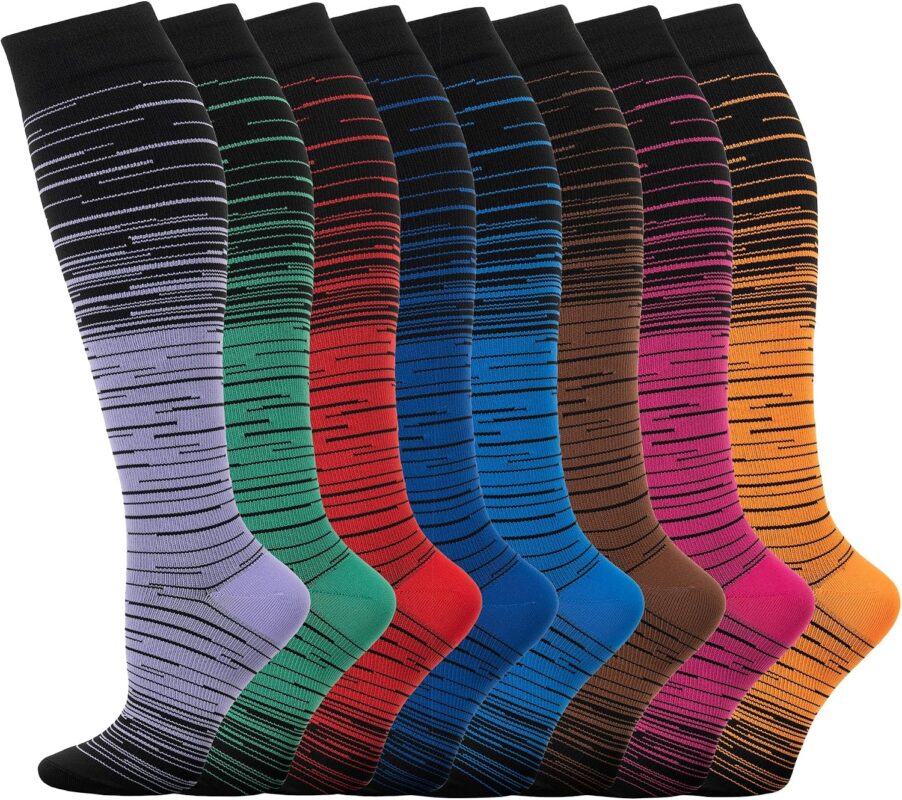
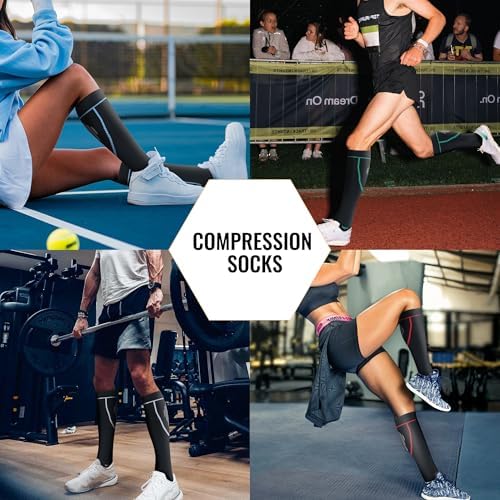
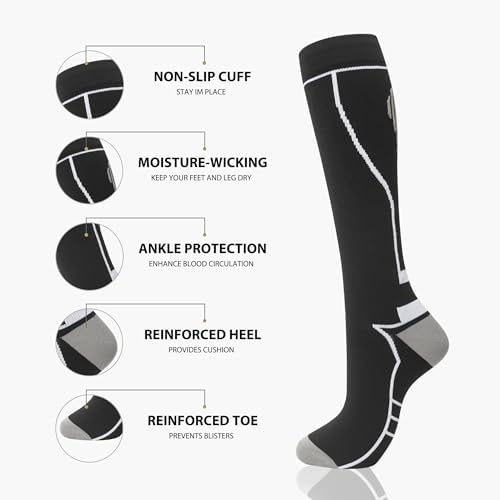
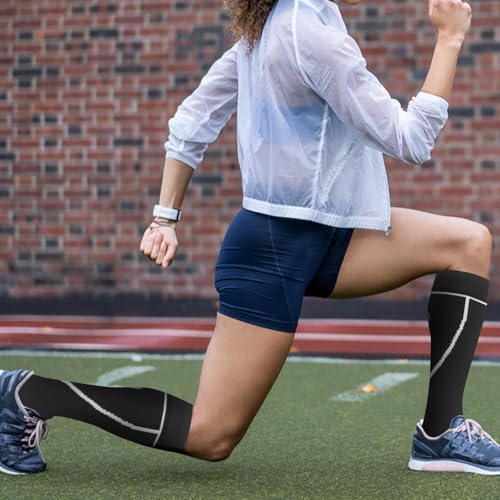
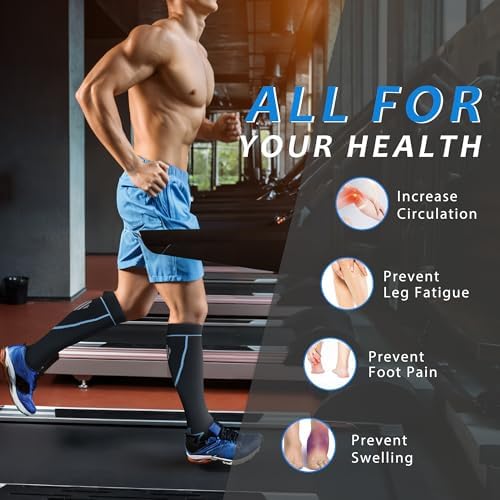
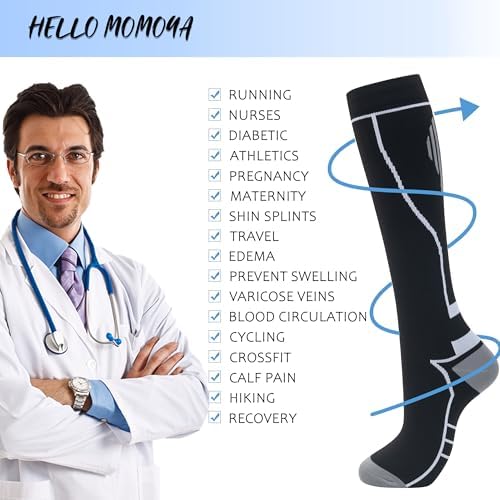
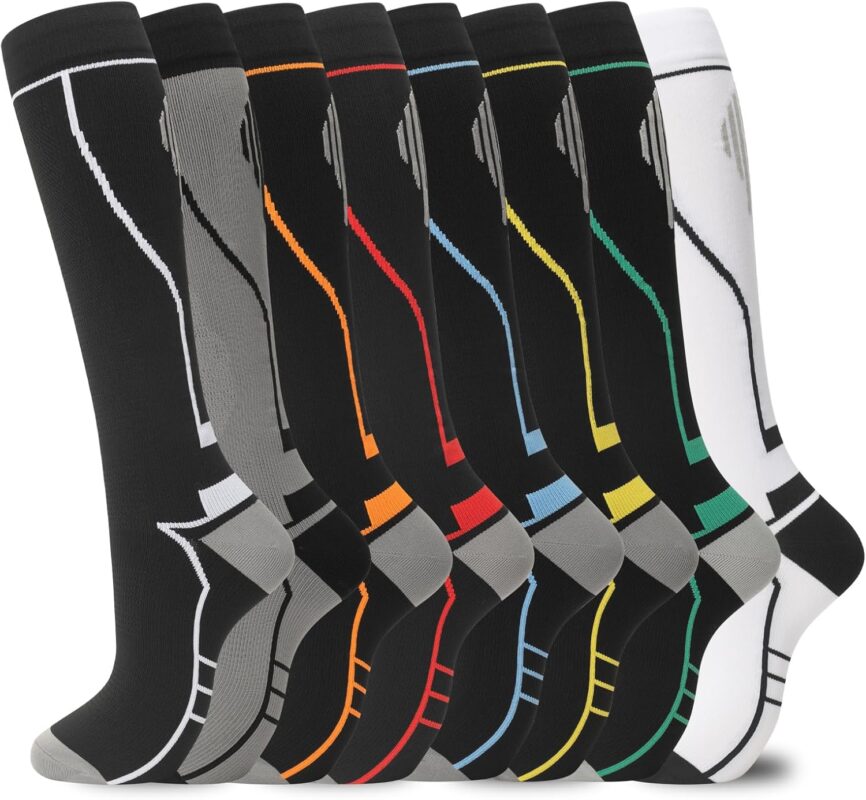
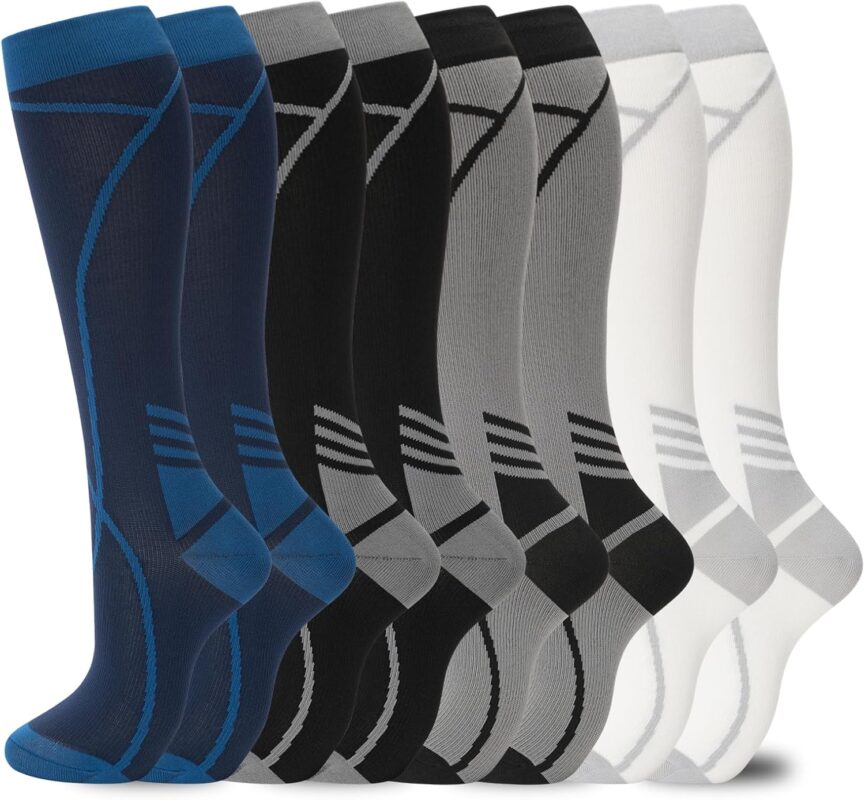
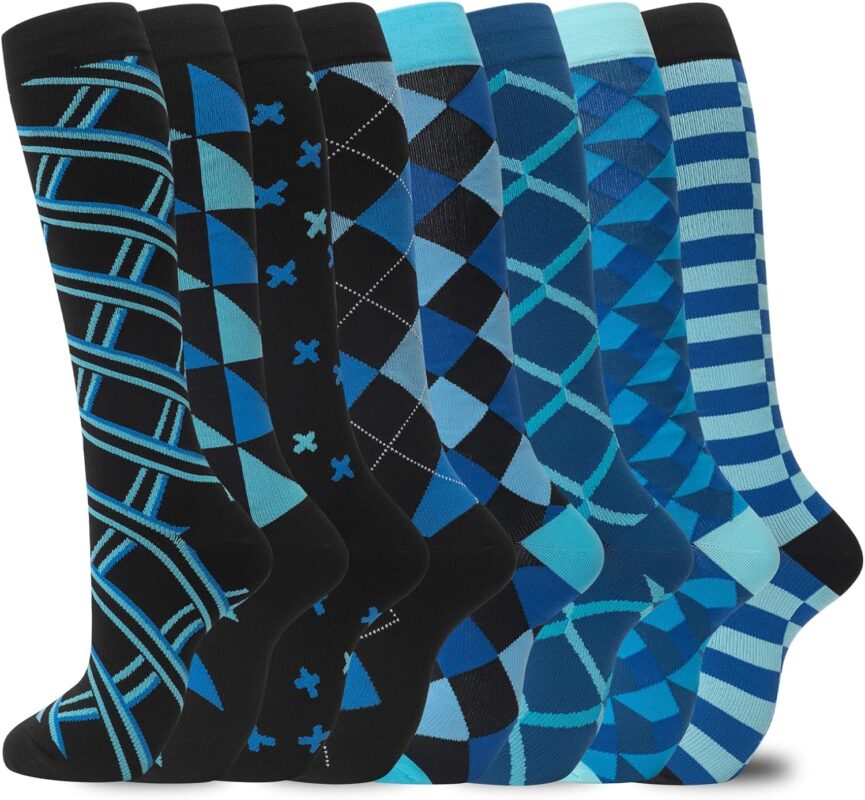
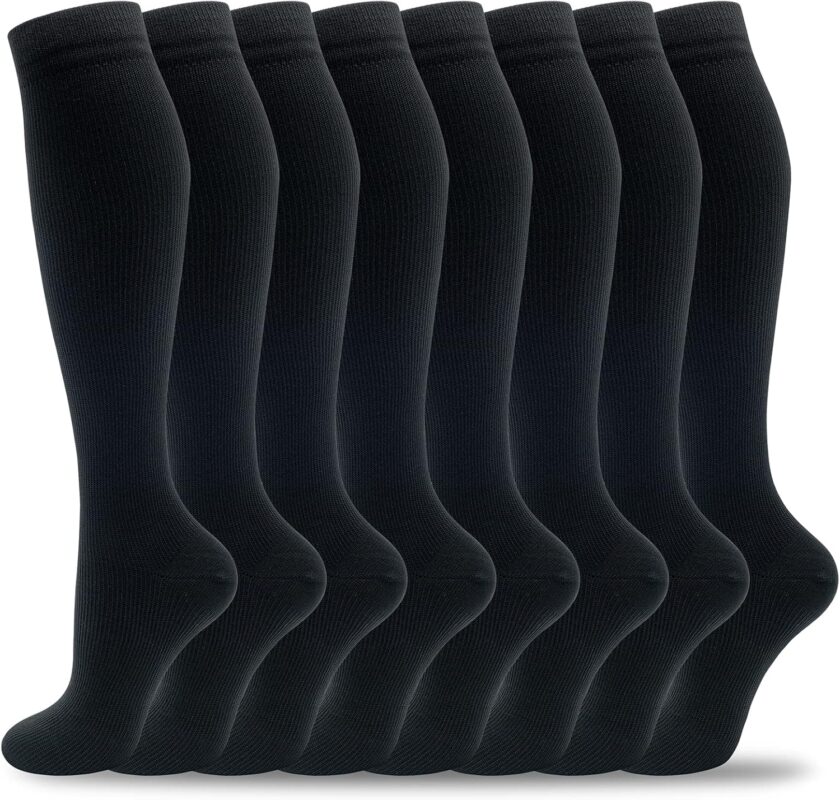
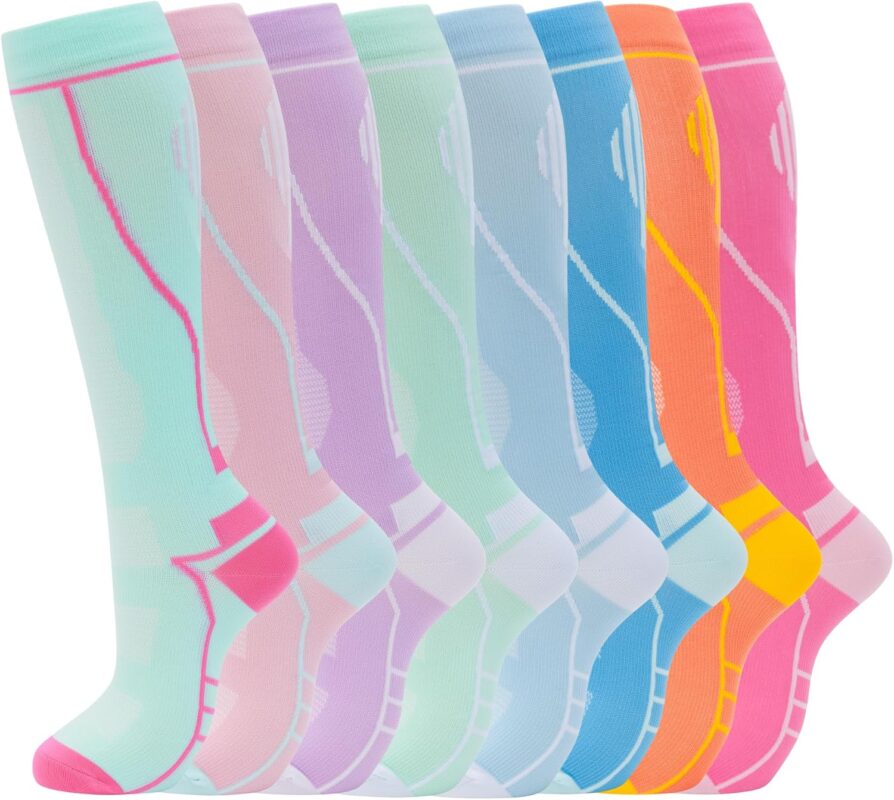
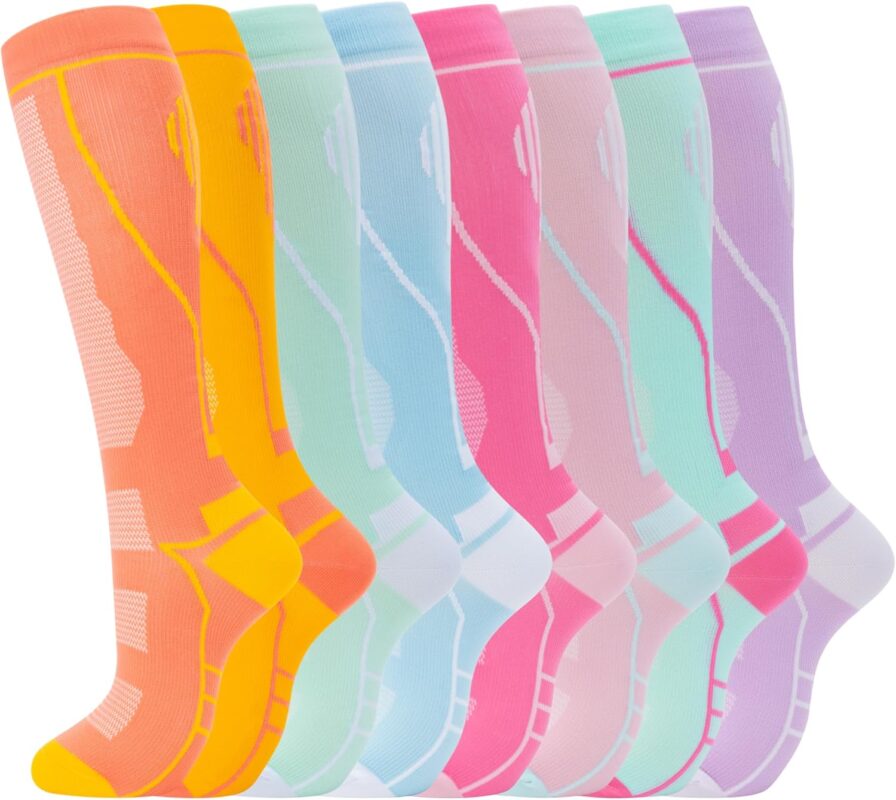
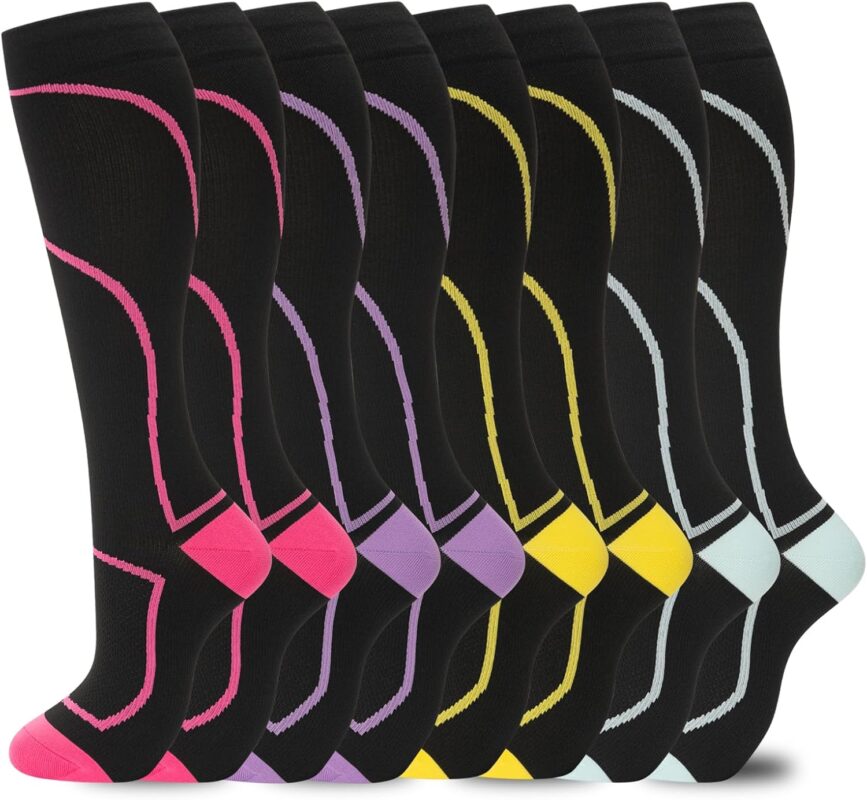
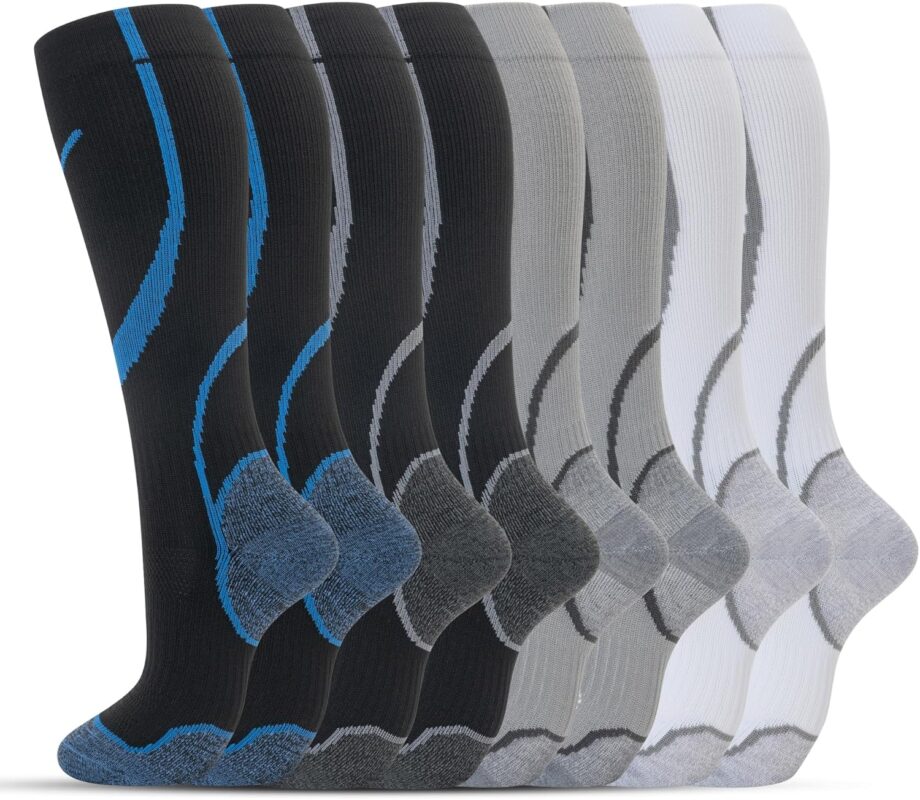
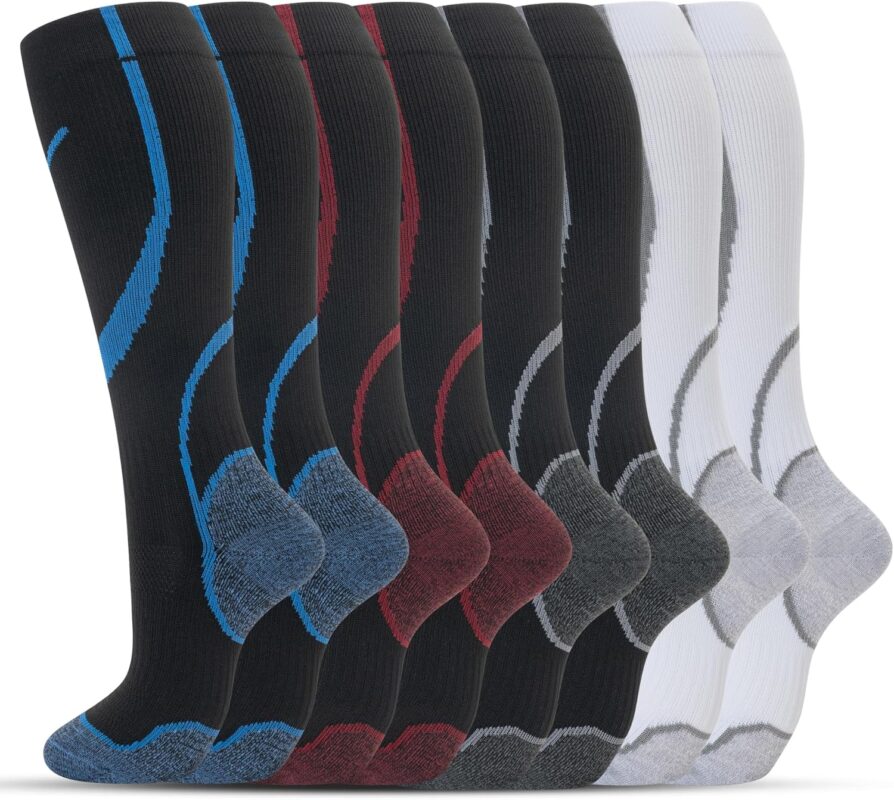
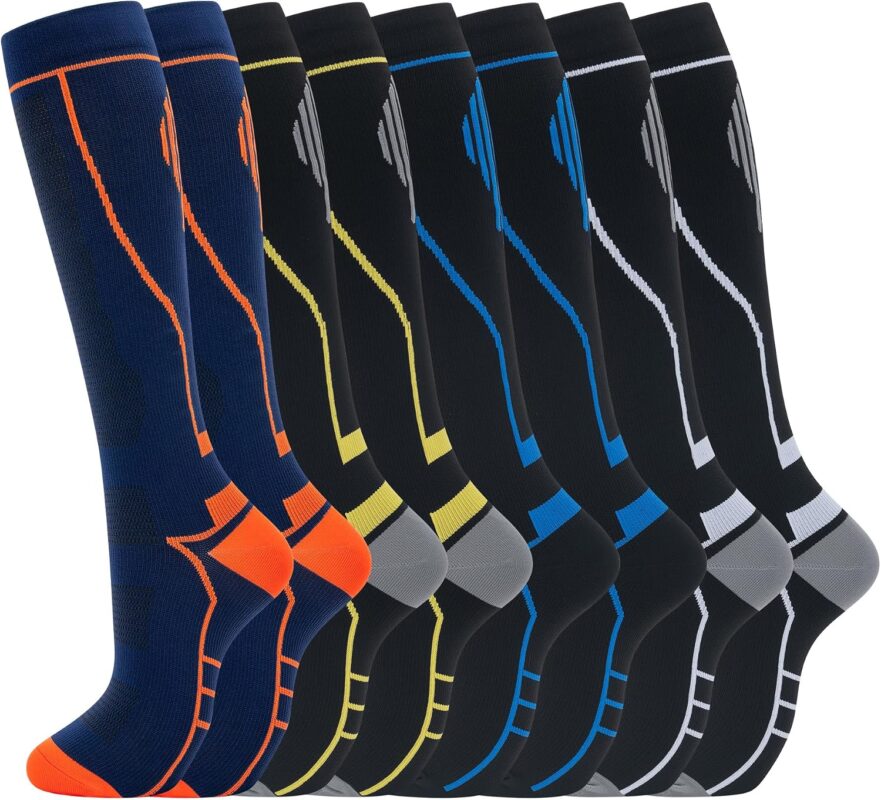
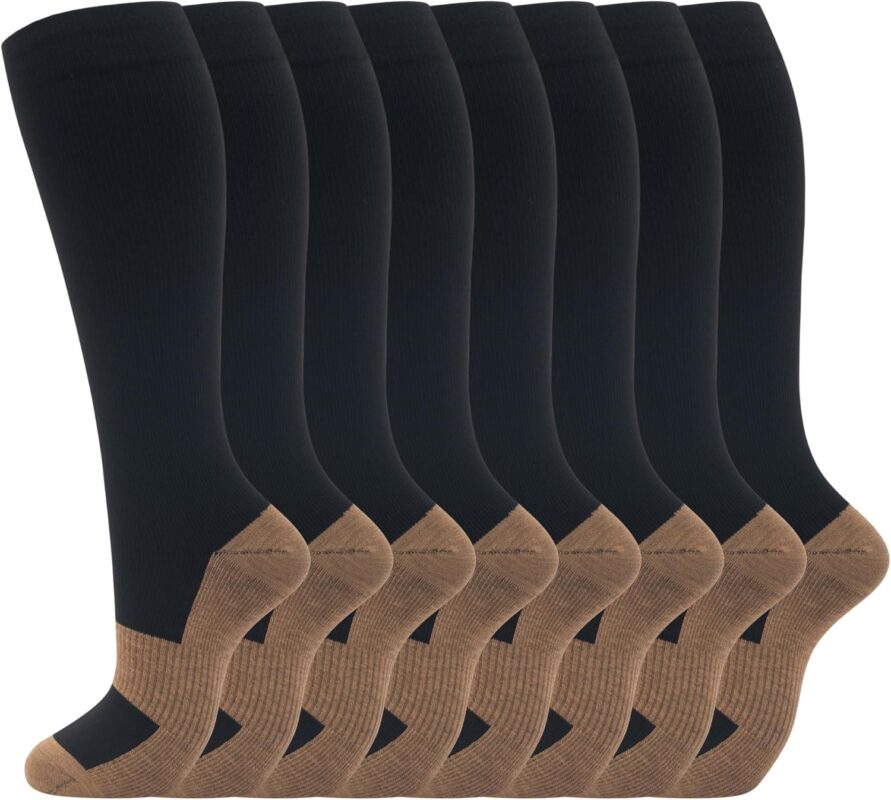
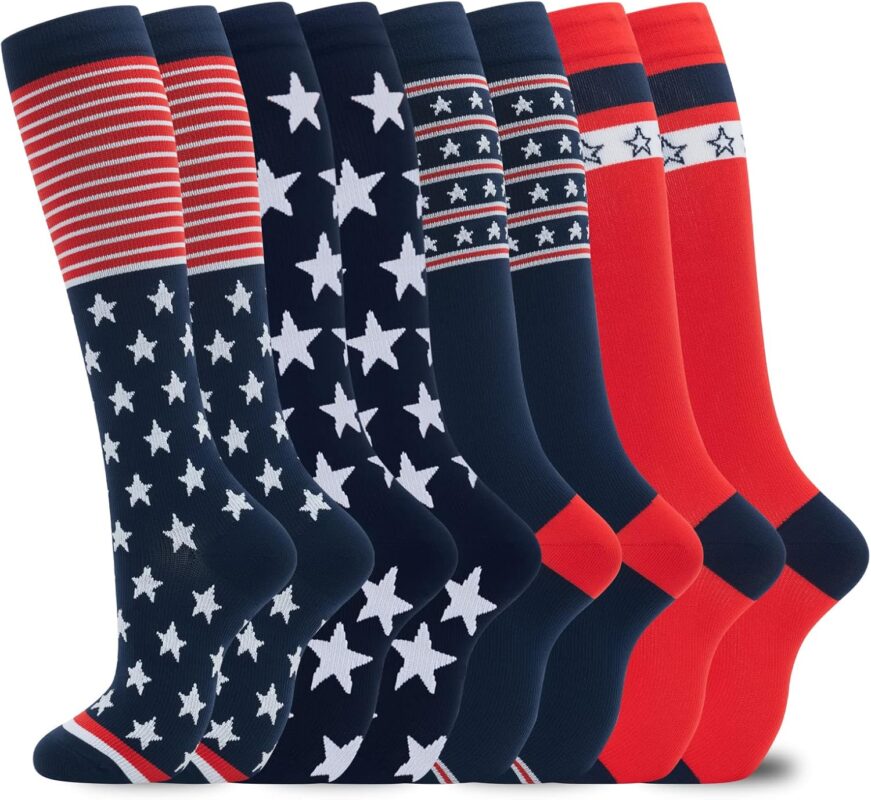
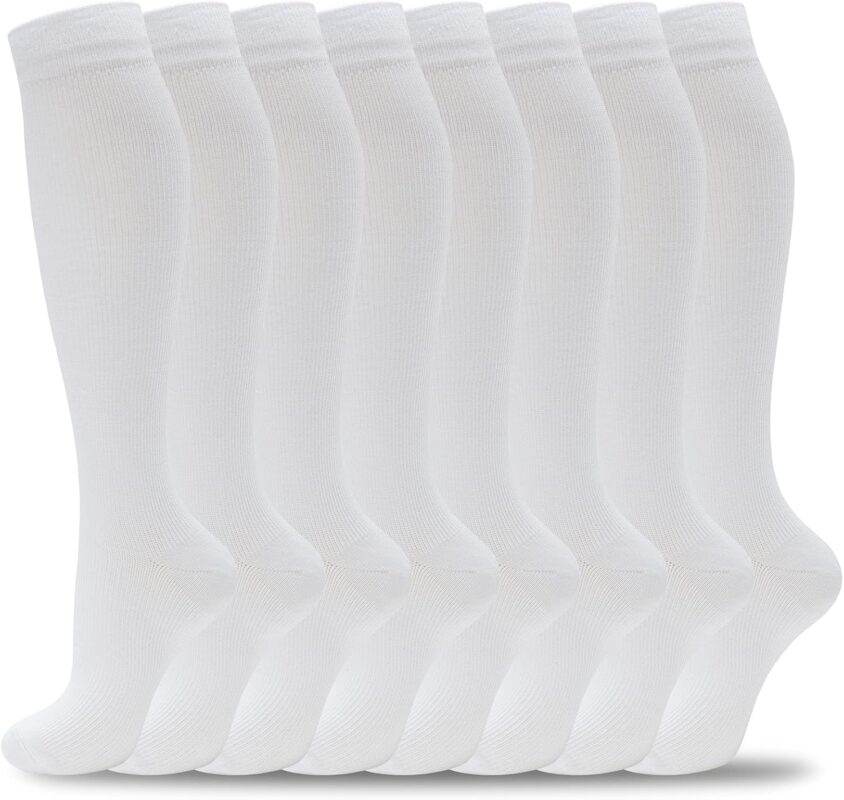
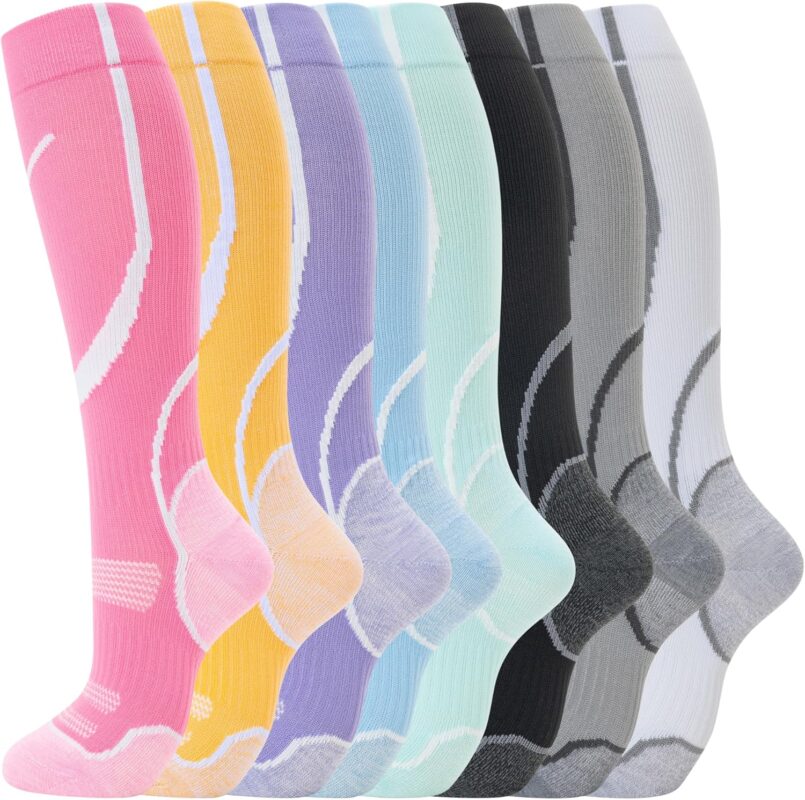
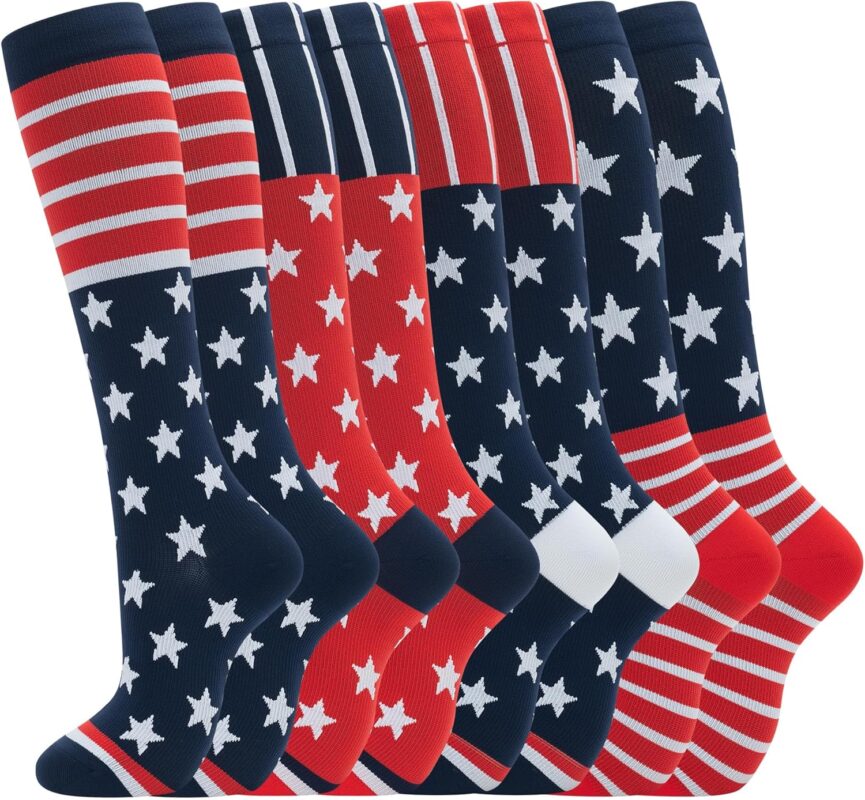
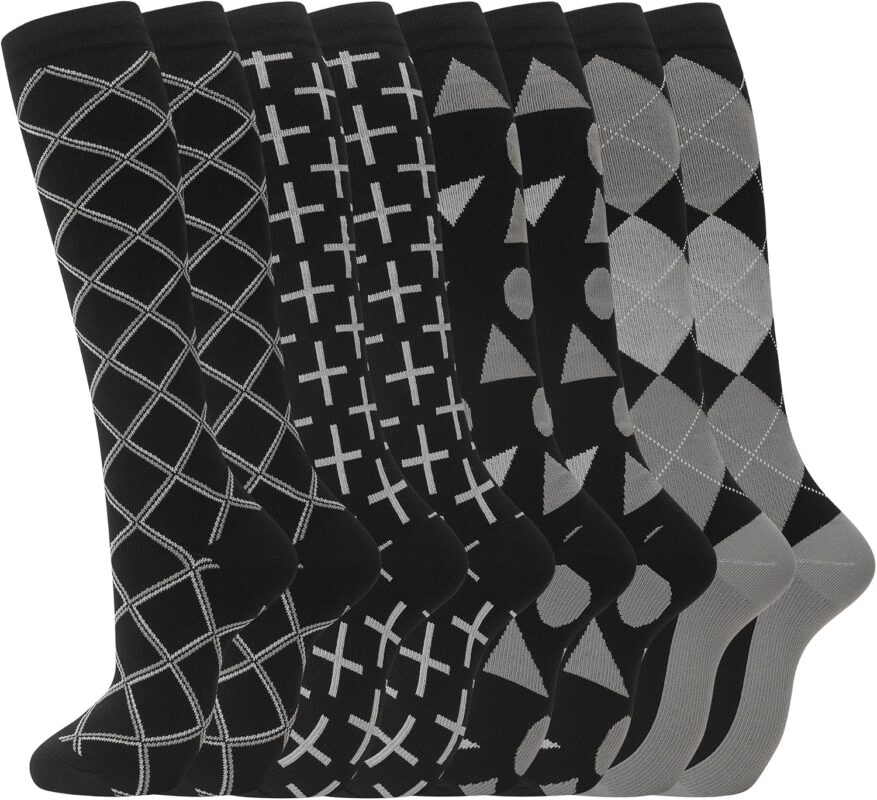
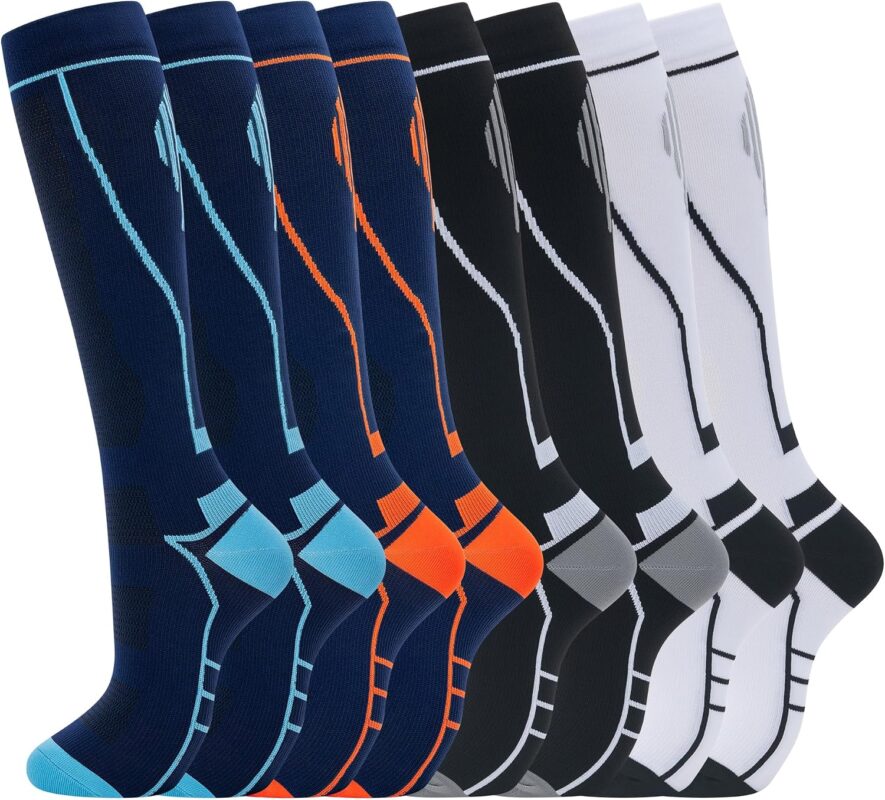
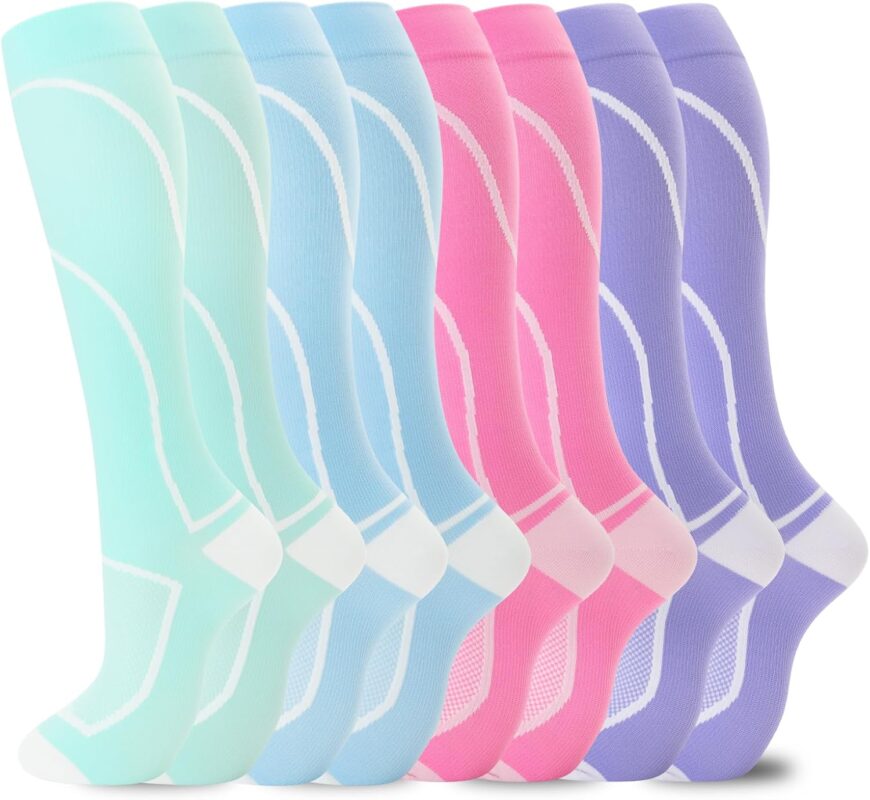
Hello Momoya Compression Socks for Women & Men 8 Pairs Knee High
8 pairs knee high compression socks with graduated support to improve circulation, reduce swelling and fatigue for running, travel, nursing and daily long-hour comfort