
Blog
Are Compression Socks Good for Standing All Day? Evidence

Yes, compression socks are good for standing all day, and real worker studies back that up. In a 12-hour standing shift study, security guards wearing 15–20 mmHg and 20–30 mmHg compression stockings had much less lower-leg muscle fatigue, edema, and discomfort than those wearing regular socks, which makes them a practical tool for people who spend most of the day upright.
That matters because standing all day isn’t just tiring, it changes what happens inside the legs, and the right compression can help offset that strain. For some readers dealing with orthostatic symptoms as well as standing-related leg fatigue, this related overview on compression socks and hyperadrenergic POTS can add helpful context, but the core answer for shift work is straightforward, well-fitted compression often helps.
Table of Contents
- What Clinical Studies Reveal About Standing All Day in Compression Socks
- Why Prolonged Standing Causes Leg Fatigue and Swelling
- Choosing the Right Compression Level for Your Shift Length
- Real-World Evidence From Workers Who Stand All Day
- How to Wear Compression Socks Safely During Long Shifts
- Materials and Fit Options That Make All-Day Wear Comfortable
- Building Your Compression Sock Strategy for Daily Standing
What Clinical Studies Reveal About Standing All Day in Compression Socks
The best answer to are compression socks good for standing all day is yes, especially when they’re worn during real work shifts. In a peer-reviewed study of security guards working a 12-hour standing shift, regular socks were associated with significant muscle fatigue, edema, and discomfort, while both 15–20 mmHg and 20–30 mmHg compression stockings reduced those outcomes much more effectively. The study’s real strength is that it tested workers in their actual environment, not just in a short lab session, so the findings translate well to nurses, retail staff, teachers, hospitality teams, and anyone else who spends most of a shift on their feet. PMC study on 12-hour standing shifts and compression stockings
Why that matters in practice
A lot of consumer advice treats compression socks like a comfort add-on. The occupational data says something more specific, they’re a measurable support tool for standing-related leg strain. That’s a meaningful distinction for people who end the day with heavy calves, puffy ankles, or that dull ache that builds hour by hour.
Practical rule: if a workday involves long, mostly stationary standing, compression is most useful when it’s worn before the legs are already swollen and tired.
The evidence also helps separate marketing claims from what’s been shown. The benefit doesn’t depend on the highest possible pressure level. Both commonly used medical-style ranges, 15–20 mmHg and 20–30 mmHg, were effective in the standing-worker study, which is why those levels show up so often in occupational guidance. If your job keeps you planted in one place for long stretches, that’s the kind of evidence worth paying attention to.
Why Prolonged Standing Causes Leg Fatigue and Swelling
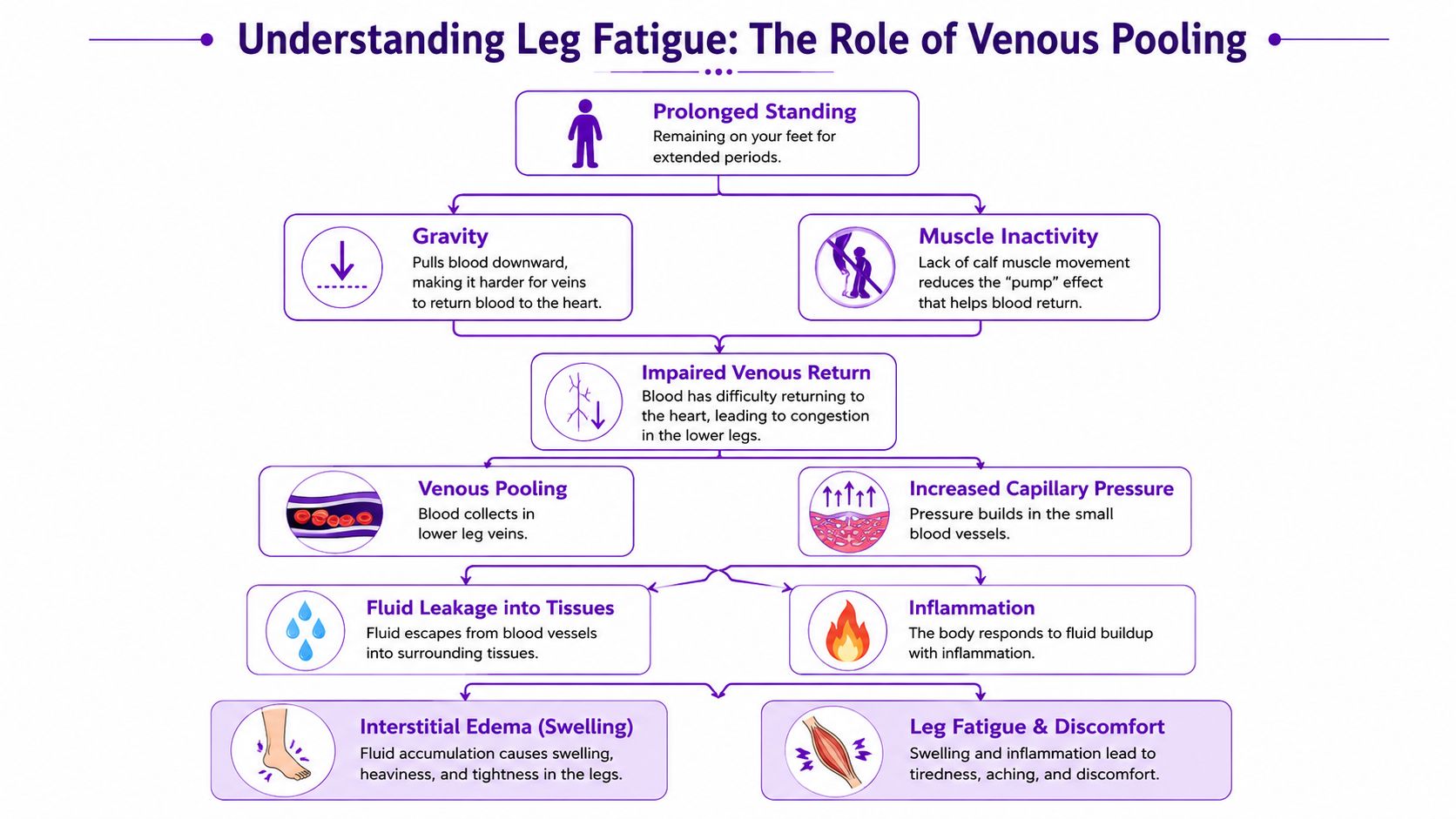
Standing still is harder on the legs than many people expect because gravity keeps pulling blood and fluid downward while the calf muscles stay relatively quiet. Walking helps because the calf acts like a pump, but a long shift at a register, in a classroom, or behind a station leaves that pump underused. Over time, blood can pool in the lower legs, and fluid can start shifting into the surrounding tissues.
What the body is doing during a long shift
The problem is twofold. First, venous return slows, which means blood moves back toward the heart less efficiently. Second, pressure inside the small vessels rises, which encourages fluid to leak into nearby tissue. That combination is what creates the familiar end-of-day heaviness, tightness, and swelling.
Compression socks help by applying graduated pressure, tighter at the ankle and gentler higher up the calf. That external pressure supports venous return and limits fluid buildup, which is why they make more sense than generic “support” socks that don’t provide meaningful compression. The logic isn’t complicated, gravity is always present, so the garment has to work with the leg’s circulation instead of just covering it.
Blood doesn’t get tired, but the system that moves it upward can.
That’s why people often feel worst late in the day. The issue isn’t a single moment of strain, it’s the accumulation of standing, stillness, and fluid shift over hours. Compression doesn’t replace movement, but it can reduce the physiological penalty of being upright for a long time.
Choosing the Right Compression Level for Your Shift Length
Not every pair of compression socks is built for the same kind of day. The pressure range matters because the goal is to match the garment to the amount of standing, the amount of swelling you get, and how much support you can comfortably tolerate. A lighter sock can feel fine for brief use, but a full shift often calls for a more purposeful graduated design.
For people who stand only part of the day, lighter options can be enough. For long, mostly upright shifts, the occupational evidence points to 15–20 mmHg or 20–30 mmHg as the ranges with real support behind them. Graduated compression means the sock is firmest at the ankle and gradually eases upward, which is the part that helps venous return rather than just squeezing the leg evenly.
This mmHg guide on compression levels is useful if you’re comparing pressure ranges side by side. The key is to think about function first, then comfort, then style.
| Compression Levels by Standing Duration | Best For | Typical Use Case |
|---|---|---|
| Light compression | Shorter standing periods or mild daily support | Brief shifts, travel, or people who want a gentler feel |
| 15–20 mmHg | Most all-day standing use | Nurses, teachers, retail workers, hospitality staff, and others on their feet for long stretches |
| 20–30 mmHg | More noticeable swelling, fatigue, or longer standing demands | Full shifts with heavier leg fatigue or recurring end-of-day swelling |
| Higher medical-style compression | Situations that need clinician guidance | Use only when appropriate and fitted correctly |
A simple way to decide is this, choose the lowest level that still controls your symptoms without feeling overly restrictive. If you finish the day with tired legs but little swelling, a moderate range may be enough. If swelling is the main issue, a more supportive range may be the better fit.
Real-World Evidence From Workers Who Stand All Day
The occupational data becomes especially convincing when you look at workers who stand for a living. In a study of hairdressers, lower-limb circumference measured 22.1 ± 2.3 cm at the start of the day, increased to 22.9 ± 2.2 cm after a workday without compression, and was only 21.2 ± 2.1 cm when compression stockings were worn, with p = 0.0001 versus the no-stockings condition. The same study concluded there was no significant lower-limb edema when compression stockings were used. Hairdresser occupational study in PMC
What that looks like on the floor
For a worker, those numbers translate into a very practical difference. Without compression, the legs get visibly fuller through the shift, shoes can feel tighter, and the day ends with that heavy, stretched sensation around the ankles. With compression, the accumulation of swelling is blunted enough that the legs stay closer to their baseline.
A 2024 systematic review also found that across five independent studies, compression stockings consistently reduced lower-limb muscle fatigue, swelling, and discomfort in prolonged-standing work settings, and earlier clinical work in women working standing professions likewise found reductions in ankle and leg edema, venous pooling, and lower-body discomfort during the day. Systematic review on prolonged standing and compression stockings
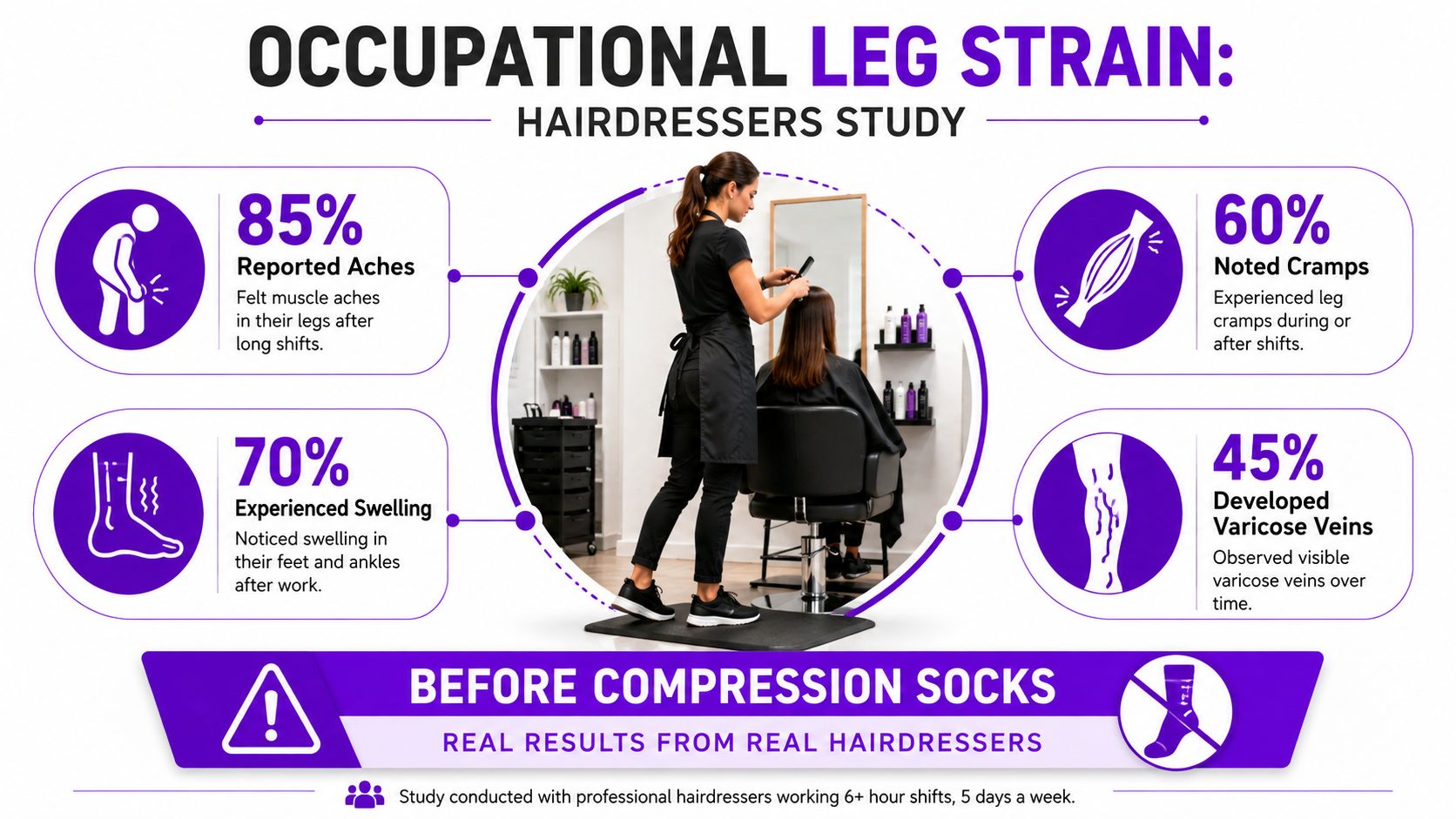
What stands out in these studies is consistency. The benefit isn't limited to one job type or one highly specific product, it shows up in real standing professions where the legs take a predictable beating. That's why compression socks are more than a trend in healthcare and service work, they're a repeatable strategy for reducing end-of-shift strain.
How to Wear Compression Socks Safely During Long Shifts
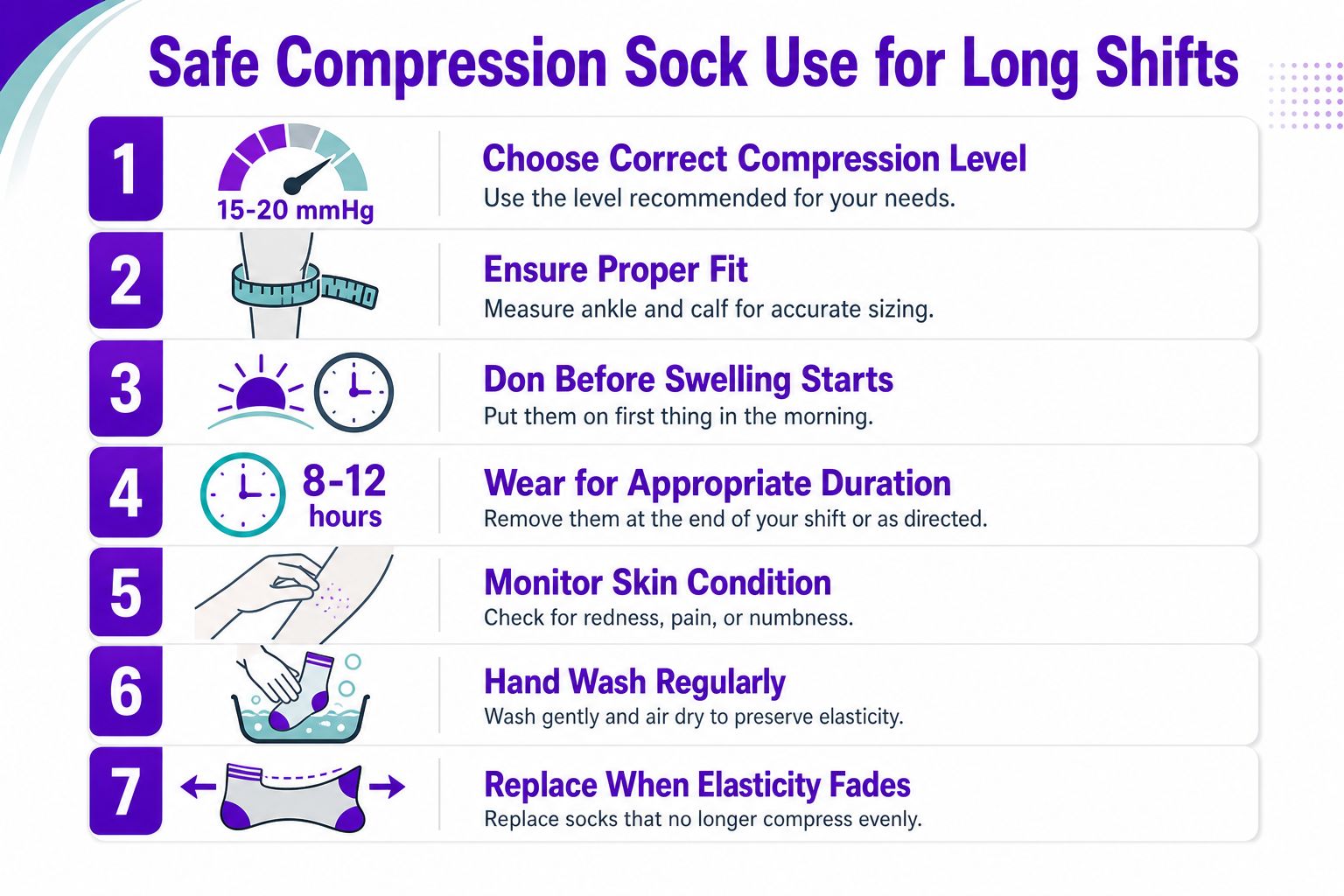
The safest time to put compression socks on is in the morning, before the legs have already started to swell. That timing matters because the garment is meant to help prevent fluid buildup during the day, not just manage the aftermath once swelling is established. You should wear them during active hours and remove them at night unless a clinician gives different instructions.
A good fit should feel snug, not painful. If the socks leave deep marks, cause numbness, irritate the skin, or feel impossibly tight, the size or pressure level may be wrong. People with peripheral artery disease, severe neuropathy, or congestive heart failure should check with a clinician before using compression socks.
Basic safety habits that matter
- Choose the right pressure: Start with a level that matches your standing time and symptoms, then move up only if needed.
- Put them on early: Morning application is easier and usually more effective than waiting until swelling starts.
- Watch your skin: Redness, itching, or irritation can signal friction or fit problems.
- Respect wear time: Daily use during a shift is the normal pattern, not random overnight wear for over-the-counter pairs.
- Keep them clean: Hand washing helps preserve elasticity and keeps the fabric comfortable against the skin.
Fit problems usually show up as discomfort, not just numbers on a label.
That's why compression should feel supportive and workable, not like a battle every morning. If getting them on is difficult, consider a style that's easier to don, because consistency matters more than owning the “strongest” pair.
Materials and Fit Options That Make All-Day Wear Comfortable
Comfort decides whether compression socks become part of your routine or stay in a drawer. A great pressure range won't help if the fabric traps heat, the calf feels pinched, or the opening fights your foot every morning. That's why material and fit options matter just as much as mmHg.
What to look for in daily wear
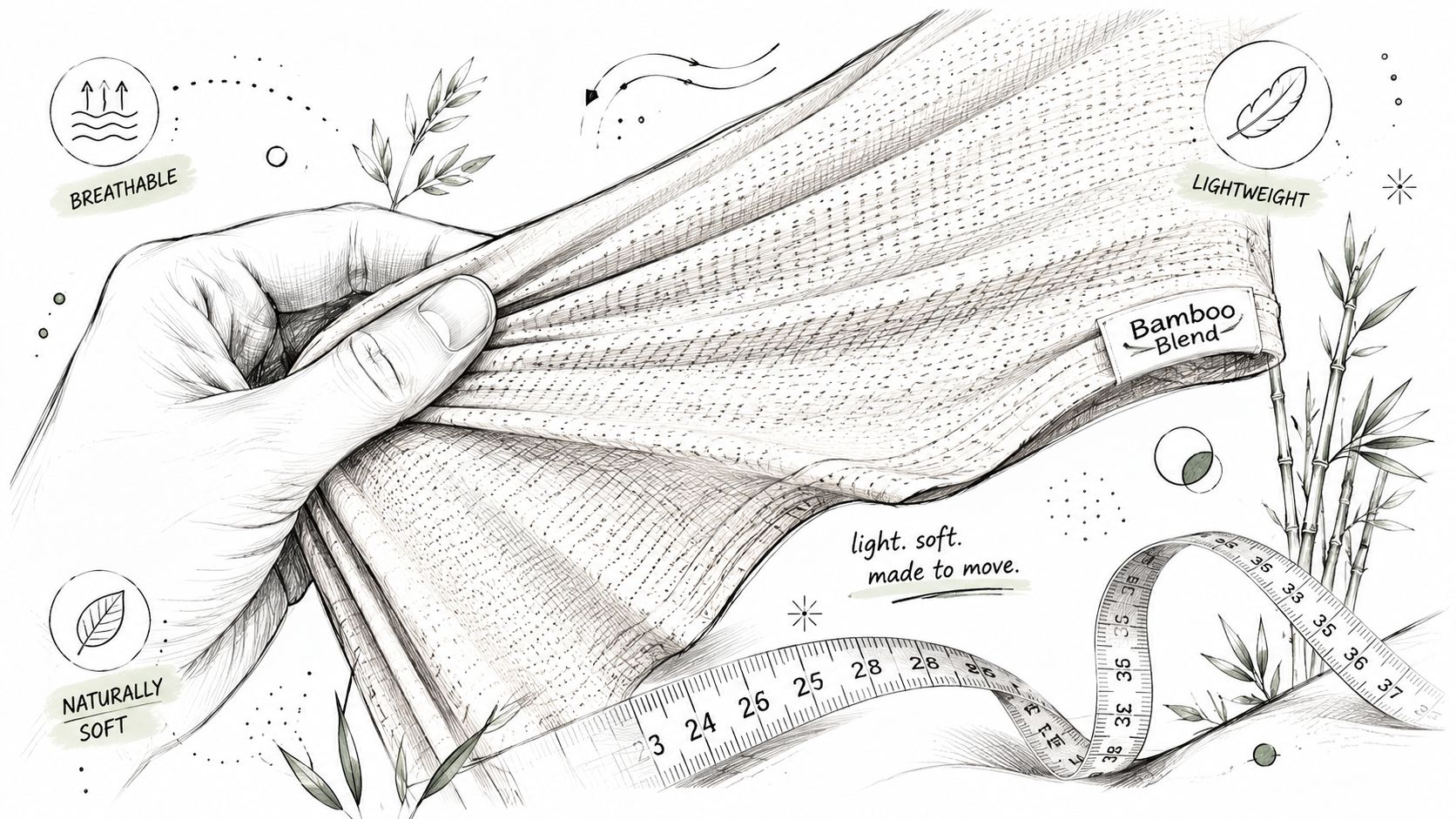
Bamboo viscose is often chosen for its softer feel and moisture handling, which can make long shifts more tolerable in warm environments. Copper-infused fabrics are another option some users prefer when they want a different feel or odor-control focus, though comfort is still personal and depends on the specific garment. If your calves are fuller, wide-calf styles can prevent the top band from feeling restrictive.
Open-toe designs can help people with toe sensitivity or those who just prefer more room at the front of the sock. Zipper-entry styles can be useful when higher compression feels hard to pull on by hand. Plus-size options matter too, because the goal is the same graduated support across different body types, not a one-size approach that fits poorly.
This Brasi Chic compression collection page can be helpful if you're comparing these comfort-first features in one place. The best choice is the one you can wear consistently through the week without dreading it.
The most wearable sock is usually the one that disappears once your shift starts.
That's the standard worth using. If the fabric breathes well, the calf size is right, and the opening doesn't fight you, you're much more likely to keep wearing compression long enough to feel the benefit.
Building Your Compression Sock Strategy for Daily Standing
Start with your shift length and your main symptom. If fatigue is the bigger issue, a moderate level may be enough. If swelling is the main complaint, or if you finish the day with visibly puffy ankles, a more supportive range is often the better match.
Then check fit and fabric. Look for a sock that's snug without pain, breathable enough for your work setting, and easy enough to put on before the day gets going. If you stand most days, keeping more than one pair in rotation makes it easier to stay consistent.
The goal isn't perfection, it's repeatable support that fits your actual workday. The right pair should help you finish a shift with less heaviness, less swelling, and less of the slow, draining fatigue that comes from standing too long.
If you're ready to find compression socks that fit real workdays, Brasi Chic carries size-inclusive options designed for comfort, support, and everyday wear. Visit Brasi Chic to explore compression styles and find a pair that matches your standing routine, fit needs, and preferred level of support.