

Blog
Bamboo Compression Socks for Nurses and Healthcare Workers: Comfort and Support for Long Shifts

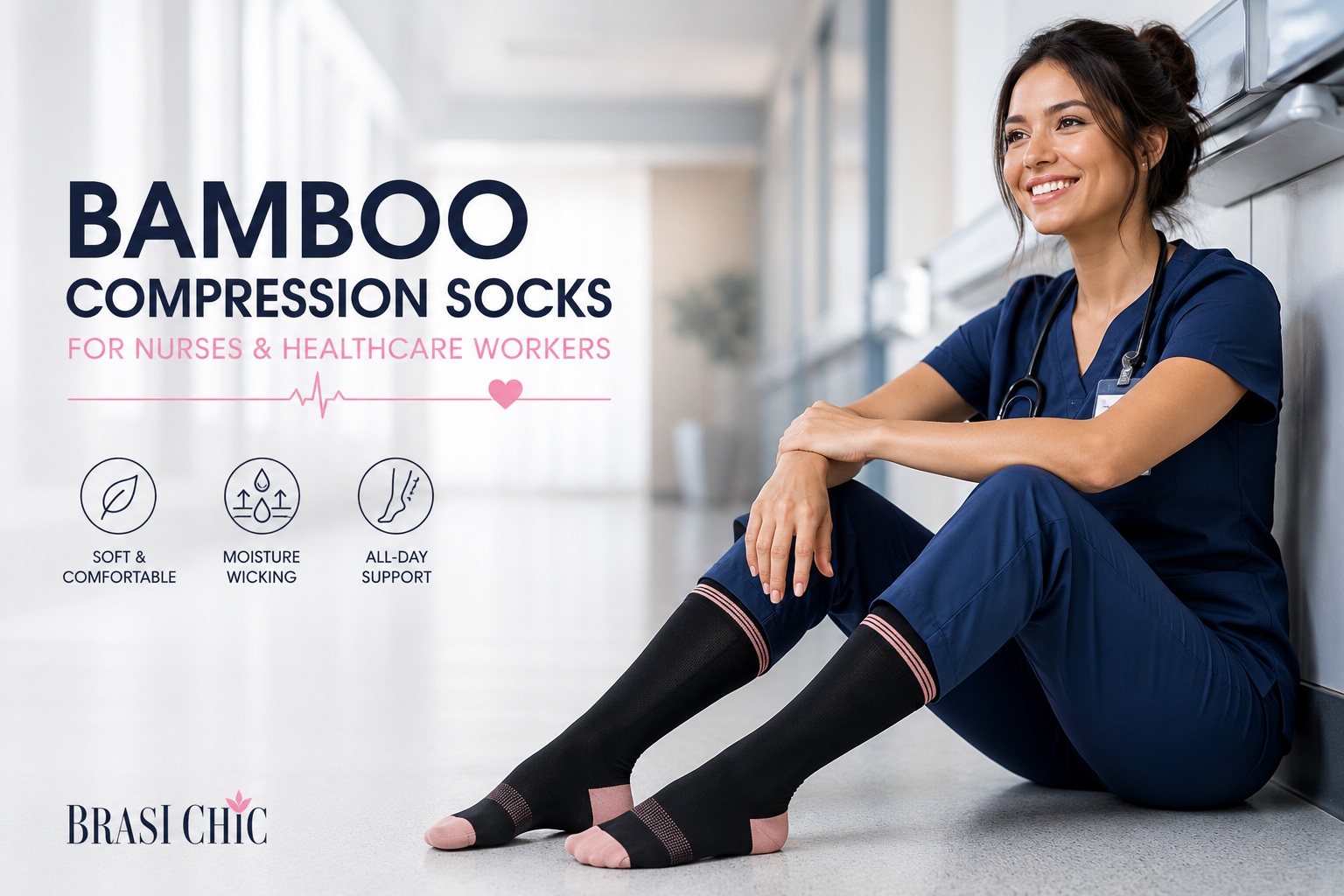
Bamboo compression socks for nurses and healthcare workers combine graduated leg support with soft, moisture-managing fabric, making them a practical choice for professionals who spend long shifts standing, walking, and moving between patients.
Nurses, nursing assistants, physicians, technicians, pharmacists, and other healthcare workers can spend many hours on their feet. By the end of a demanding shift, tired, heavy-feeling legs and swelling around the ankles can become an unwelcome part of the workday.
Compression socks are designed to provide controlled pressure around the lower leg. When that support is combined with bamboo-derived viscose fabric, the goal is a sock that balances compression with softness and everyday comfort.
But are bamboo compression socks actually a good choice for nurses? What compression level should healthcare workers consider? And how do bamboo socks compare with cotton or standard synthetic compression socks?
This guide covers the most important factors to consider before buying.
Why Nurses and Healthcare Workers Wear Compression Socks
Healthcare jobs frequently involve prolonged standing and walking. A nurse may move continuously between patient rooms, stand during procedures, sit while charting, and then return to walking—all during the same shift.
Research supports the use of compression stockings for people whose occupations involve prolonged standing.
A randomized controlled trial involving 75 healthcare professionals working six-hour standing shifts investigated graduated compression stockings for occupational use. The researchers noted that prolonged standing is associated with a risk of chronic venous problems and evaluated compression stockings as a way to counteract occupational venous pressure.
Another randomized controlled trial found that below-knee compression stockings with measured interface pressure of approximately 18–21 mmHg significantly reduced occupational lower-leg swelling and discomfort associated with prolonged standing and sitting.
This helps explain why compression socks have become common among nurses and other workers who spend much of the day on their feet.
Common Reasons Healthcare Workers Choose Compression Socks
Healthcare professionals may wear them for:
- Long nursing shifts
- Extended periods of standing
- Frequent walking between departments
- Tired or heavy-feeling legs
- Mild end-of-shift swelling
- Long periods of sitting while charting
- Travel to and from work
- Additional everyday lower-leg support
Compression socks shouldn’t be viewed as a replacement for professional medical care. Instead, they can be a practical piece of workwear for people whose jobs place significant demands on their legs.
What Makes Bamboo Compression Socks Different?
The term bamboo compression socks typically refers to compression socks containing viscose or rayon derived from bamboo rather than socks made directly from untreated bamboo fibers.
The material matters because a compression sock has two jobs.
First, it needs enough elasticity and structure to deliver its intended compression. Second, it needs to remain reasonably comfortable against the skin for hours at a time.
Bamboo-viscose blends can help address the second requirement.
Research examining different sock fibers has evaluated bamboo alongside cotton, viscose, modal, and other regenerated cellulose fibers for properties including air permeability, water-vapor transfer, wicking, wetting, and heat transfer. The findings indicate that fiber type, moisture regain, fabric thickness, and construction all affect sock comfort.
Other textile research has found that regenerated cellulosic materials can offer favorable moisture-management characteristics compared with conventional cotton under certain constructions.
That makes bamboo-viscose blends particularly interesting for people wearing socks inside closed work shoes for extended periods.
Bamboo vs. Cotton vs. Synthetic Compression Socks
No single fabric is automatically best for everyone. Construction, compression level, fit, fiber percentages, and personal preference matter just as much as the material named on the package.
Here is a practical comparison.
| Feature | Bamboo Viscose Compression Socks | Cotton-Blend Compression Socks | Synthetic Compression Socks |
|---|---|---|---|
| Feel against skin | Usually soft and smooth | Familiar, soft feel | Varies by construction |
| Moisture management | Often very good | Moderate to good | Often good, depending on fiber |
| Breathability | Can be very good | Generally comfortable | Varies considerably |
| Compression performance | Depends on elastic blend and construction | Depends on blend | Often strong and consistent |
| Best suited for | Long-shift comfort | Everyday wear | Performance-focused compression |
| Work-shoe use | Excellent option | Good option | Good option |
| Durability | Depends heavily on blend | Generally good | Often very good |
| Ideal buyer | Comfort-focused healthcare workers | Cotton-preferring users | Users prioritizing firm support |
Textile testing is important here because the word “bamboo” alone does not guarantee superior performance.
For example, research comparing sock materials has found that viscose socks can provide better moisture absorption and breathability than comparable cotton socks, although abrasion resistance can be lower.
The best bamboo compression socks therefore usually use a blend. Bamboo-derived viscose provides softness and moisture handling, while fibers such as nylon, polyester, or spandex provide elasticity, shape retention, and compression.
Benefits of Bamboo Compression Socks for Nurses
1. Comfortable for Long Shifts
Comfort becomes especially important when socks are worn for eight, ten, or twelve hours.
A fabric that feels acceptable for an hour may become irritating after an entire workday. Nurses should therefore look beyond compression strength and consider the sock’s overall construction.
Bamboo-viscose blends are popular because they tend to have a smooth, soft hand feel.
For healthcare workers who prioritize comfort, this can make bamboo compression socks easier to incorporate into a daily uniform.
2. Moisture Management Inside Work Shoes
Healthcare professionals often spend most of their shift wearing enclosed shoes.
That means heat and moisture can accumulate around the feet.
Sock research has specifically examined moisture absorption, air permeability, wicking, water-vapor transfer, and thermal properties because these characteristics influence comfort inside footwear.
Bamboo and other regenerated cellulosic fibers have demonstrated useful moisture-management characteristics in textile testing, although performance varies according to fiber blend and knit construction.
For nurses working long shifts, that can be an important buying consideration.
3. Graduated Lower-Leg Support
Most everyday medical-style compression socks use graduated compression.
This means the sock is designed to provide greater pressure near the ankle, with pressure decreasing farther up the leg.
This design differs significantly from ordinary knee-high socks that simply feel tight.
Proper fit is important because compression should be distributed according to the product’s design rather than bunching, folding, or creating excessively tight areas.
4. Support During Prolonged Standing
Standing all day can contribute to occupational leg swelling.
One study examining workers who experienced leg swelling and pain after standing for more than eight hours found benefits associated with medical compression stockings as part of the evaluated interventions.
For healthcare workers, compression socks can therefore be particularly relevant during shifts involving extensive standing.
5. Knee-High Coverage Works Well With Healthcare Uniforms
Knee-high compression socks are one of the most practical options for nurses.
They fit easily underneath scrub pants, provide lower-leg coverage, and don’t require changing the rest of the uniform.
They are also easier to put on than thigh-high compression garments for many people.
What Compression Level Is Best for Nurses?
Compression strength is normally measured in mmHg, or millimeters of mercury.
Different levels serve different purposes.
| Compression Level | General Support Level | Potential Use for Healthcare Workers |
|---|---|---|
| 8–15 mmHg | Light | Everyday support and people new to compression |
| 15–20 mmHg | Moderate | Long shifts, standing, walking and everyday occupational support |
| 20–30 mmHg | Firm | Stronger compression; may be appropriate when specifically needed or recommended |
| 30–40 mmHg | Extra firm | Typically used for more specific medical needs and should generally involve professional guidance |
For many healthy nurses simply seeking everyday occupational support, 15–20 mmHg compression socks can offer a useful balance between compression and wearability.
Someone who has been advised to wear firmer compression may instead need 20–30 mmHg compression socks.
Higher compression isn’t automatically better.
The right level depends on the wearer, reason for use, fit, and any underlying medical conditions.
15–20 mmHg vs. 20–30 mmHg for Nurses
This is one of the most common comparisons healthcare workers make when shopping.
| Factor | 15–20 mmHg | 20–30 mmHg |
|---|---|---|
| Compression | Moderate | Firm |
| Everyday workwear | Excellent | Suitable when stronger support is desired |
| Long standing shifts | Yes | Yes |
| Ease of putting on | Generally easier | Usually more difficult |
| First-time compression wearer | Often a practical starting range | May feel quite firm |
| Mild tired-leg support | Common choice | More compression than some users need |
| Medical conditions | Ask a clinician when appropriate | Professional guidance may be important |
The goal isn’t to buy the tightest sock available. It is to find a compression level that matches your needs and that you can wear consistently and comfortably.
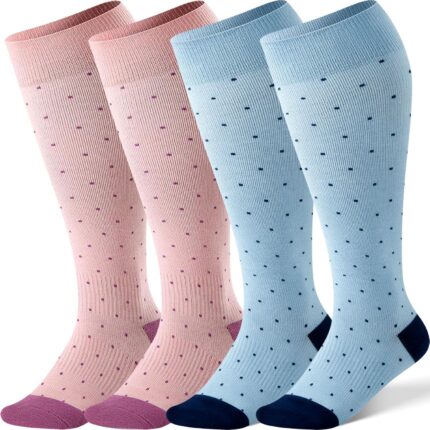
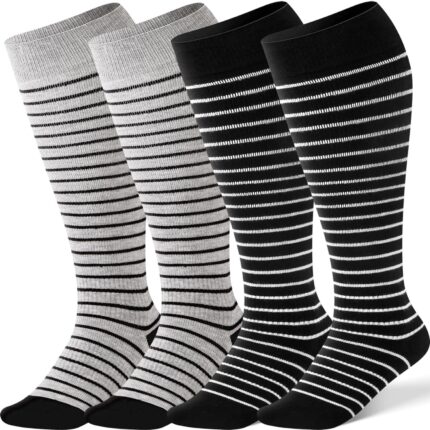
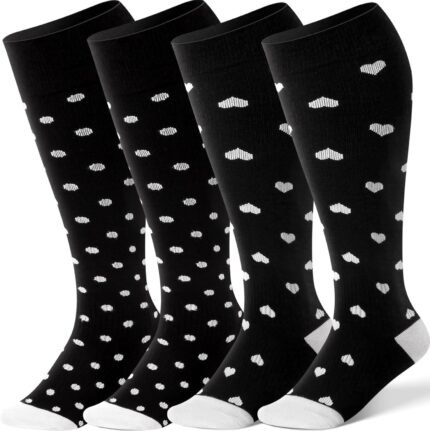
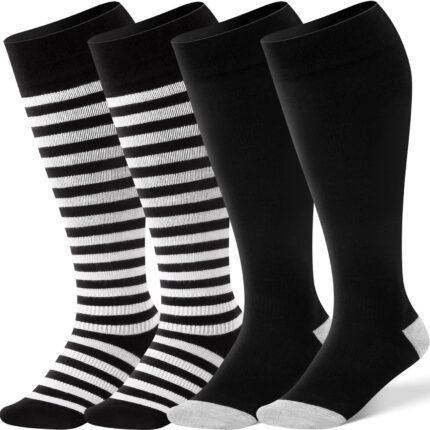
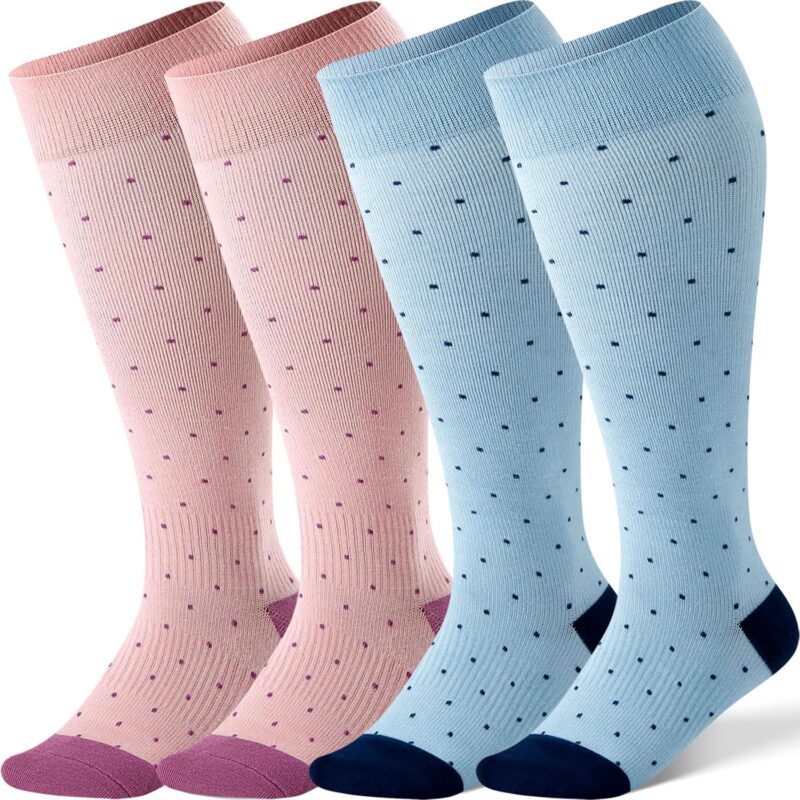
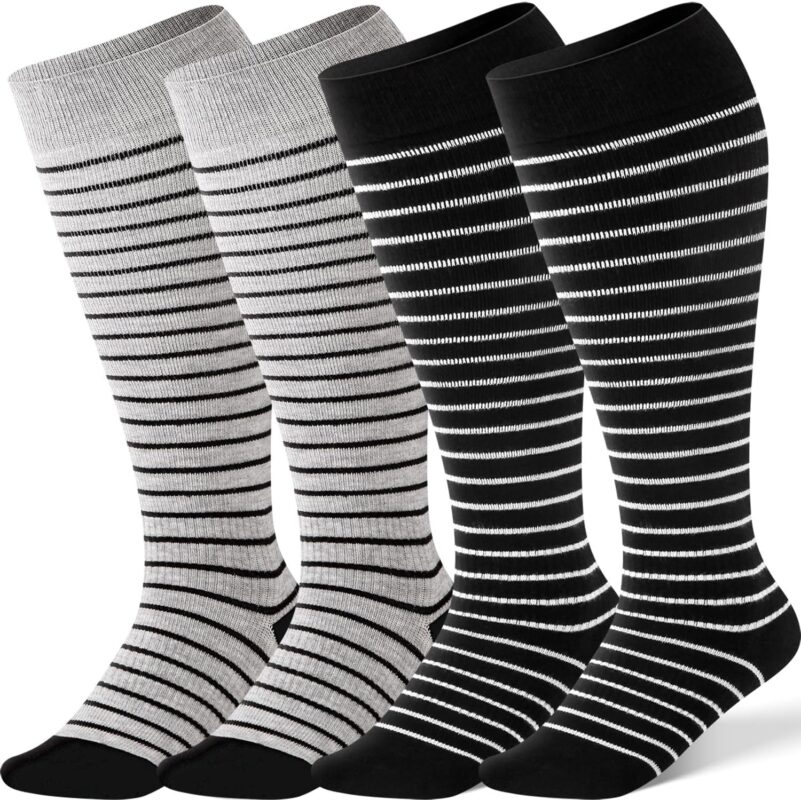
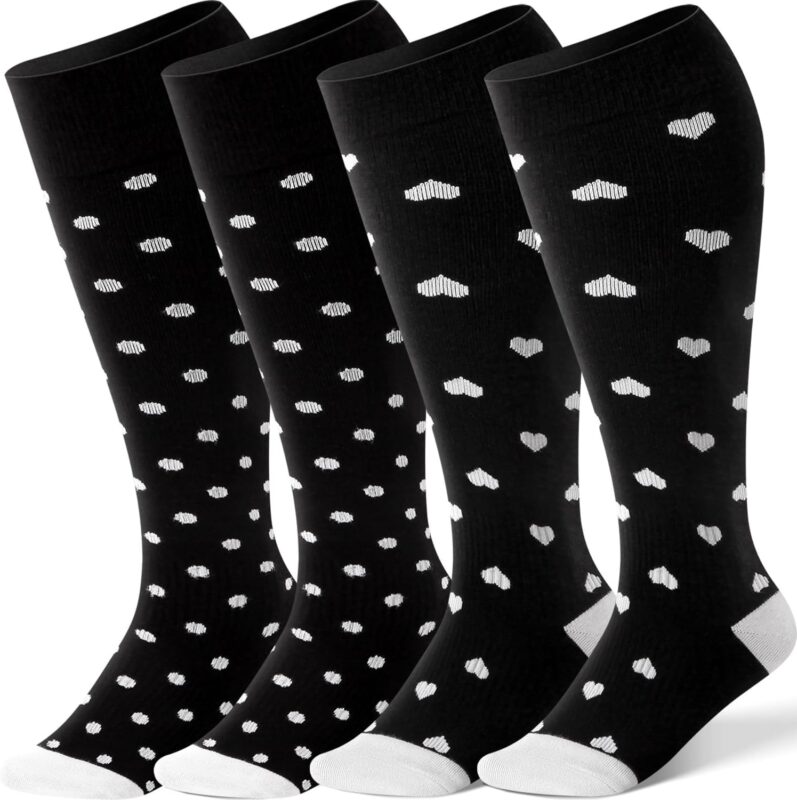
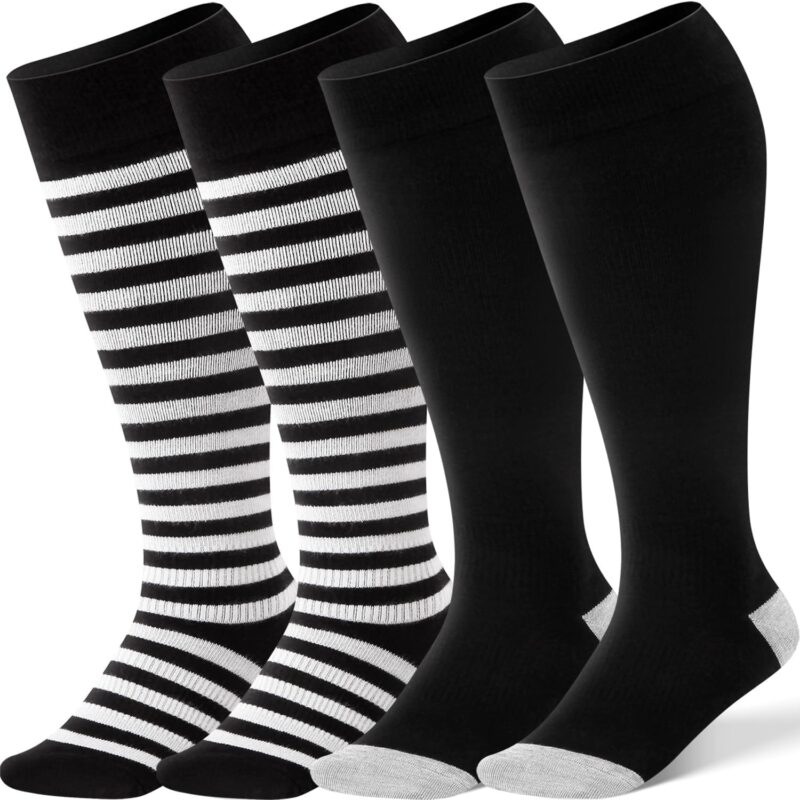
LIKAWEN Bamboo Wide Calf Compression Socks 15-20 mmHg Plus Size 2 Pairs
Soft bamboo wide calf compression socks with 15-20 mmHg support to improve circulation, reduce swelling, and keep legs comfortable during work, travel, pregnancy, and daily activities.
How Should Bamboo Compression Socks Fit?
Correct sizing is critical.
A compression sock that is too loose may not deliver the intended graduated pressure. A sock that is excessively tight can become uncomfortable and may be inappropriate.
Before purchasing, check the manufacturer’s sizing chart.
Depending on the product, sizing may use:
- Ankle circumference
- Calf circumference
- Shoe size
- Leg length
- Height and weight
For compression socks, ankle and calf measurements are often more useful than relying only on shoe size.
Measure your legs when swelling is minimal, preferably earlier in the day, and compare those measurements with the specific product’s size chart.
Features Nurses Should Look for Before Buying
Not all bamboo compression socks are constructed equally.
For healthcare professionals, consider these features:
Graduated compression: Look for a clearly stated compression range such as 15–20 mmHg rather than vague claims about “support.”
Bamboo-viscose blend: Check the actual fiber composition instead of relying only on “bamboo” in the product title.
Comfortable top band: A well-designed cuff should help keep the sock in place without excessive digging or rolling.
Reinforced heel and toe: Healthcare workers may put substantial mileage on their socks. Reinforcement can improve practical durability.
Smooth toe construction: Reducing bulky seams can improve comfort inside work shoes.
Open-toe option: If you prefer more airflow and freedom around the toes, consider our toeless bamboo compression socks with breathable bamboo viscose and 18-25 mmHg graduated support.
Moisture management: Particularly useful during extended shifts in enclosed footwear.
Proper sizing: A detailed size guide is much more useful than generic small/medium/large sizing without measurements.
Bamboo Compression Socks vs. Regular Nursing Socks
Regular socks and compression socks serve different purposes.
| Regular Nursing Socks | Bamboo Compression Socks |
|---|---|
| Primarily cover and cushion the feet | Provide both coverage and graduated support |
| Usually no measured compression | Available in specific mmHg ranges |
| May be soft and breathable | Can combine softness with compression |
| Suitable for ordinary daily wear | Designed for people seeking additional lower-leg support |
| No pressure gradient | Graduated designs decrease pressure up the leg |
If your primary concern is simply having comfortable socks under your scrubs, regular bamboo socks may be enough.
If you’re specifically looking for lower-leg compression during long shifts, graduated bamboo compression socks provide a different type of support.
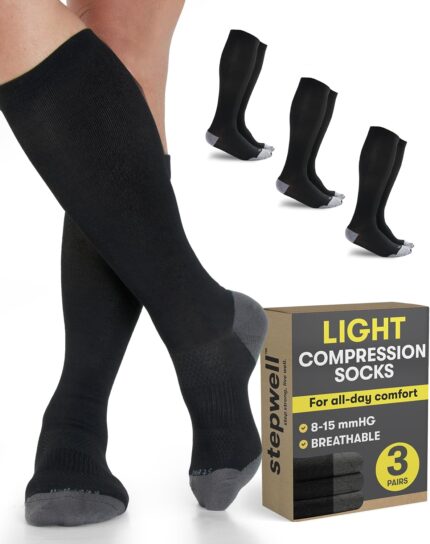
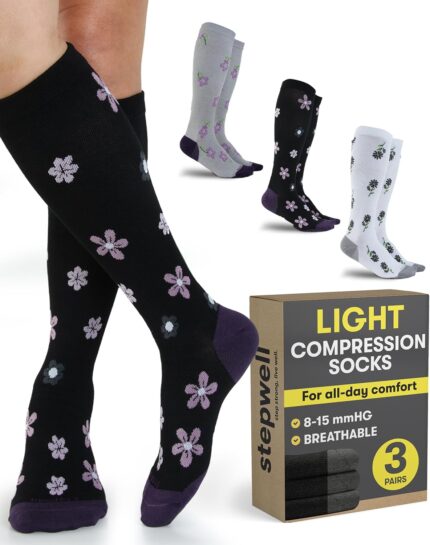
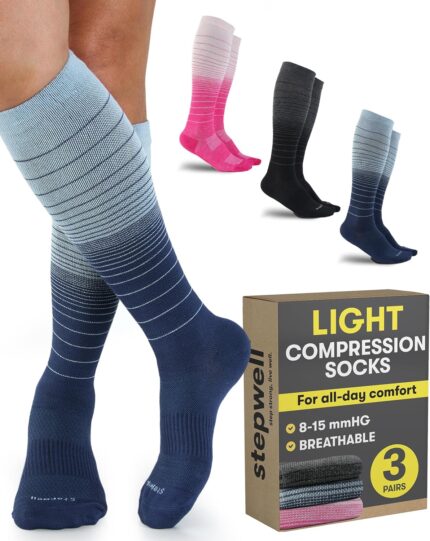
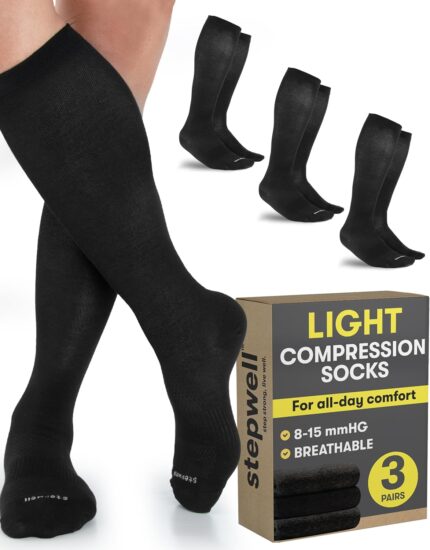
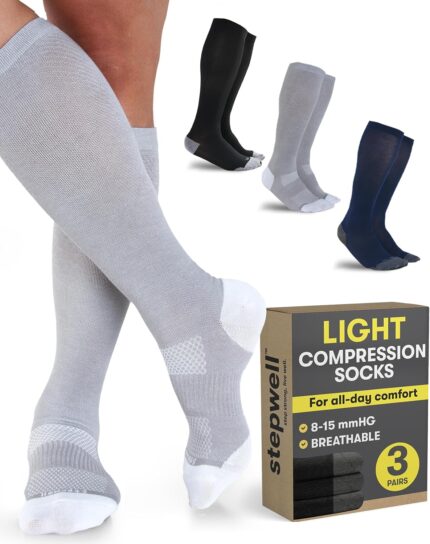
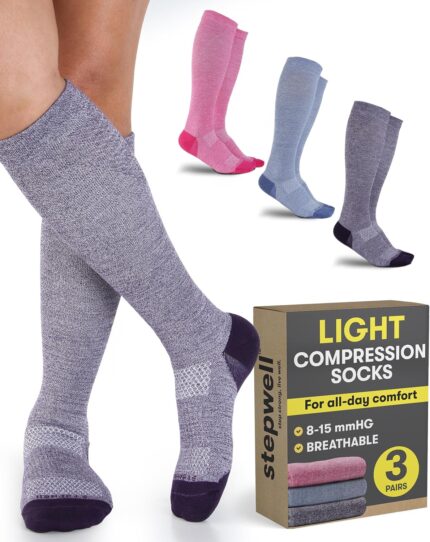
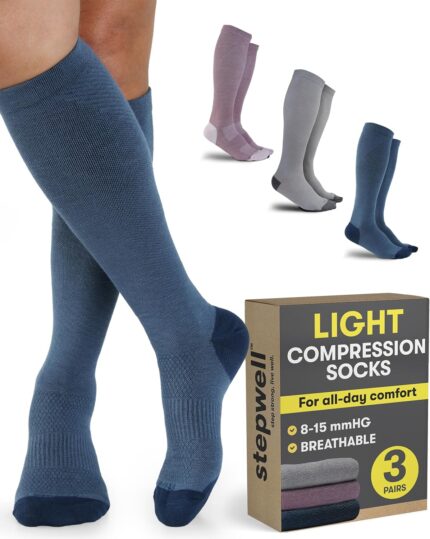
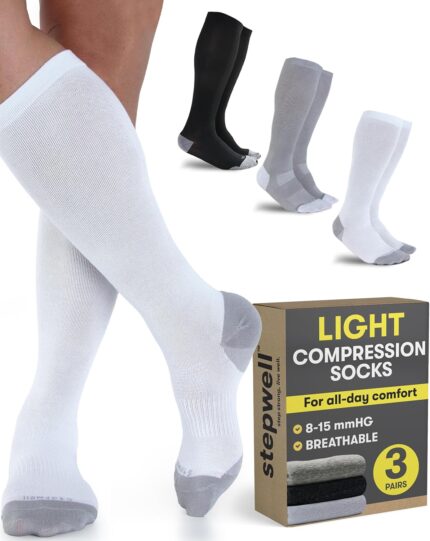
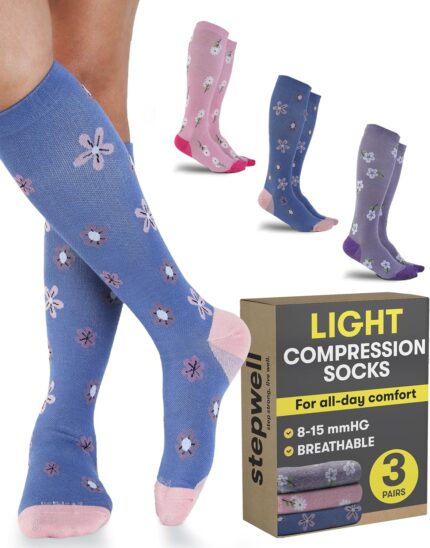
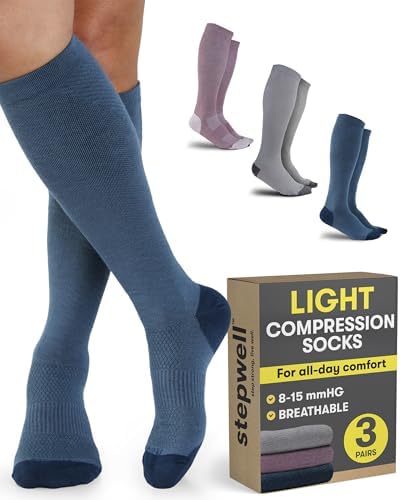
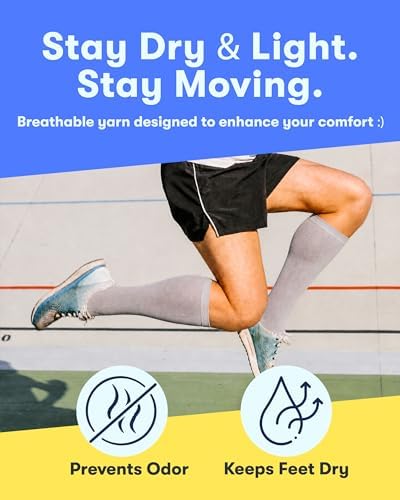
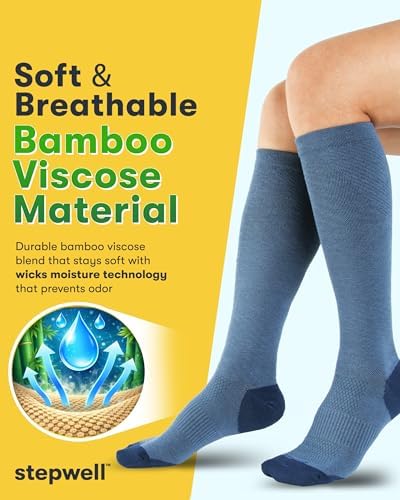
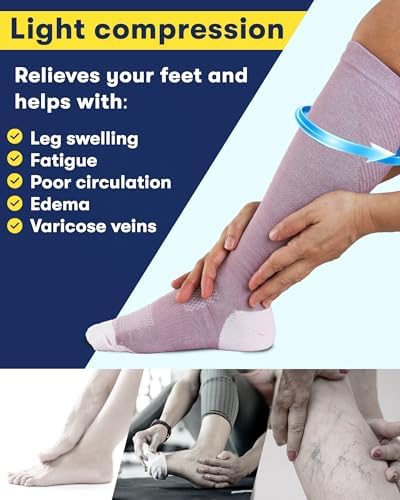
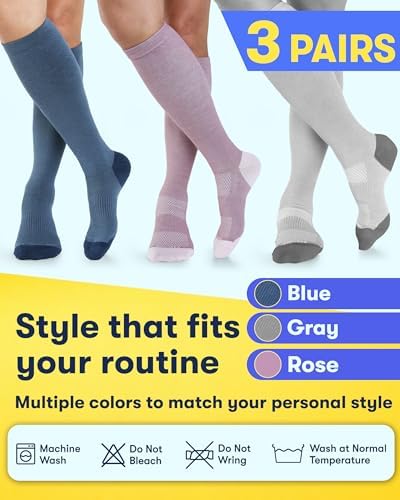
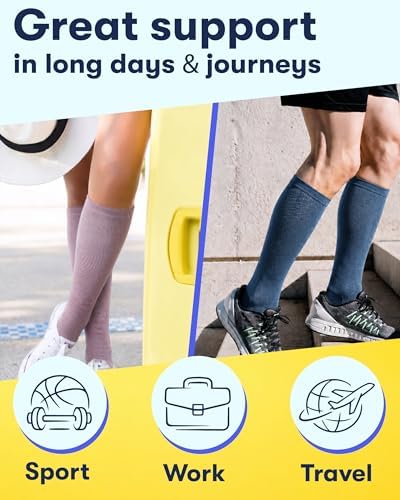
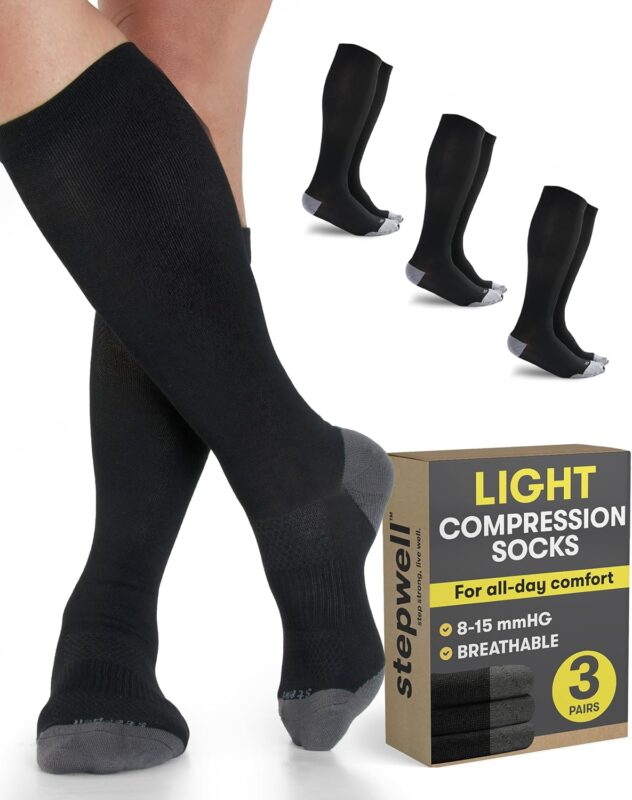
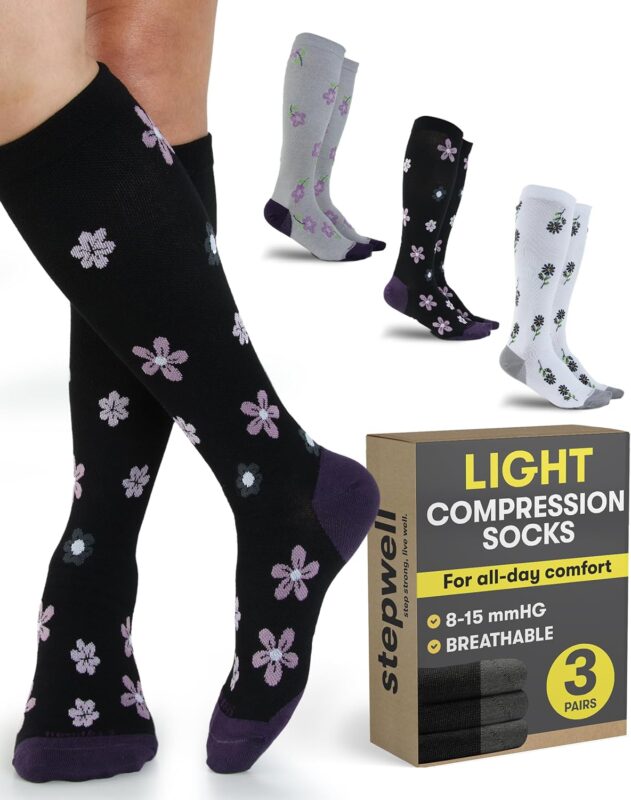
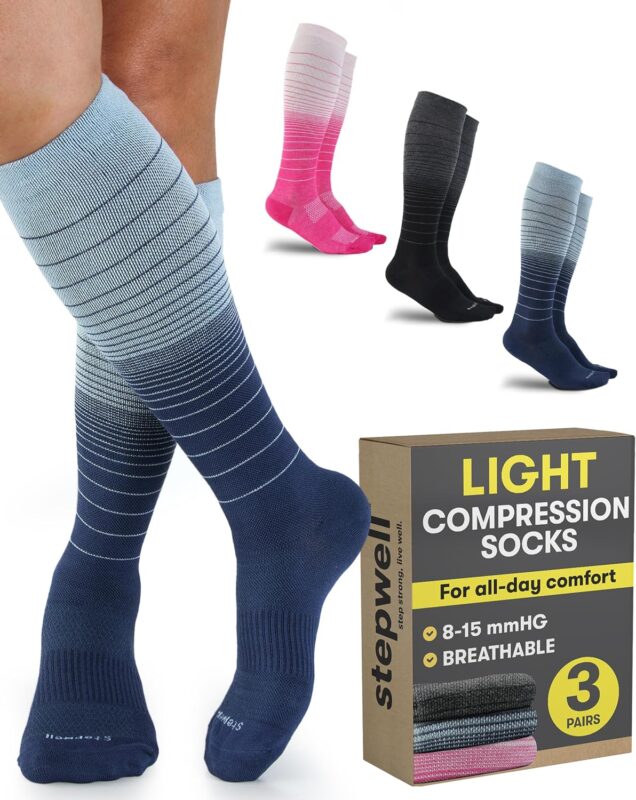
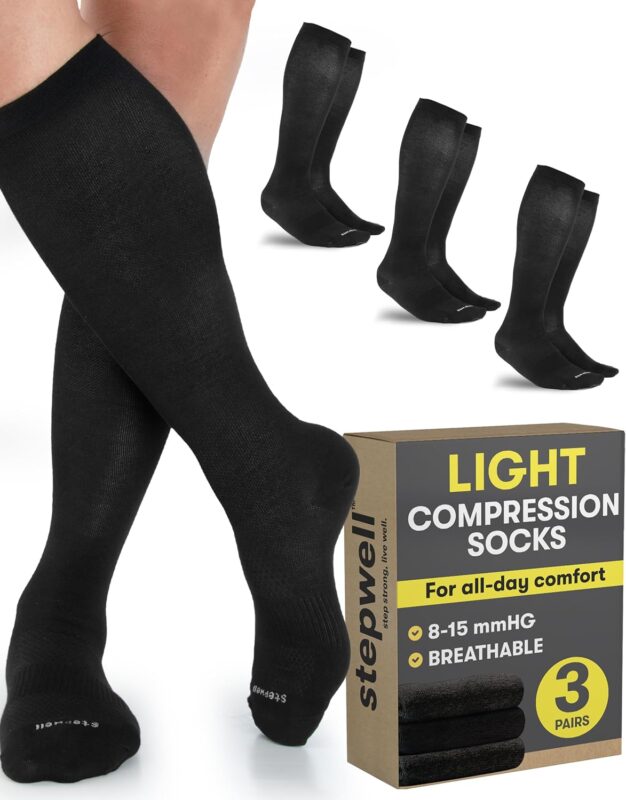
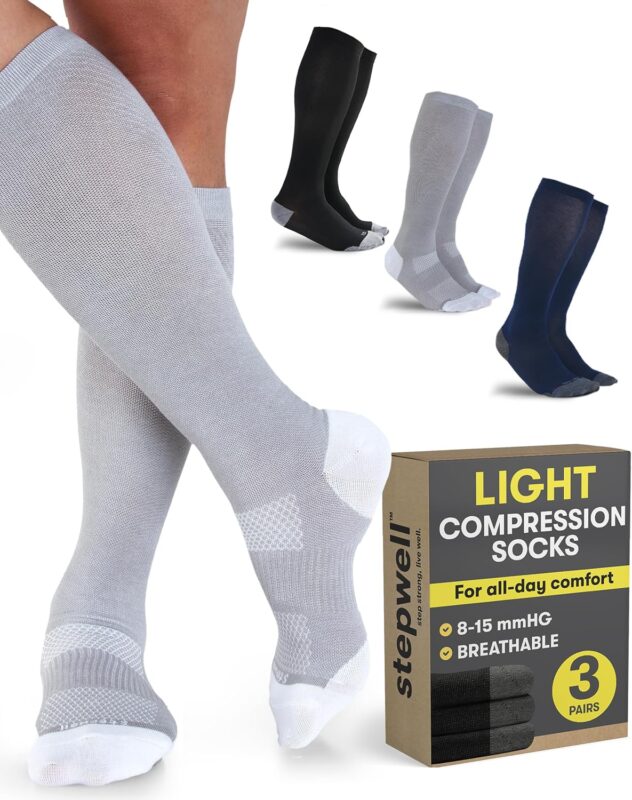
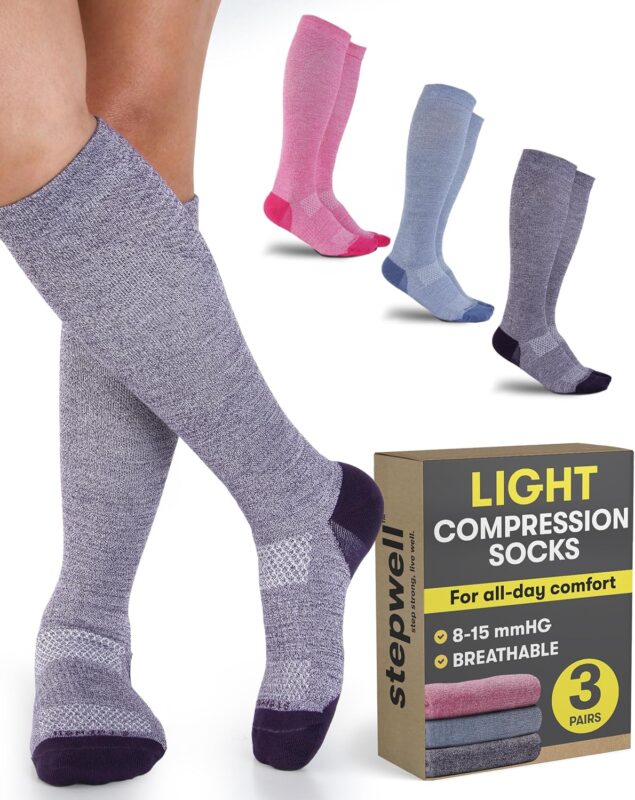
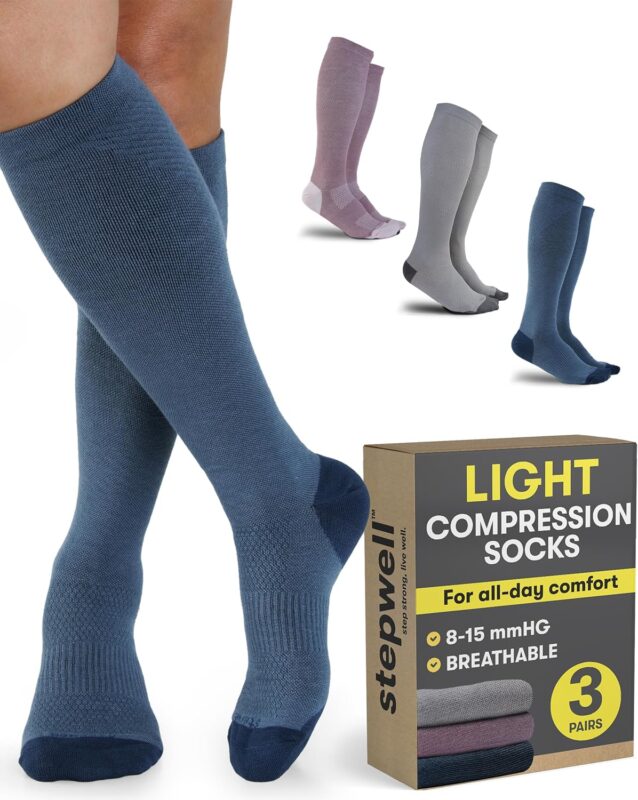
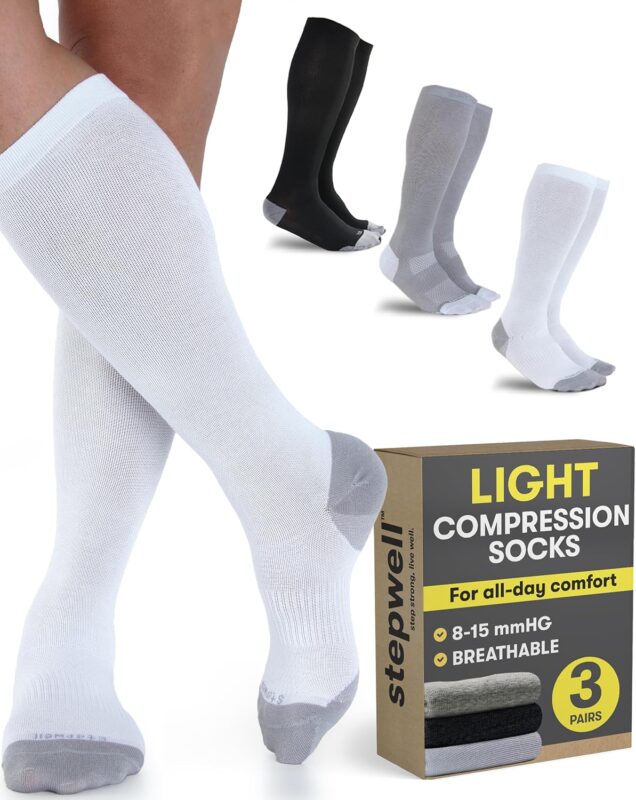
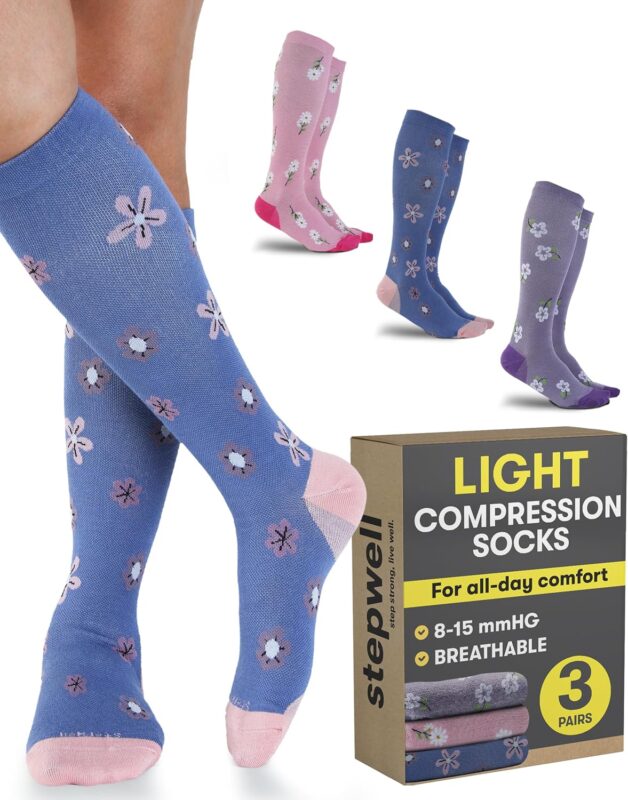
Stepwell Compression Socks 8–15 mmHg, Bamboo Viscose for Women & Men (3 Pairs)
Stepwell Compression Socks feature breathable bamboo viscose fabric with gentle 8–15 mmHg graduated compression to support healthy circulation, reduce leg fatigue, and provide everyday comfort for work, travel, pregnancy, and long hours on your feet.
When Should Nurses Put Compression Socks On?
Many people find compression socks easiest to put on before starting their workday, particularly before prolonged standing begins.
Turn the sock partially inside out to the heel, position the foot correctly, and gradually roll or pull the fabric upward.
Avoid grabbing the top and pulling aggressively.
Instead, distribute the fabric evenly over the ankle and calf. Make sure there are no folds or wrinkles that could create concentrated pressure.
How Many Pairs Does a Nurse Need?
For healthcare professionals working several shifts per week, relying on one pair isn’t particularly convenient.
A simple rotation might look like this:
| Work Schedule | Practical Starting Rotation |
|---|---|
| 2–3 shifts weekly | 3 pairs |
| 4 shifts weekly | 4–5 pairs |
| 5 shifts weekly | 5–7 pairs |
| Daily compression wearer | 7+ pairs |
Having multiple pairs also reduces the need to repeatedly wash and immediately rewear the same pair.
Always follow the manufacturer’s washing instructions because excessive heat and harsh treatment can shorten the useful life of elastic fibers.
Who Should Talk to a Healthcare Professional Before Wearing Compression Socks?
Compression isn’t appropriate for everyone.
Published clinical guidance lists several situations where graduated compression stockings can be contraindicated or require careful professional assessment, including suspected or confirmed peripheral arterial disease, severe peripheral neuropathy, certain skin conditions, significant leg deformity, and some forms of severe edema.
If you have a diagnosed circulation problem, significant unexplained swelling, numbness, skin problems, or another medical condition affecting your legs, ask an appropriate healthcare professional before choosing compression strength.
This is particularly important before using higher compression levels.
Are Bamboo Compression Socks Worth It for Healthcare Workers?
For nurses and healthcare professionals who prioritize softness, moisture management, and long-shift comfort, bamboo-viscose compression socks are worth considering.
They combine two features that matter in healthcare environments: graduated lower-leg compression and a fabric designed with comfort in mind.
The most important factors are still:
- Correct compression level
- Correct sizing
- Comfortable construction
- Suitable fiber blend
- Durability
- A cuff that stays in place
- A design that works comfortably with your work shoes
“Bamboo” should be treated as one part of the buying decision—not the only reason to choose a particular sock.
Shop Bamboo Compression Socks for Nurses at Brasi Chic
At Brasi Chic, we’re building our compression sock selection around the real-world needs of people who spend long hours standing, walking, working, and traveling.
Our Bamboo Viscose Compression Socks are a practical option for nurses, healthcare workers, travelers, office professionals, and other customers looking for comfortable graduated support.
Whether you’re shopping for moderate everyday compression or comparing different compression strengths, focus on a pair that matches your measurements, intended use, and comfort preferences.
For nurses facing another long shift, the right compression socks may be a small addition to the uniform—but one that can make everyday leg support much easier to incorporate.
Explore Brasi Chic compression socks and find the compression level, material, and style that works for your workday.
This article is for general educational and shopping information and is not a substitute for individualized medical advice.