

Blog
Compression Socks for Sensitive Skin: How to Choose Gentle Bamboo Pairs

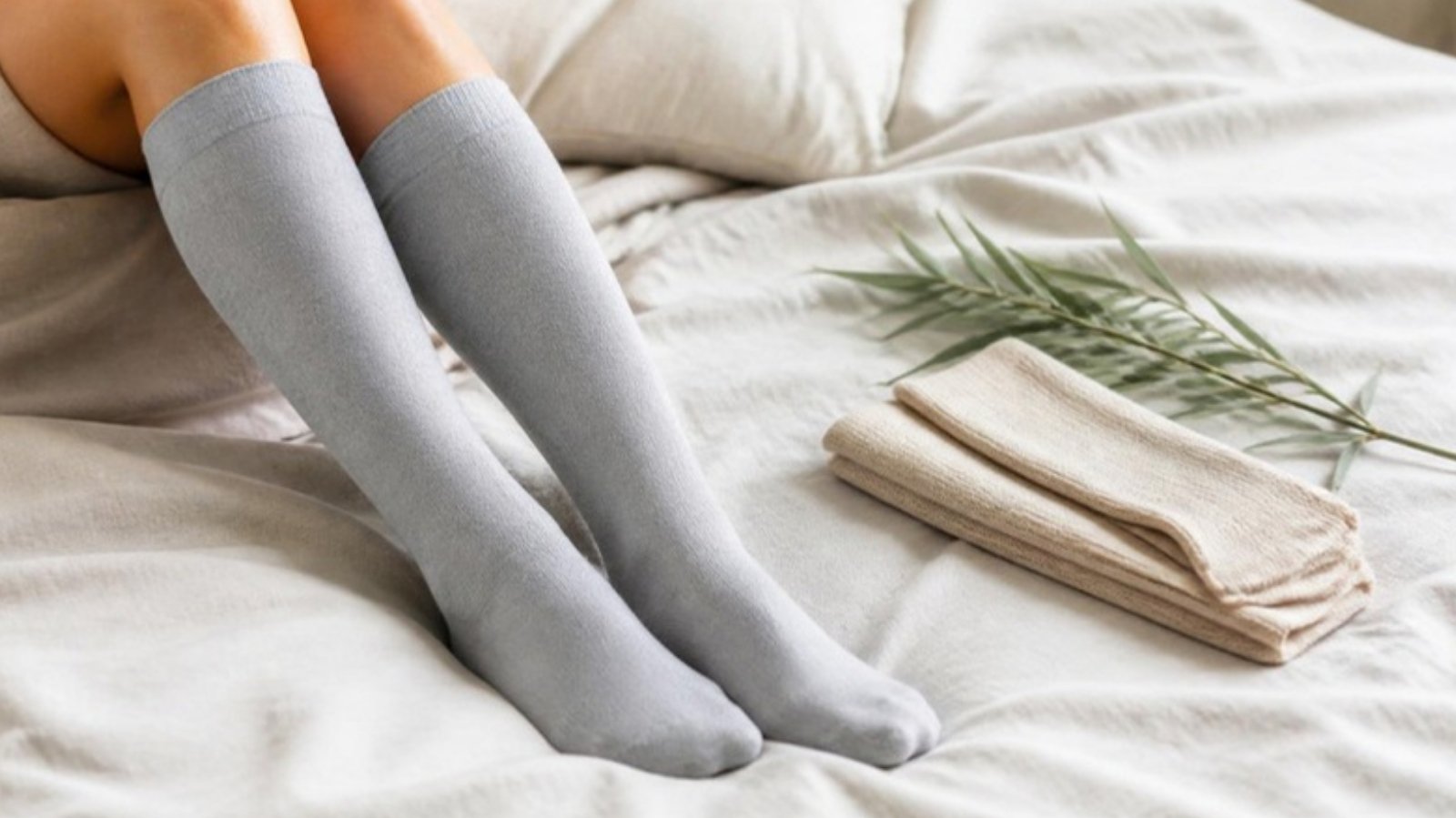
If your legs itch, redden or feel raw by the end of the day, it is tempting to give up on compression altogether. Usually you don’t have to. The right compression socks for sensitive skin combine a soft, breathable fiber blend with a pressure level you actually need, a seam and cuff design that avoids friction, and a size that fits your real measurements. Bamboo viscose socks are a popular starting point because the fabric feels smooth and handles moisture well, but the fabric is only one part of the picture.
Quick answer: what to look for
For most women with easily irritated skin, the gentlest everyday option is a knee-high sock with:
- A bamboo viscose (rayon) blend as the main fiber, with a clearly listed fiber percentage on the label.
- Light graduated compression (8–15 mmHg or roughly 10–15 mmHg) unless a clinician has recommended a firmer level.
- A seamless or flat-seam toe and a wide, soft cuff that does not dig in.
- Correct sizing based on ankle and calf measurements, not shoe size alone.
- Light colors or undyed sections if you have ever reacted to dark clothing dyes.
Just as important is how you wear them: put them on over clean, fully dry skin, take them off every day, moisturize at night rather than right before dressing, and check your legs for marks or redness.
Why compression socks can irritate sensitive skin
Compression socks are designed to fit closely, so any problem with fit, fabric or friction is pressed directly against the skin for hours. Medically reviewed consumer guidance from Healthline notes that compression socks can aggravate existing skin irritation and cause itching, and that poorly fitted pairs can leave redness and temporary dents in the skin. Dry skin, or dry air on a flight, makes chafing more likely.
The most common triggers fall into four groups:
1. Friction and moisture
Rubbing at the toe seam, the heel or the top band is the classic source of soreness. Trapped sweat softens the skin and makes it more prone to chafing, which is why breathable, moisture-managing fabrics matter for sensitive skin.
2. Fit problems
A sock that is too tight can bite into the calf, while one that is too loose wrinkles or slides down. NHS patient guidance from the Royal Wolverhampton NHS Trust specifically warns against letting compression stockings roll down, because a rolled band can act like a tourniquet and restrict blood flow. Wrinkles and folded fabric also create pressure lines that irritate skin.
3. Chemicals in textiles
True allergy to a fiber itself is uncommon. According to DermNet, the dermatology resource from New Zealand, textile contact dermatitis is more often caused by chemicals added to fabric, including certain dyes (especially disperse dyes used on synthetics), formaldehyde-based finishing resins, and the rubber accelerators and latex used in some elastic. Reactions tend to appear where clothing sits tightest against the skin, such as the backs of the knees.
4. Skin that is already compromised
Very dry, cracked or broken skin is more easily irritated by any close-fitting garment. If your skin is fragile, actively inflamed or broken, speak with a clinician before starting or continuing compression.
Is bamboo actually better for sensitive skin?
Bamboo compression socks have a strong reputation for comfort, and there are practical reasons many wearers prefer them: bamboo viscose has a smooth, soft hand-feel, it drapes well, and it is commonly used in blends marketed for breathability and moisture-wicking. For people whose main problem is friction, heat or sweat, a smoother and more breathable sock can make a real difference to day-long comfort.
It helps to know what “bamboo” means on a label, though. The U.S. Federal Trade Commission explains that most soft bamboo textiles are not made of bamboo fiber at all: they are rayon, a regenerated fiber manufactured from bamboo pulp using chemical processing. Under FTC rules, these products should be labeled with a name such as “rayon made from bamboo” or “viscose from bamboo.” The FTC also points out that claims that such fabrics keep bamboo’s natural properties, including antimicrobial claims, must be backed by competent and reliable scientific evidence.
What that means for you:
- Choose bamboo viscose for its softness and moisture handling, not because it is guaranteed to be hypoallergenic.
- Treat “antibacterial” or “odor-killing” bamboo claims with caution unless the brand shows test evidence.
- Remember that a compression sock is always a blend. Elastic fibers such as spandex, and sometimes rubber, are what create the pressure, so they are present in every pair.
How to read a compression sock label
The fiber line on the packaging or product page tells you more than the word “bamboo” on the front. Here is a real example from a light-compression sock sold on BrasiChic, the Stepwell 8–15 mmHg pair, whose listed blend is 54% bamboo viscose, 37% polyester, 5% spandex and 4% rubber.
| Component | What it does | What sensitive skin should know |
|---|---|---|
| Bamboo viscose (rayon) | Soft, smooth surface; absorbs and moves moisture | Usually the most comfortable fiber against the skin; a higher share generally means a softer feel |
| Polyester or nylon | Strength, shape retention and durability | Helps the sock hold its shape; synthetics are often colored with disperse dyes, which can matter if you are dye-sensitive |
| Spandex (elastane) | Stretch and recovery | Essential for compression; usually well tolerated |
| Rubber or latex | Extra elastic power, often in the cuff or compression yarn | If you have a known latex or rubber-accelerator allergy, look for products that list no rubber or latex and ask the brand if it is unclear |
If a product page lists no fiber content at all, that is a good reason to choose a different pair. You cannot avoid an ingredient you cannot see.
Choosing the right compression level for sensitive skin
Compression socks are rated in millimeters of mercury (mmHg), the amount of pressure at the ankle. Graduated designs are firmest at the ankle and gradually ease off toward the knee. Ochsner Health describes the common ranges this way:
| Level | Typical use described by Ochsner Health | Sensitive-skin note |
|---|---|---|
| 8–15 mmHg | Daily wear or minor discomfort | The gentlest starting point; easiest to put on and take off |
| 15–20 mmHg | Mild swelling, varicose veins or travel | Popular for long days and flights; still manageable for most wearers |
| 20–30 mmHg | The level most often used in research studies | Firmer and harder to put on; best chosen with guidance from a clinician |
Firmer is not automatically better. For sensitive skin, more pressure means more contact force, a tighter cuff and more effort pulling the sock over the heel, which can drag on dry skin. Unless you have been advised to wear a specific level, starting light and moving up only if you need to is the gentler path.
Ochsner Health also advises talking to a healthcare professional before using compression if you have peripheral arterial disease, a severe infection on the legs, or advanced heart or circulation problems. If you are pregnant, postpartum or managing a medical condition, your clinician can help you decide whether compression is appropriate and at what level.
Design features that reduce friction
- Seamless or hand-linked toes. A flat or seamless toe removes the ridge that rubs the tops of the toes.
- Open-toe (toeless) styles. These leave the toes free and let air circulate, which some people with sensitive feet prefer. You still need a regular sock or comfortable shoe lining over the toes.
- Wide, soft top bands. A broader cuff spreads pressure over a larger area, so it is less likely to leave a deep groove than a narrow band.
- Mesh or ventilation zones. Breathable panels help reduce heat and sweat buildup.
- Wide-calf sizing. If standard sizes feel tight at the top, a wide-calf version can prevent the band from biting into the leg.
- Lighter colors. DermNet suggests light-colored clothing for people with dye-related textile dermatitis, since lighter shades generally contain less dye.
Sizing: the most overlooked cause of irritation
A sock that fits well is less likely to wrinkle, roll, slip or bite. Most brands size compression socks by ankle circumference and calf circumference, with shoe size as a secondary guide. A few practical tips:
- Measure first thing in the morning, before swelling builds up during the day.
- Measure the narrowest part of the ankle and the widest part of the calf, using a soft tape measure.
- Compare both numbers to the specific brand’s chart. Sizes vary between brands.
- If you fall between sizes at the calf, a wide-calf option is often more comfortable than sizing up overall.
- Re-measure after significant weight changes, during pregnancy and postpartum, since leg size can change.
Daily skin-care routine with compression socks
The way you care for your skin matters as much as the sock you buy. These steps draw on NHS patient leaflets for people who wear compression hosiery:
- Moisturize at night, not right before dressing. NHS Forth Valley advises avoiding lotions or creams just before putting on hosiery and applying moisturizer in the evening after taking garments off.
- Start with dry skin. Make sure legs are completely dry before pulling socks on.
- Take them off every day. Removing compression daily lets you wash your legs and inspect your skin, as recommended by the Royal Wolverhampton NHS Trust.
- Smooth out wrinkles and never let the top roll down. Rolled or folded fabric concentrates pressure in one line.
- Rotate clean pairs. Wear a clean, dry pair each day and follow the care label. Air-drying helps the elastic last longer.
- Wash new socks before the first wear. DermNet recommends washing new clothing before wearing it, which can reduce leftover finishing chemicals and loose dye.
- Replace worn-out pairs. Stretched-out socks lose consistent compression and are more likely to slip and rub.
When to stop wearing them and get advice
Mild sock lines that fade soon after removal are common. Some signs, however, mean you should take the socks off and contact a healthcare professional. NHS guidance lists warning signs including:
- Blistering, broken skin or unusual marks on the legs.
- Skin discoloration, especially over the heels.
- New numbness or tingling in the toes.
- Pain in the lower leg or foot.
- Sudden swelling, warmth or spreading redness in one leg.
Sudden swelling, warmth and pain in one leg, or chest pain and shortness of breath, can signal a serious problem and need urgent medical attention.
If itching or a rash keeps returning in the same places, a dermatologist can arrange patch testing to find out whether a specific dye, rubber chemical or finish is responsible.
Three gentle bamboo picks from BrasiChic
These three pairs are good examples of the features covered above. The details below come from each product’s listing.
Yomandamor Bamboo Compression Socks, 10–15 mmHg
A light over-the-calf option made from bamboo rayon with breathable mesh ventilation zones and a seamless toe construction designed to minimize rubbing. The pack includes four pairs. If friction at the toes is your main issue, the Yomandamor seamless-toe bamboo socks are a sensible first pair to try.
Stepwell Bamboo Viscose Light Compression Socks, 8–15 mmHg
A three-pair pack of mild-compression knee-highs with a transparent fiber list (54% bamboo viscose, 37% polyester, 5% spandex, 4% rubber) and a non-binding top band. The light pressure makes it an easy introduction to compression. Note the listed rubber content if you have a known rubber or latex allergy.
Breslatte Open Toe Wide Calf Compression Socks, 10–14 mmHg
A toeless bamboo viscose style in plus sizes with wide-calf stretch. The open toe adds airflow and leaves the toes free, while the gentle pressure suits people who find firmer socks too tight at the calf.
You can compare more fabrics, pressure levels and sizes in our bamboo viscose compression sock collection. If you are also choosing a pair for long shifts or travel, our guide on picking bamboo socks for all-day comfort covers durability, cushioning and how many pairs to rotate.
Frequently asked questions
Are bamboo compression socks hypoallergenic?
Not automatically. Bamboo viscose feels soft and smooth, which many people with sensitive skin appreciate, but every compression sock also contains elastic fibers and may contain dyes, finishes or rubber. Reactions to textiles are more often linked to these additives than to the base fiber, so check the full fiber list.
What compression level is best for sensitive skin?
Lighter levels such as 8–15 mmHg or 10–15 mmHg are the gentlest and the easiest to put on. If a clinician has recommended a specific level, such as 20–30 mmHg, follow that advice and focus on fit, fabric and skin care to stay comfortable.
Can I put lotion on before compression socks?
It is better not to. NHS guidance recommends avoiding creams just before putting on hosiery and moisturizing at night instead, once the garments are off.
Should I wear compression socks to bed?
Daytime wear is the norm, and guidance for compression hosiery generally calls for removing it daily so skin can be washed and checked. Only wear compression overnight if a healthcare professional has told you to.
Why do my compression socks leave deep marks?
Deep grooves usually point to a sock that is too small, a narrow or rolled top band, or a pressure level that is too firm for you. Re-measure, try a wide-calf or wider-cuff style, and make sure the band is never folded over.
The bottom line
The best compression socks for sensitive skin are the ones that fit precisely, use a soft breathable blend, keep seams and cuffs from rubbing, and apply only as much pressure as you need. Bamboo viscose is a comfortable choice for many women, but read the full fiber list, wash new pairs before wearing, moisturize at night and take your socks off every day. If irritation persists or you notice warning signs, stop and get professional advice.
This article is for general information and is not a substitute for advice from a doctor or other qualified healthcare professional.
Sources
- Federal Trade Commission. “How to Avoid Bamboozling Your Customers.” ftc.gov.
- DermNet. “Textile contact dermatitis.” dermnetnz.org.
- NHS Forth Valley. “Tips for Good Skin Care When Wearing Compression Hosiery” (patient information leaflet).
- The Royal Wolverhampton NHS Trust. “How do I use my graduated compression stockings?” (patient leaflet).
- Ochsner Health. “How Do Compression Socks Help Blood Flow?” blog.ochsner.org.
- Healthline. “Can Wearing Compression Socks Be Harmful?” (medically reviewed). healthline.com.